
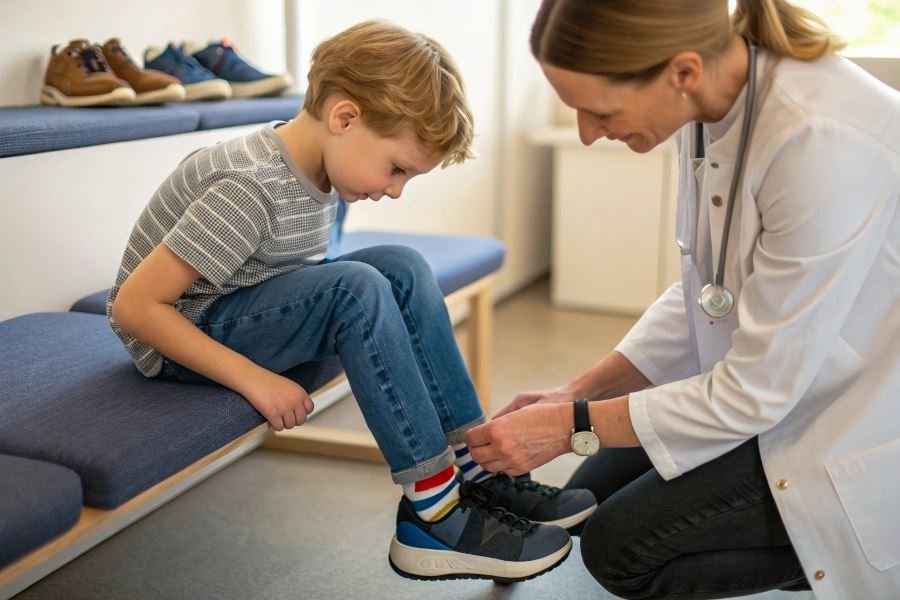
Did you know that nearly 20% of children develop flat feet, a condition that can significantly impact their walking patterns and overall development? While many kids outgrow this condition naturally, the right footwear during these formative years isn’t just helpful—it’s crucial.
When a child has flat feet, their arches don’t form the natural curve that helps absorb shock and distribute weight evenly. This seemingly small anatomical difference can lead to a cascade of effects: altered walking patterns, increased fatigue, and even pain in the feet, ankles, and knees. The right sneakers don’t just provide comfort—they actively support proper foot development and can prevent complications down the road.
Understanding the flat feet phenomenon
Flat feet (or pes planus) occurs when the arches on the inside of feet are flattened, causing the entire sole to touch the floor when standing. While most babies appear flat-footed due to fat pads in their feet, true arches typically develop by age six. When they don’t, specialized footwear becomes essential.
What makes a sneaker “flat-feet friendly”?
The ideal sneakers for children with flat feet share several critical features:
- Firm heel counter that stabilizes the rear foot
- Proper arch support that mimics the natural arch
- Flexible yet supportive midsoles that don’t bend too easily in the middle
- Wide toe boxes allowing natural toe splaying and movement
These features work together to guide the foot into proper alignment, potentially helping to develop stronger arches over time while preventing overpronation—the excessive inward rolling of the foot that often accompanies flat feet.
Remember: investing in quality footwear now can prevent discomfort and potentially costly interventions later!
The Ultimate Guide to Sneakers for Flat-Footed Kids
Finding the right sneakers for children with flat feet isn’t just about comfort—it’s about setting them up for a lifetime of healthy movement. When kids lack that natural arch, their feet need extra support to prevent pain, fatigue, and potential long-term issues. Let’s dive into the three game-changing sneaker types that can make all the difference for your flat-footed little athlete!
Parents often struggle with determining what sneakers are suitable for children with flat feet, balancing style preferences with proper support needs. The good news? Today’s market offers specialized options that don’t sacrifice cool factor for function. The right footwear can help distribute weight properly, align the foot correctly, and provide stability during those endless playground adventures.
Motion Control Marvels
Motion control sneakers are the heavyweight champions of the flat foot world. These structured powerhouses feature:
- Firm heel counters that lock the foot in place
- Reinforced medial support to prevent excessive inward rolling
- Structured designs that guide the foot through a proper stride
New Balance 860v13 kids’ models exemplify this category with their exceptional stability features. The rigid heel cup works like a stabilizing hand, gently cradling your child’s heel while the dense foam along the inner edge prevents overpronation—that inward collapse common in flat feet.
Another standout is the Brooks Kids Ariel, which combines maximum support with surprising flexibility where it counts. These aren’t just smaller versions of adult shoes; they’re engineered specifically for developing feet.
Stability Superstars
Stability sneakers strike the perfect balance between structure and comfort with:
- Responsive arch support that adapts to pressure
- Cushioned midsoles for impact absorption
- Guided foot positioning without rigid restriction
The ASICS GT-1000 kids’ line delivers exceptional stability through their GEL technology cushioning system and DuoMax Support System. These features work together to create a responsive platform that supports flat arches while still allowing natural movement.
The best stability sneakers don’t force an arch where there isn’t one—they support the foot’s natural structure while preventing harmful collapse.
Orthotic-Friendly Options
For children who need custom support, orthotic-friendly sneakers offer:
- Removable insoles for personalized orthotics
- Extra depth to accommodate additional support
- Wide toe boxes for comfort with inserts
Saucony Ride models feature easily removable insoles and roomy interiors that welcome custom orthotics without cramping toes or creating pressure points. The depth-to-width ratio is carefully calibrated to maintain stability even with custom inserts.
The Stride Rite Made2Play collection deserves special mention for their combination of orthotic-friendly design and practically indestructible durability—because kids will be kids, flat feet or not.
| Sneaker Type | Key Features | Best For |
|---|---|---|
| Motion Control | Firm heel, structured support | Severe overpronation |
| Stability | Responsive arch support, cushioned | Mild to moderate flat feet |
| Orthotic-Friendly | Removable insoles, extra depth | Custom orthotic users |
Remember that proper fitting is crucial—even the most technically perfect shoe won’t help if it’s the wrong size. Look for thumb-width space at the toe, no heel slippage, and adequate width to prevent pressure points. Your child’s comfort feedback matters too; they’re the ones feeling every step!
Mastering Footwear for Flat-Footed Kids
Finding the perfect sneakers for children with flat feet isn’t just about comfort—it’s about setting them up for a lifetime of healthy movement. As someone who’s analyzed countless athletic footwear options, I can tell you that proper shoe selection makes all the difference between painful steps and confident strides.
Professional fitting that actually works
The journey to proper support begins with professional fitting. Take your child to a specialized footwear store where trained staff can perform gait analysis. These experts will observe how your child’s foot rolls inward (pronates) and recommend shoes with appropriate arch support and stability features.
Key measurement points include:
- Foot length (both feet, as they often differ)
- Arch height (or lack thereof)
- Heel width
- Forefoot width
- Instep height
Children’s feet grow rapidly—approximately half a size every 2-3 months for toddlers and every 4-6 months for school-age children. This means replacement is necessary more frequently than you might expect. Don’t wait for complaints of discomfort or visible wear; proactively check fit every two months.
The thumb rule still applies: ensure there’s a thumb’s width of space between the longest toe and the shoe end.
Strengthening exercises that complement supportive footwear
Supportive sneakers work best when paired with exercises that strengthen the intrinsic foot muscles. These activities help develop the muscular support that flat-footed children need:
| Exercise | Frequency | Benefits |
|---|---|---|
| Toe grips (picking up marbles) | 5 minutes daily | Strengthens intrinsic foot muscles |
| Heel raises | 10-15 reps, twice daily | Improves calf and arch strength |
| Barefoot beach walking | When possible | Natural arch development |
| Balance board activities | 5-10 minutes, 3x weekly | Improves proprioception and stability |
Walking barefoot on varied natural surfaces (grass, sand) for short periods can also help strengthen foot muscles naturally. However, this should complement—not replace—properly supportive footwear during most activities.
Recognizing when sneakers are doing their job
How do you know if those New Balance or Brooks sneakers are actually providing the support your child needs? Look for these positive indicators:
Physical signs of proper support:
- Even wear pattern on soles (not just on inner edges)
- No excessive redness or pressure marks after removal
- Shoe maintains its structure when not being worn
Behavioral indicators:
- Child doesn’t try to remove shoes frequently
- Increased willingness to participate in physical activities
- No complaints of foot fatigue or pain after activity
- Improved posture and gait
Watch for subtle changes in how your child moves—increased confidence in running and jumping often signals well-supported feet.
If your child’s current sneakers show uneven wear patterns (particularly along the inner edge), it’s a clear sign that their footwear isn’t adequately controlling pronation. Similarly, if the heel counter (back portion) easily collapses when squeezed, the shoe has lost its structural integrity and needs replacement.
Remember that proper footwear is an investment in your child’s long-term mobility and comfort. Quality brands like ASICS and Saucony offer specialized children’s lines with features specifically designed for flat feet—motion control, firmer midsoles, and structured heel counters that make all the difference in supporting developing feet.