
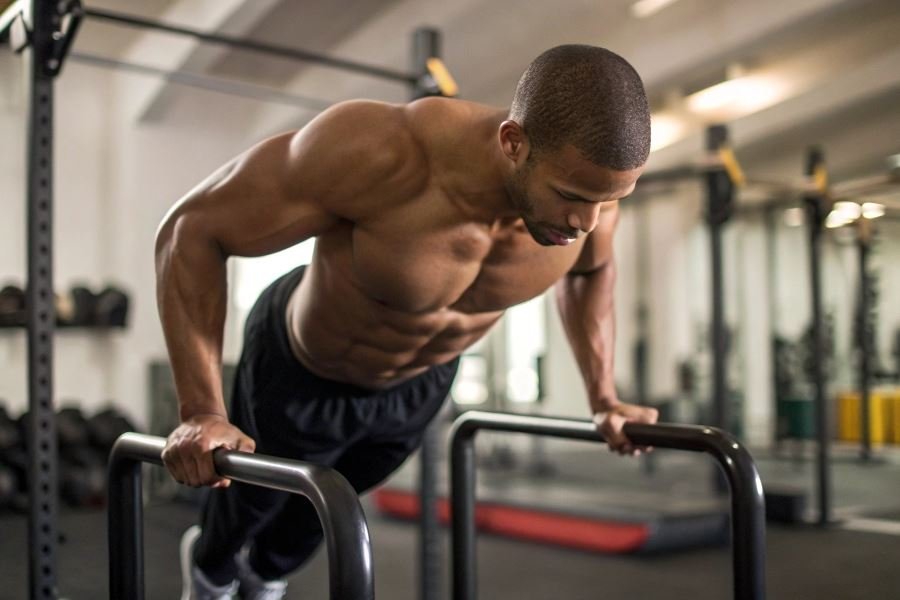
Ever watched gymnasts effortlessly swing, hold, and balance on parallel bars with enviable strength? That same equipment offers one of the most effective upper body workouts available—yet remains criminally underutilized in most fitness routines.
Parallel bars training creates a perfect storm for upper body development. Unlike traditional weight training, these exercises engage multiple muscle groups simultaneously while requiring significant stabilization. The result? A comprehensive strength builder that targets your chest, shoulders, triceps, and core in ways dumbbells simply cannot match.
The science-backed benefits are staggering. Research published in the Journal of Strength and Conditioning Research found that parallel bar exercises activate up to 1.5 times more muscle fiber than comparable bench press movements. This translates to more efficient workouts and faster strength gains.
Equipment essentials and staying safe
You don’t need Olympic-grade equipment to start. Many gyms offer adjustable parallel bars, and portable options start around $150. For home setups, dip bars or even two sturdy chairs can work for beginners.
Safety is non-negotiable. Always ensure:
- Bars can support at least 1.5 times your body weight
- Surfaces beneath bars are padded
- Proper warm-up before attempting holds or dips
The perfect training complement
What makes parallel bar training truly exceptional is how it enhances other strength disciplines. The stabilization muscles developed through these exercises directly improve performance in everything from bench pressing to pull-ups.
“Parallel bar training filled gaps in my strength I didn’t know existed. My bench press increased 15% after just eight weeks of incorporating dips and L-sits.” — Professional strength coach
The Power Trio: Parallel Bar Fundamentals
When it comes to building impressive upper body strength, few training tools match the raw effectiveness of parallel bars. These unassuming pieces of equipment have been sculpting powerful physiques since their introduction to gymnastics in the early 19th century. The beauty of exercises on parallel bars for developing upper body strength lies in their simplicity and the compound nature of movements they enable, engaging multiple muscle groups simultaneously for maximum efficiency.
Let’s dive into the three cornerstone movements that should form the foundation of any serious parallel bar training regimen. These exercises aren’t just effective—they’re transformative when performed consistently.
Parallel Bar Dips: The Upper Body Powerhouse
Parallel bar dips stand as the undisputed king of upper body development on this apparatus. This movement primarily targets the chest, triceps, and anterior deltoids while engaging the core and back as stabilizers.
The proper form is critical:
- Begin in a supported position with arms fully extended
- Lower your body by bending at the elbows until they reach approximately 90 degrees
- Push explosively back to the starting position
What makes dips particularly effective is the natural movement pattern and the significant load they place on the triceps—often neglected in many training programs. For advanced athletes, adding weight via a dip belt can continue to drive progress when bodyweight becomes insufficient.
The difference between mediocre and exceptional dip performance often comes down to controlled tempo and full range of motion.
L-Sits: Core Strength Meets Shoulder Stability
The L-sit might look deceptively simple, but it delivers an intense challenge to multiple systems. In this isometric hold, you’ll maintain a position with legs extended parallel to the ground while supporting your body on the bars.
Key technique points:
- Push down firmly on the bars to elevate the shoulders
- Keep legs straight and toes pointed
- Maintain a slight posterior pelvic tilt to protect the lower back
| Duration | Experience Level | Training Effect |
|---|---|---|
| 10-15 sec | Beginner | Neural adaptation, basic strength |
| 20-30 sec | Intermediate | Increased endurance, core development |
| 45+ sec | Advanced | Elite core strength, shoulder stability |
L-sits create tremendous tension throughout the core, shoulders, and hip flexors. The isometric nature of this exercise builds exceptional stability that transfers to virtually all other athletic movements.
Straight Arm Supports: Building the Foundation
Straight arm supports may seem elementary, but they establish the fundamental strength and positional awareness necessary for all parallel bar work. This position—simply holding yourself above the bars with locked arms—creates significant demand on the shoulders, chest, and triceps.
The benefits extend beyond basic strength:
- Develops crucial scapular stability
- Teaches proper body alignment
- Builds tendon and ligament strength in the elbow and wrist
For beginners, simply holding this position for time creates significant adaptation. More advanced practitioners can progress to dynamic movements like forward and backward leans or slight turns to further challenge stability.
Remember that mastery of these fundamentals creates the platform for more advanced skills like swings, handstands, and dynamic movements that build upon this foundation.
By consistently practicing these three cornerstone exercises, you’ll develop remarkable upper body strength, stability, and control that transfers to virtually all other physical activities and sports.
Unleash Your Potential with Parallel Bars
From zero to hero on the bars
Parallel bars aren’t just gymnastics equipment—they’re your ticket to extraordinary upper body development. The beauty of these twin rails lies in their versatility, allowing anyone from complete beginners to seasoned athletes to build impressive strength. Let’s dive into a progressive approach that will transform your training.
Mastering the progression ladder
The key to parallel bar success is respecting the progression curve. Each exercise builds upon the previous one, creating a foundation for more advanced movements:
Beginner modifications:
- Support holds – Simply holding yourself above the bars develops baseline stability
- Assisted dips – Using resistance bands or feet on a platform to reduce body weight
- Negative dips – Lowering yourself slowly from the top position (3-5 second descent)
Intermediate movements:
- Full dips – The cornerstone exercise, lowering until upper arms are parallel to the ground
- L-sits – Holding legs extended forward while supporting on the bars
- Forward leans – Shifting weight forward while maintaining support
Advanced techniques:
- Russian dips – Lowering behind the bars to extreme shoulder extension
- Straight bar dips – Performing dips on a single bar for increased stabilization demands
- Muscle-ups – The holy grail transition from below to above the bars
“The parallel bars don’t lie—they reveal exactly where your weaknesses hide and force you to address them.”
Blueprint for weekly domination
Consistency with intelligent programming is what separates casual users from those who transform their physiques. Here’s a sample weekly schedule designed for optimal strength development:
| Day | Focus | Sample Workout |
|---|---|---|
| Monday | Strength | 5 sets of weighted dips, 3-5 reps |
| Wednesday | Volume | 4 sets of regular dips, 8-12 reps + 3 sets of L-sits |
| Friday | Technique | 3 sets of advanced variations + 3 sets of support holds |
| Saturday | Active recovery | Light movement, mobility work |
This balanced approach provides adequate stimulus while allowing for recovery—the often-forgotten component of strength building. Remember that muscles grow during rest, not during exercise.
Breaking through barriers
Progress isn’t always linear, and plateaus are inevitable. The most common sticking points occur when:
- Technical efficiency plateaus – Record yourself to identify form breakdowns
- Strength barriers – Implement micro-loading (adding just 1-2 pounds per week)
- Endurance limitations – Add density training (more work in less time)
Measurement matters: Track not just repetitions but quality metrics like:
- Time under tension
- Range of motion consistency
- Stability during holds
- Recovery time between sets
When progress stalls, don’t just work harder—work smarter. Rotate your focus between strength, endurance, and skill acquisition phases lasting 3-4 weeks each.
The parallel bars reward patience and persistence. What begins as a struggle to perform a single dip can evolve into impressive displays of bodyweight mastery—all while building shoulders, chest, and arms that reflect your dedication. Your upper body transformation awaits between those two bars.