
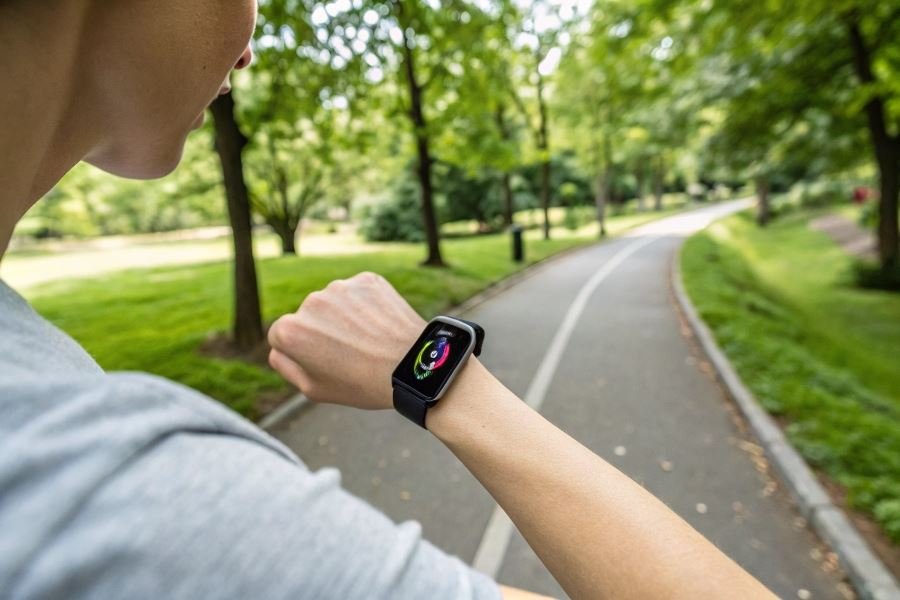
Ever wondered how many steps you actually take each day? The number might surprise you—most Americans average just 3,000-4,000 steps daily, far below the recommended 10,000. This gap represents not just numbers, but potential health improvements waiting to be unlocked.
Choosing the right pedometer transforms an ordinary walk into a measurable health activity. These small devices have evolved dramatically since their invention in 1780 by Abraham-Louis Perrelet, who created the first mechanical pedometer. From those clockwork beginnings to today’s sophisticated wearables, pedometers have become essential tools for anyone serious about fitness.
The evolution of step tracking
The journey from mechanical counters to smart devices represents one of fitness technology’s most impressive transformations:
- Mechanical pedometers: Simple pendulum mechanisms that counted steps
- Electronic pedometers: Digital displays with improved accuracy
- Modern fitness trackers: GPS-enabled devices with heart rate monitoring and sleep tracking
Why tracking steps matters
Step counting does more than satisfy curiosity—it creates accountability. Research published in the Journal of the American Medical Association shows that pedometer users increase their physical activity by approximately 27% when they monitor their steps.
The benefits extend beyond just walking more:
“Step tracking creates a feedback loop that motivates continued activity. When you see your numbers improve, you’re naturally driven to maintain or exceed them.”
For those managing weight, tracking steps provides concrete data about daily activity levels. For those managing chronic conditions like diabetes or heart disease, it offers a simple way to ensure consistent movement throughout the day—turning abstract health goals into achievable daily targets.
Essential Features That Make or Break Your Pedometer
When tracking your daily steps becomes a priority, the right pedometer transforms from a simple gadget into your constant companion. The market offers countless options, from basic step counters to advanced fitness trackers packed with features. Knowing which specifications actually matter can save you from buyer’s remorse and ensure your step-tracking journey starts on the right foot.
The process of how to choose a pedometer for daily use doesn’t need to be overwhelming when you focus on the core features that align with your lifestyle. Whether you’re aiming for 10,000 steps daily or monitoring your overall activity levels, understanding what makes a quality pedometer will guide your decision-making process.
Accuracy that doesn’t miss a step
Nothing frustrates users more than unreliable step counts. The best pedometers employ either accelerometer technology or piezoelectric sensors to detect movement patterns.
Three-axis accelerometers have become the gold standard, capturing movement in all directions rather than just up and down. This technology significantly reduces false readings when you’re driving or performing non-step movements.
Premium models like the Garmin vívofit 4 and Fitbit Inspire 3 calibrate to your specific gait pattern over time, increasing accuracy.
Beyond basic step counting, consider these tracking capabilities:
| Feature | Benefit | Worth the upgrade? |
|---|---|---|
| Distance tracking | Converts steps to miles/kilometers | Essential |
| Calorie estimation | Provides metabolic feedback | Useful for weight management |
| Active minutes | Distinguishes between casual walking and exercise | Very valuable |
| Sleep monitoring | Tracks rest quality and duration | Nice-to-have |
| Heart rate monitoring | Provides intensity metrics | Worth it for serious fitness |
Display that speaks to you
The pedometer’s display serves as your window into your activity data. Readability factors include:
Screen size and resolution determine how much information you can view at once. Larger displays benefit those with vision concerns but come with trade-offs in battery life and device size.
E-ink displays offer exceptional outdoor visibility and battery efficiency, while OLED and LCD screens provide vibrant colors and animations but may wash out in direct sunlight.
Consider these display options:
- Always-on displays let you check your progress without pressing buttons
- Backlit screens ensure nighttime visibility
- Customizable data fields allow you to prioritize the metrics that matter most to you
- Color-coded progress indicators provide instant visual feedback
Power that keeps pace with you
Nothing derails a step-tracking habit faster than a dead pedometer. Battery considerations include:
Replaceable batteries (typically CR2032 coin cells) can last 6-12 months in basic pedometers like the Omron HJ-325, eliminating the need for regular charging but requiring occasional purchases.
Rechargeable lithium-ion batteries power most advanced trackers, with battery life ranging dramatically:
| Battery Type | Typical Life | Charging Method | Best For |
|---|---|---|---|
| Basic rechargeable | 5-7 days | USB cable | Feature-rich trackers |
| Extended capacity | 2-4 weeks | Proprietary charger | Active travelers |
| Solar-assisted | 3+ months | Solar + USB | Outdoor enthusiasts |
Power-saving features like automatic sleep modes, display dimming, and selective Bluetooth connectivity can dramatically extend battery life without sacrificing functionality.
When selecting your perfect pedometer, prioritize accuracy first, then consider which display and power options align with your daily habits. The ideal device balances the features you need with the convenience that keeps you consistently tracking.
Pedometer Types That Actually Track Every Step
When counting steps becomes your daily mission, choosing the right pedometer transforms from a simple purchase into a strategic decision. Let’s dive into the three main categories that dominate the step-counting universe and find your perfect match.
Basic Mechanical Pedometers: The Reliable Veterans
Basic mechanical pedometers operate on a beautifully simple principle: a suspended lever arm moves with each step, triggering the counting mechanism. These no-frills devices deliver exactly what they promise—step counts without battery anxiety.
Key advantages:
- Typically priced between $15-25
- No charging required
- Straightforward operation with minimal learning curve
- Durable construction that can withstand drops
The Omron HJ-321 remains a standout in this category, offering accuracy within 5% of actual steps taken during controlled tests. These devices excel in simplicity but sacrifice the data insights that more advanced options provide.
Remember that mechanical pedometers require proper positioning—usually clipped horizontally at the waistband—to maintain accuracy.
Advanced Digital Pedometers: Smart Without The Commitment
Digital pedometers represent the sweet spot between functionality and simplicity. Using accelerometers instead of mechanical pendulums, they detect motion patterns that distinguish walking from other movements.
These devices typically offer:
- Step count accuracy within 2-3%
- Distance calculations based on stride length
- Calorie burn estimates
- 7-30 day memory storage
- Multiple wearing positions (pocket, bag, or clip-on)
The Fitbit Inspire and Garmin vivofit series exemplify this category, offering impressive battery life (often 6+ months) while tracking multiple metrics without smartphone dependency.
Pro tip: Digital pedometers with 3D tri-axis technology track steps regardless of device orientation, dramatically improving accuracy during everyday movement.
Smart Pedometers: Your Connected Step Ecosystem
Smart pedometers and fitness trackers have revolutionized step counting by integrating it into comprehensive health monitoring systems. These devices sync wirelessly with smartphones and offer extensive data analysis.
| Feature | Basic Mechanical | Advanced Digital | Smart Pedometers |
|---|---|---|---|
| Price Range | $15-25 | $25-60 | $80-250+ |
| Battery Life | No battery | 6-12 months | 4-10 days |
| Data Storage | 7 days | 7-30 days | Unlimited (cloud) |
| Additional Metrics | None | Distance, calories | Sleep, heart rate, GPS |
| Accuracy | ±5-10% | ±2-5% | ±1-3% |
The Apple Watch and Samsung Galaxy Watch represent the premium end, while the Xiaomi Mi Band offers impressive functionality at a fraction of the cost.
What makes smart pedometers worth considering:
- Comprehensive health insights beyond step counting
- Personalized goal setting and achievement tracking
- Social features for competition and motivation
- Automatic activity recognition
- Sleep quality analysis
The integration capabilities of smart pedometers create accountability systems that basic counters simply cannot match.
When selecting your pedometer, consider your primary motivation. If you simply need step validation, a basic mechanical device suffices. For those seeking data-driven motivation without tech complexity, advanced digital models hit the sweet spot. And if you’re ready to embrace a connected fitness ecosystem, smart pedometers deliver unmatched insights that can genuinely transform daily habits.
The best pedometer isn’t necessarily the most expensive—it’s the one you’ll actually wear consistently.