
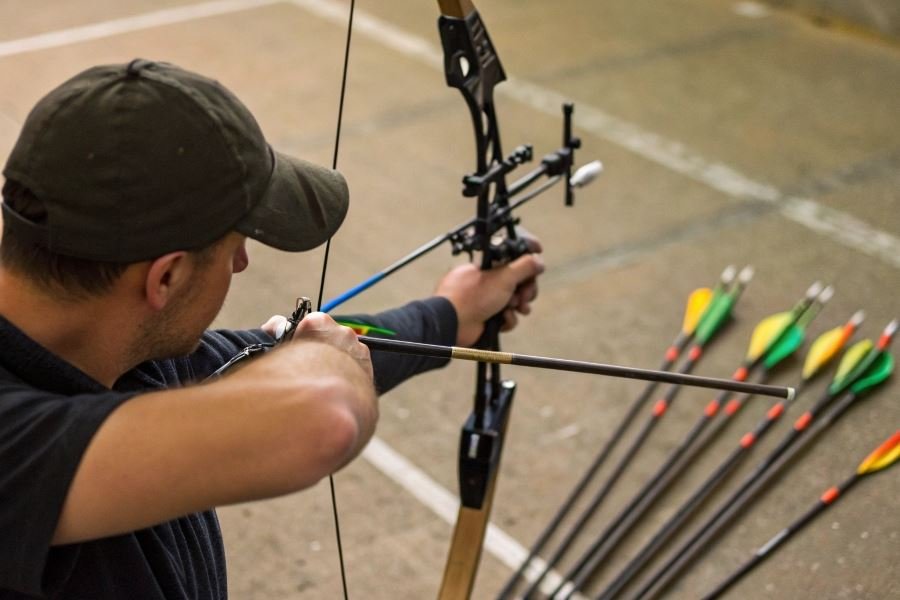
Ever watched an archer hit a bullseye from 70 meters and wondered what makes that precision possible? The secret often lies not in the archer’s stance or aim, but in something far more fundamental: the bow’s tension strength.
When you pull back a bowstring, you’re engaging with what archers call “draw weight” – the force required to fully draw the bow. This seemingly simple measurement is actually the heartbeat of your archery performance. A properly adjusted draw weight doesn’t just determine whether you can comfortably pull the string; it dictates arrow speed, penetration power, and ultimately, your accuracy.
Draw weight is the invisible architect of your shooting style. Too heavy, and you’ll struggle with consistency and form. Too light, and your arrows lack the punch needed for distance shooting or hunting applications. Finding that sweet spot transforms your archery experience from frustrating to fluid.
The anatomy of tension adjustment
Your bow isn’t just a curved piece of material with a string. It’s a precision instrument with specific components designed for customization:
- Limb bolts: These are your primary tension adjusters, typically located where the limbs connect to the riser
- Tiller adjustment: Controls the balance between upper and lower limb tension
- Limb pockets: House the limbs and sometimes offer additional adjustment options
Safety first: Before you turn that allen wrench
Before making any adjustments, remember that your bow operates under tremendous tension. Always de-string compound bows before major adjustments and work in a controlled environment. Never exceed the manufacturer’s recommended limits – pushing a bow beyond its designed parameters isn’t just bad for performance; it can be dangerous.
The journey to perfect bow tension begins with understanding these fundamentals – your pathway to shooting with both power and precision.
Mastering Bow Tension Adjustment for Perfect Shots
When your arrows aren’t flying true, it’s rarely the archer’s form alone—it’s often the bow’s tension setting that needs fine-tuning. Learning how to adjust the tension strength of a sports bow transforms an off-the-shelf tool into a personalized extension of your shooting style. Whether you’re preparing for tournament season or simply want consistent backyard practice, precise draw weight adjustments can make the difference between frustration and that satisfying thwack of hitting the bullseye.
Compound Bow Limb Bolt Adjustments
Compound bows offer the most straightforward tension modifications through their limb bolt systems. These mechanical marvels allow archers to dial in their preferred draw weight with remarkable precision:
- Locate the limb bolts at the base of each limb where they connect to the riser
- Use an Allen wrench (typically 3/16″ or 1/4″) that matches your bow’s specifications
- Turn clockwise to increase tension (heavier draw weight)
- Turn counterclockwise to decrease tension (lighter draw weight)
Most manufacturers recommend adjusting in half-turn increments, testing after each adjustment. A critical safety tip: never completely unscrew the limb bolts, as this can cause catastrophic bow failure.
| Adjustment Direction | Effect on Draw Weight | Typical Increment |
|---|---|---|
| Clockwise | Increases | 2-4 lbs per full turn |
| Counterclockwise | Decreases | 2-4 lbs per full turn |
| Maximum adjustment | 10-15 lbs from factory setting | Varies by model |
Remember to adjust both limbs equally—uneven tension leads to erratic arrow flight and potential damage to your Mathews, Hoyt, or other compound bow.
Recurve Bow Tension Techniques
Traditional recurve bows require different approaches to tension adjustment:
The primary method involves changing the actual limbs on your takedown recurve. Unlike compounds, most recurves don’t offer on-the-fly adjustments. Instead, manufacturers like Samick offer interchangeable limbs in various draw weights.
For minor adjustments on some modern recurves:
- Identify if your bow has limb pocket adjustment systems
- Use the manufacturer-specified tool to adjust the limb alignment bolts
- Small adjustments to limb pocket tiller can slightly modify draw characteristics
Tiller tuning (the difference in distance between the upper and lower limb to the string) affects how the bow pulls through the draw cycle and can be adjusted on higher-end recurves for personalized performance.
Measuring and Verifying with a Bow Scale
No tension adjustment is complete without verification using a bow scale. These essential tools provide objective measurements of your adjustments:
- Attach the bow scale to your string at the nocking point
- Draw to your normal anchor position (or use a drawing board for consistency)
- Read the peak weight displayed on the scale
- Make additional adjustments as needed
Digital scales like the Easton Bow Force Mapper provide the most accurate readings, though mechanical spring scales remain popular for their simplicity and reliability.
Pro tip: Document your bow’s performance at different tension settings in various weather conditions. Temperature fluctuations can affect limb performance by 2-3 pounds between winter and summer shooting.
By methodically working through these adjustment techniques and verifying with precise measurements, you’ll discover your bow’s sweet spot—that perfect tension where accuracy, comfort, and performance converge into archery excellence.
Mastering Bow Tension for Peak Performance
The difference between hitting the bullseye consistently and missing the mark often comes down to one critical factor: proper bow tension. Whether you’re standing on the competition line or stalking through underbrush at dawn, your bow’s tension strength determines accuracy, consistency, and ultimately, success.
Dialing in for Target Archery
Target archery demands precision that borders on obsession. When fine-tuning tension strength for competitive shooting, start with your draw weight—the force required to pull the string to full draw position.
Most competitive archers find their sweet spot between 40-50 pounds for compound bows and 30-40 pounds for recurves. This range offers enough power for accuracy without causing fatigue during lengthy tournaments.
Tiller adjustment becomes your secret weapon here. The tiller—the distance between the limb and the bow string at the point where the limbs meet the riser—affects how the bow pulls and releases.
For target shooting, aim for:
| Bow Type | Recommended Tiller | Effect |
|---|---|---|
| Recurve | 0-1/8″ positive tiller | Smoother draw cycle |
| Compound | Even tiller | Balanced shot execution |
Positive tiller means the upper limb measurement is greater than the lower limb measurement.
For compound shooters, adjusting let-off percentage dramatically impacts performance. While hunting bows often feature 80-85% let-off, target archers typically prefer 65-75% for better “holding” feel and feedback during the shot process.
Hunting Applications Demand Different Tuning
When pursuing game, your bow tension requirements shift significantly. Hunting scenarios require:
-
Higher draw weights – Typically 55-70 pounds to ensure ethical harvesting power and penetration through dense tissue and bone.
-
Increased let-off – Many hunters maximize let-off (80-85%) to hold at full draw longer while waiting for the perfect shot opportunity.
-
Balanced speed-to-noise ratio – Finding the tension that delivers arrow velocity without excessive string vibration that might spook game.
When adjusting for hunting, remember that temperature affects limb performance. Carbon limbs from manufacturers like Hoyt maintain consistent tension in varying conditions better than other materials—critical when you might be hunting in 30°F morning conditions and 70°F afternoons.
For hunting applications, consider using a dual-cam synchronization tool to ensure perfect timing. Even minor timing issues magnify at longer distances, potentially turning a clean harvest into a miss.
Maintenance Practices for Consistent Performance
Tension strength isn’t a set-it-and-forget-it proposition. Maintaining consistent performance requires regular attention:
String and cable maintenance forms your first line of defense. Apply quality string wax like BCY Bowstring Wax every 2-3 shooting sessions to prevent premature wear that affects tension.
A properly maintained string can last 2-3 times longer than a neglected one while maintaining consistent tension properties.
Limb bolt inspection should become routine. Check for loosening every 200 shots, and maintain manufacturer-recommended torque settings. Over-tightened limb bolts can damage the riser, while loose bolts create inconsistent tension.
Store your bow horizontally or hanging by the riser—never leaning in a corner where uneven pressure stresses the limbs. For compound bows, backing off the limb bolts 2-3 turns during extended storage periods (2+ months) prevents limb fatigue.
The most overlooked aspect of tension maintenance? Temperature acclimation. Allow your bow 30-45 minutes to adjust to ambient temperature before shooting, particularly when moving between climate-controlled environments and outdoor conditions.
By mastering these tension adjustments for your specific application, you’ll experience tighter groups, more consistent performance, and ultimately, more success in whatever archery discipline you pursue.