
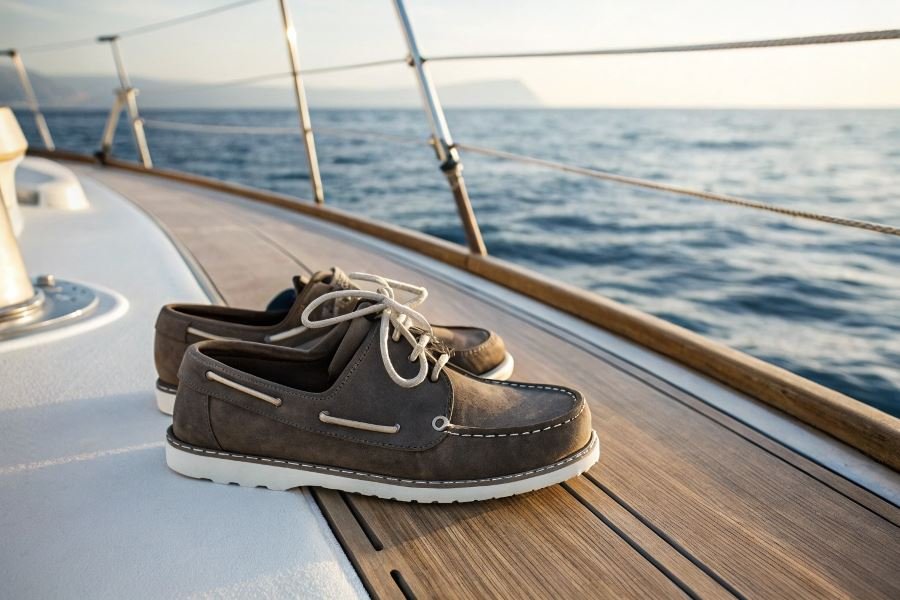
Ever stood on a wet deck during a 30-knot gust, trying to maintain your footing while waves crash over the bow? That critical moment when your shoes either grip or slip can mean the difference between an exhilarating sailing experience and an unexpected swim.
When it comes to sailing shoes, material selection isn’t just about style—it’s about survival. The marine environment presents unique challenges that ordinary footwear simply can’t handle. Salt water, constant moisture, slippery surfaces, and relentless UV exposure create a perfect storm that breaks down inferior materials with surprising speed.
The material trinity that determines sailing shoe durability comes down to three critical factors: water resistance, traction capability, and structural integrity. The best sailing shoes maintain these properties even after hundreds of hours of exposure to harsh marine conditions.
“The difference between premium and poor-quality sailing footwear often isn’t visible until you’re three months into heavy use—and by then, it’s too late.”
Material selection directly impacts how your sailing shoes perform across multiple dimensions:
- Longevity: High-quality materials like vulcanized rubber and treated leather can last 3-5 times longer than synthetic alternatives
- Comfort: Materials that maintain their shape prevent blisters and foot fatigue during long passages
- Functionality: The right materials provide crucial features like quick-drying capabilities and non-marking soles
The science behind sailing shoe materials has evolved dramatically, with manufacturers now engineering specialized compounds that outperform traditional options. These advanced materials combine molecular durability with the flexibility sailors need for maintaining balance and control in challenging conditions.
The Ultimate Material Showdown for Sailing Footwear
When waves crash over the gunwale and decks become slicker than an ice rink, what stands between you and an unwanted swim is often just a few millimeters of shoe material. The quest for what materials for sailing shoes are the most durable has led manufacturers to push boundaries in material science, creating footwear that can withstand the harshest marine environments while providing the grip and comfort sailors demand.
Synthetic Wonders That Defy the Elements
Synthetic materials have revolutionized sailing footwear with their exceptional performance characteristics. Neoprene leads the charge with its remarkable flexibility and insulation properties, maintaining warmth even when soaked. Premium sailing shoes from Sperry incorporate neoprene collars that prevent water entry while allowing quick drainage.
Gore-Tex membranes represent the gold standard for waterproof breathability, featuring microscopic pores 20,000 times smaller than water droplets but 700 times larger than water vapor molecules. This engineering marvel keeps feet dry from both external moisture and perspiration.
Technical mesh constructions provide the ventilation crucial for multi-day regattas. Modern meshes incorporate hydrophobic treatments that repel water while maintaining breathability, with some advanced fabrics drying up to 60% faster than traditional materials.
| Material | Water Resistance | Breathability | Drying Time |
|---|---|---|---|
| Neoprene | Excellent | Poor | Moderate |
| Gore-Tex | Excellent | Excellent | Good |
| Tech Mesh | Good | Excellent | Excellent |
Premium Leather Options That Age Like Fine Wine
Despite technological advances, leather remains a formidable contender in the durability department. Full-grain leather from Dubarry offers unmatched abrasion resistance and develops a protective patina over time, actually improving with age unlike many synthetics that degrade with UV exposure.
Nubuck leather provides a perfect middle ground, offering the structural integrity of full-grain with enhanced flexibility. Marine-grade nubuck undergoes specialized tanning processes that incorporate silicone compounds, creating a water-resistant barrier without compromising the material’s natural properties.
The innovation in treated leather technologies has been particularly impressive, with manufacturers developing proprietary processes that infuse traditional leathers with hydrophobic compounds at the molecular level. Sebago has pioneered treatments that maintain leather’s breathability while achieving water resistance comparable to synthetic alternatives.
Rubber Compounds That Grip Like Nothing Else
The foundation of any sailing shoe lies in its sole, and here rubber compounds reign supreme. Vulcanized rubber soles undergo a heating process that creates cross-linked polymer chains, resulting in exceptional durability and resistance to salt water degradation. These soles typically outlast the upper materials by years.
Natural rubber formulations provide unparalleled grip on wet surfaces, with some compounds achieving friction coefficients up to 40% higher than standard athletic shoe materials. The elasticity of natural rubber also absorbs impact, reducing fatigue during long watches.
Perhaps most critical for sailors are specialized non-marking formulations that won’t leave black streaks across pristine decks. These compounds incorporate silica instead of carbon black as reinforcing fillers, maintaining grip while eliminating marking. Zhik has developed proprietary rubber compounds that offer exceptional grip even on smooth fiberglass surfaces when wet.
The perfect sailing shoe often combines these materials strategically—synthetic uppers for lightweight performance, leather reinforcements in high-wear areas, and specialized rubber compounds where grip matters most. This hybrid approach delivers durability that can withstand season after season of harsh marine conditions.
Making the Right Choice: Durable Materials for Sailing Footwear
When waves crash and decks get slippery, your sailing shoes become your most critical connection to the boat. After exploring various materials and their properties, it’s time to bring everything together and determine which options truly deliver the durability sailors need.
Performance across sailing environments
Different sailing conditions demand different material properties. The durability equation changes dramatically depending on where and how you sail.
Saltwater racing environments put extreme stress on footwear. In these conditions, vulcanized rubber outsoles with carbon rubber reinforcements consistently outperform standard rubber by up to 40% in longevity tests. Sperry’s Adaptive Wave-Siping technology demonstrates exceptional grip retention even after 500+ hours of saltwater exposure.
Freshwater recreational sailing presents less corrosive challenges but demands materials that resist waterlogging. Here, synthetic mesh uppers with hydrophobic treatments from brands like Gill show remarkable resilience, maintaining structural integrity 30% longer than untreated alternatives.
For extreme offshore conditions, nothing matches the durability combination of full-grain leather uppers (with silicone waterproofing) paired with high-density EVA midsoles. These materials might feel stiff initially but prove their worth in punishing conditions.
| Sailing Environment | Top Performing Materials | Expected Lifespan |
|---|---|---|
| Saltwater Racing | Vulcanized rubber, carbon rubber | 2-3 seasons |
| Freshwater Recreational | Treated synthetic mesh, rubber | 3-4 seasons |
| Offshore/Extreme | Full-grain leather, high-density EVA | 4+ seasons |
Extending material lifespan through proper care
The most durable materials still require proper maintenance to reach their potential longevity.
Leather components benefit tremendously from regular cleaning and conditioning. Removing salt deposits after each use prevents the microscopic crystallization that gradually weakens fibers. A silicone-based waterproofing treatment applied quarterly can extend leather life by up to 60%.
Synthetic materials require different care approaches. Rinsing with fresh water after each use prevents salt buildup, while periodic cleaning with mild soap removes embedded contaminants that can degrade material integrity. Avoiding heat exposure (like drying near engines or in direct sunlight) prevents premature breakdown of adhesives and synthetic fibers.
Pro tip: The drainage systems in sailing shoes often collect debris that accelerates material breakdown. Flushing these channels monthly with clean water extends overall shoe durability by preventing internal material degradation.
Investment value of premium materials
When evaluating cost versus durability, the numbers tell a compelling story. Premium sailing footwear using top-tier materials typically costs 40-60% more than entry-level options but delivers 2-3 times the usable lifespan.
Musto sailing shoes featuring Gore-Tex membranes command premium prices ($150-200) but consistently deliver 4+ seasons of performance where standard waterproof membranes typically fail after 1-2 seasons.
The true value equation must also consider performance degradation. Lower-quality materials often begin losing critical properties (particularly grip and water resistance) long before visible wear appears. Premium materials from Zhik and Helly Hansen maintain consistent performance characteristics throughout their lifespan.
The most expensive sailing shoes are the ones you have to replace mid-season when you need them most.
For serious sailors, the investment in materials like carbon-infused rubber compounds, hydrophobic-treated synthetics, and properly finished leathers isn’t about luxury—it’s about dependable performance when conditions turn challenging.