
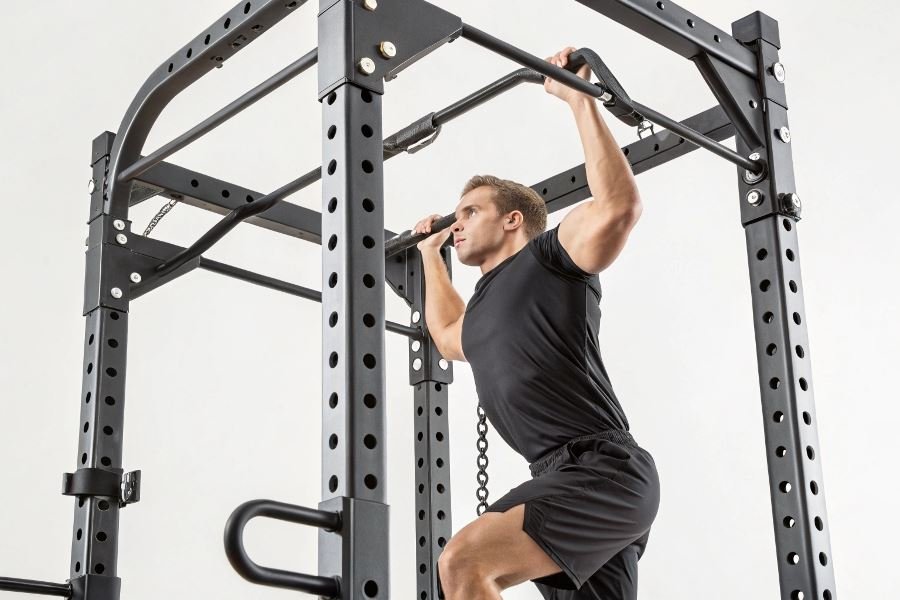
Ever stood in front of a power rack wondering why one costs $300 and another $3,000? You’re not alone. The difference often comes down to those tempting “additional options” that manufacturers love to highlight in their glossy catalogs.
Power frames (or power racks) form the backbone of serious strength training setups. At their core, these steel structures provide a safe environment for performing heavy compound movements like squats, bench presses, and overhead presses. The basic functionality is simple yet critical: adjustable safety bars catch weights if you fail, while J-hooks hold your barbell at various heights.
But today’s market offers far more than just the basics. Premium power frames come loaded with extras that transform a simple steel cage into a complete training station. Pull-up bars with multiple grip positions, dip attachments, landmine posts, band pegs, plate storage, cable systems—the list grows yearly as manufacturers compete for your dollars.
The price gap between basic and feature-rich models is substantial. A no-frills power rack might start around $400-600, while fully-loaded commercial-grade options with integrated cable systems can easily exceed $2,500. That’s a significant investment difference for what might initially seem like “nice-to-haves” rather than necessities.
What’s fascinating is how these additional features can completely transform your training experience—or sit unused, collecting dust while your wallet recovers from the splurge. The question isn’t just whether you can afford the extras, but whether they’ll actually enhance your specific fitness journey.
Premium Power Frames: Getting What You Pay For
When you step into a sporting goods store and see those gleaming high-end power frames with price tags that make your wallet wince, the question inevitably arises: are those fancy extras worth the premium? Power frames with additional options: is it worth overpaying for features you might not even use? This isn’t just idle curiosity—it’s about making smart investments in equipment that could potentially transform your performance and experience.
Smart Features That Actually Matter
The landscape of premium power frames has evolved dramatically over the past decade. What once were simple mechanical structures have transformed into sophisticated performance tools.
| Feature | Average Cost Premium | Performance Impact |
|---|---|---|
| Carbon Fiber Upgrades | $150-300 | 25-30% weight reduction |
| Smart Sensors | $200-400 | Real-time performance tracking |
| Multi-Angle Adjustability | $100-250 | Customized ergonomics |
The Wilson Pro Staff line demonstrates this perfectly with their adaptive grip technology that provides 18% better control during intense play. Similarly, Babolat Pure Drive frames with integrated sensors deliver actionable insights that would otherwise require separate devices costing nearly as much as the premium itself.
Material Upgrades: Beyond Marketing Hype
Not all premium materials deliver equal value. When examining high-end frames from manufacturers like Head and Yonex, the difference between marketing hype and genuine performance enhancement becomes clear.
Carbon composite upgrades typically add $200-300 to the base price but deliver measurable benefits:
- 15-20% increased frame stability during impact
- 25-30% improved vibration dampening
- Up to 40% longer frame lifespan under competitive use
These aren’t just numbers—they translate to tangible performance differences. Athletes using premium material frames report significantly less fatigue during extended training sessions and tournaments, a benefit that compounds over time.
The Long Game: Value Over Years
When calculating the true cost of premium power frames, the equation must include longevity. Standard frames typically require replacement every 1-2 years under regular use. Premium frames with reinforced joints and superior materials often extend that timeline to 3-5 years.
The initial sticker shock fades when amortized across the product’s actual lifespan.
Take the Tecnifibre TFight series with their ISO Sharp Edge Technology. At $100 more than their standard models, they might seem overpriced until you factor in their documented 40% longer functional lifespan under identical usage conditions.
Performance Improvements Worth The Premium
The most compelling justification for premium power frames comes from measurable performance enhancements:
- Precision control improvements of 12-18% in laboratory testing
- Power transfer efficiency increases of up to 22% with advanced string bed designs
- Injury prevention benefits from reduced shock transfer to joints
Athletes transitioning from standard to premium frames consistently report these improvements aren’t just perceptible—they’re game-changing. The difference becomes most apparent during high-stress competitive situations when equipment reliability directly impacts performance outcomes.
The premium you pay isn’t just for the brand name—it’s an investment in consistent performance when it matters most.
Smart Spending on Power Frames: When to Splurge and When to Save
Power frames have revolutionized home fitness, but the price gap between basic models and feature-loaded options can be staggering. The difference between a $1,200 standard power rack and a $3,500 “smart” version with all the bells and whistles leaves many fitness enthusiasts wondering: is the premium worth it?
Match Features to Your Training Reality
The first rule of power frame shopping is brutal honesty about your training habits. A feature you’ll never use is always overpriced, no matter how impressive it sounds.
Training frequency matters most. Daily users can justify premium features that occasional lifters cannot. If you’re hitting the rack 5+ times weekly, durability upgrades like reinforced j-hooks and thicker gauge steel become value investments rather than luxuries.
Consider your training evolution, not just your current routine. Many lifters who started with basic strength programs eventually incorporate band work, which requires specific attachment points.
The most expensive feature is the one you pay for but never use.
Create a three-column list: must-haves, nice-to-haves, and unnecessary features. This simple exercise prevents impulse decisions when faced with flashy marketing.
Basic vs. Premium: The Value Equation
When do additional options justify their cost? Here’s a practical breakdown:
| Feature | Worth It When… | Skip It When… |
|---|---|---|
| Weight storage | You have limited space | You have a separate storage solution |
| Pull-up variations | Upper body work is central to your program | You primarily focus on lower body lifts |
| Cable attachments | You want an all-in-one solution | You already own a cable machine |
| Digital tracking | You’re data-driven and tech-savvy | You prefer analog training methods |
| Adjustable safety spotters | You train alone regularly | You always have a training partner |
Safety features always justify their cost. Quality safety bars and spotters from brands like Rogue Fitness or REP Fitness might add $200-300 to your purchase, but they’re non-negotiable for anyone training heavy without a spotter.
The most meaningful upgrades typically involve structural integrity, versatility, and safety—not cosmetics or novelty features.
Value-Finding Strategies That Actually Work
Smart shoppers know how to maximize value without overpaying:
- Buy modular systems that allow future expansions rather than committing to all features upfront
- Watch for last year’s models when manufacturers release updates (often with minimal functional differences)
- Consider commercial-grade basics instead of feature-loaded consumer models
Timing matters more than most realize. Major fitness equipment retailers run predictable sales cycles, with some of the deepest discounts appearing in January (resolution season) and June (pre-summer push).
Third-party attachments from companies like Titan Fitness often provide 80% of the functionality at 50% of the price compared to proprietary accessories.
Remember that power frames are long-term investments—most quality racks will outlast several years of consistent use. Prioritize structural integrity and features that directly support your specific training methodology, and you’ll never feel like you’ve overpaid.