
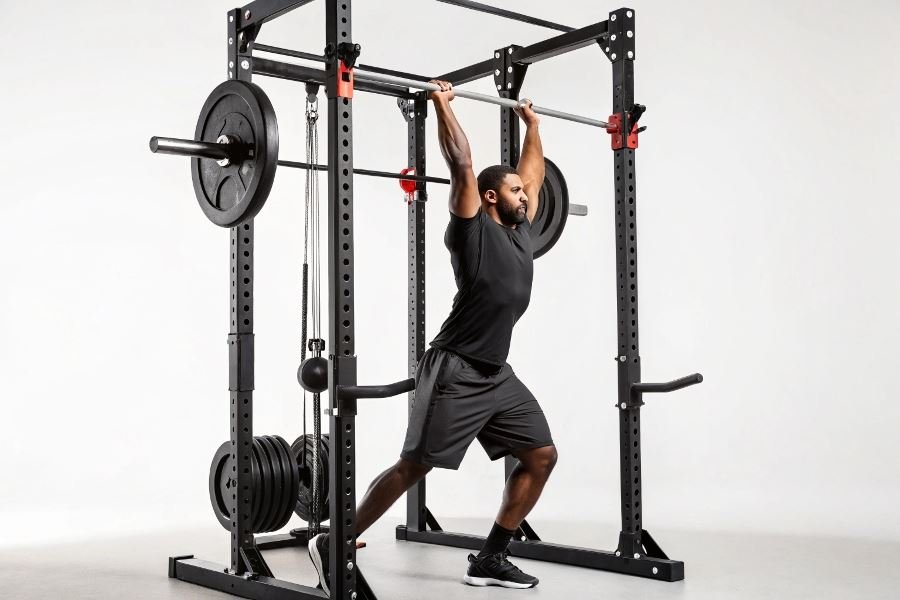
Ever wondered why some gym setups cost as much as a used car while others barely dent your wallet? The answer lies in understanding the fascinating world of power frames—equipment that can transform your strength training journey.
Power frames (or power racks) are the unsung heroes of strength training, providing the essential structure and safety needed for heavy lifts. These steel sentinels stand guard as you push your physical limits, offering support for exercises ranging from squats to bench presses and beyond. But not all frames are created equal, and the price differences can be staggering.
The market for power frames has evolved dramatically since the equipment first gained popularity in the 1960s. Today, it’s segmented into distinct price tiers: budget (200 − 500), mid − range(500-1,200), and premium ($1,200+). Each category represents a different balance of durability, functionality, and features.
What drives these price differences? Several key factors:
Material quality and construction
The difference between 11-gauge and 14-gauge steel might seem minor, but it translates to significant strength variations. Premium frames use thicker steel with precision welding that can handle thousands of pounds.
Weight capacity
Budget frames typically support 500-700 pounds, while premium options can handle 1,500+ pounds—crucial for serious lifters.
Versatility and attachments
Higher-priced frames offer modular designs with multiple attachment points for accessories like dip bars, landmine attachments, and band pegs.
The right power frame isn’t necessarily the most expensive—it’s the one that aligns with your training goals, space constraints, and budget realities.
Power Frames That Deliver: Finding Your Perfect Match
When you’re serious about strength training, the foundation of your home gym matters more than almost anything else. Power frames—those steel sentinels that keep you safe during heavy lifts—come in a striking range of quality, features, and price points. The market offers everything from basic starter racks to commercial-grade behemoths that could survive the apocalypse.
Understanding power frames of different price categories: comparison of characteristics helps you make an investment that aligns with your fitness goals, space constraints, and budget. Let’s break down what you’re really getting as you climb the price ladder, and why sometimes spending more actually saves you money in the long run.
Entry-Level Power Frames (200−500): The Gateway to Gains
Entry-level power frames offer a surprisingly capable introduction to serious lifting without breaking the bank.
Construction fundamentals:
- 14-gauge steel (thinner than premium options)
- Weight capacity typically between 500-800 lbs
- Basic powder coating for rust resistance
- Bolt-together assembly (versus welded components)
Most budget racks use 2″×2″ steel tubing, which provides adequate stability for beginners and intermediate lifters. The Fitness Reality 810XLT exemplifies this category with its 800-lb capacity and surprisingly solid construction despite its sub-$300 price point.
The true test of an entry-level power frame isn’t how it performs on day one—it’s how it holds up after 500 workouts.
Stability features at this price point typically include:
- Basic J-hooks (often plastic-lined)
- Floor bolting options (though many users skip this step)
- Limited hole spacing (typically 3″ apart)
Mid-Range Power Frames (500−1,200): Serious Business
Mid-range options represent the sweet spot for most dedicated home gym enthusiasts, offering substantial upgrades in durability and functionality.
Key improvements include:
- 11-14 gauge steel construction
- 2″×3″ or 3″×3″ uprights
- Weight capacity of 1,000-1,500 lbs
- Westside hole spacing (1″ apart in the bench press zone)
- Multiple attachment compatibility
The versatility factor jumps dramatically in this category. Frames like the Rep Fitness PR-4000 offer modular designs that grow with your needs, supporting everything from dip attachments to plate storage to cable systems.
| Feature | Entry-Level | Mid-Range | Premium |
|---|---|---|---|
| Steel Gauge | 14 | 11-14 | 7-11 |
| Weight Capacity | 500-800 lbs | 1,000-1,500 lbs | 1,500+ lbs |
| Upright Size | 2″×2″ | 2″×3″ or 3″×3″ | 3″×3″ or larger |
| Hole Spacing | 3″ | 1″-2″ | 1″ or Westside |
| Warranty | 1-2 years | 5-10 years | Lifetime |
Premium Power Frames ($1,200+): Commercial-Grade Excellence
When you step into premium territory, you’re investing in equipment that rivals or exceeds what you’ll find in high-end commercial gyms.
Elite-level features:
- 7-11 gauge steel construction
- 3″×3″ uprights (minimum)
- Weight capacities exceeding 1,500 lbs
- Precision manufacturing tolerances
- Lifetime warranties on frames
The Rogue Monster Series represents this category’s gold standard, with 3″×3″ 11-gauge steel uprights, 1″ hardware, and virtually unlimited customization options. These frames aren’t just equipment—they’re heirlooms that can be passed down to the next generation of lifters.
Premium racks also offer advanced features rarely found in lower price brackets:
- Laser-cut numbering on uprights
- Custom color options
- Integrated band pegs for accommodating resistance
- Specialized bar storage solutions
- Integrated pull-up systems with multiple grip options
The warranty consideration becomes particularly compelling at this price point. Many premium manufacturers offer lifetime guarantees on frames—a testament to their confidence in the product’s durability and a significant value proposition for serious lifters.
Making the Smart Power Frame Investment
Value champions across price tiers
When it comes to power frames, your wallet doesn’t always dictate performance. In the entry-level category (200 − 500), the[RogueEcho](https : //www.roguefitness.com)deliversremarkablestabilityanda700 − poundweightcapacitythatpuncheswellaboveitspricepoint.Themid − rangemarket(500-1200) sees the REP PR-4000 dominating with its modular design and commercial-grade steel—features typically reserved for frames costing twice as much.
For those ready to invest in premium options ($1200+), the Sorinex XL offers unmatched customization and lifetime durability that makes its higher price tag a long-term bargain. What’s fascinating is how the price-to-performance ratio has improved across all categories since 2020, with entry-level frames now offering features that were premium-only just five years ago.
The best value isn’t always the cheapest option—it’s the frame that delivers the most capability per dollar for YOUR specific training needs.
Matching frames to training personalities
Your training style should dictate your frame choice more than any spec sheet. Power athletes focusing on explosive movements need frames with superior stability ratings and minimal rack sway—the Titan X-3 excels here with its 3×3-inch 11-gauge steel construction.
CrossFit enthusiasts require versatility and quick configuration changes, making the PRx Profile with its space-saving fold-away design and multiple attachment points ideal. Meanwhile, bodybuilders prioritizing isolation work benefit from frames with integrated cable systems like the Force USA G20.
Consider your training evolution too. A beginner might start with basic strength movements but could expand to Olympic lifts within a year—making attachment compatibility crucial for future-proofing your investment.
The long game of power frame ownership
When comparing frames across price categories, think beyond the initial purchase:
| Consideration | Budget Frames | Mid-Range | Premium |
|---|---|---|---|
| Expected Lifespan | 5-7 years | 10-15 years | 15+ years |
| Warranty | 1-3 years | 5-10 years | Lifetime |
| Resale Value | 30-40% | 50-60% | 60-70% |
| Upgrade Costs | High (often requires replacement) | Moderate | Minimal |
The total cost of ownership often reveals surprising truths. That $400 entry-level frame might seem economical now, but factor in potential replacement costs and limited expandability, and suddenly the $800 mid-range option becomes more financially sound over a 10-year period.
Premium frames from manufacturers like Eleiko command higher prices initially but typically include superior warranties, better customer service, and robust resale values. Many premium frame owners report their equipment maintaining structural integrity for 15+ years of heavy use—effectively reducing the annual cost of ownership below that of budget options.
Smart buyers look beyond the price tag to consider training evolution, space constraints, and long-term value. The best power frame isn’t necessarily the most expensive one, but rather the one that aligns perfectly with your training trajectory while offering the right balance of immediate affordability and lasting performance.