
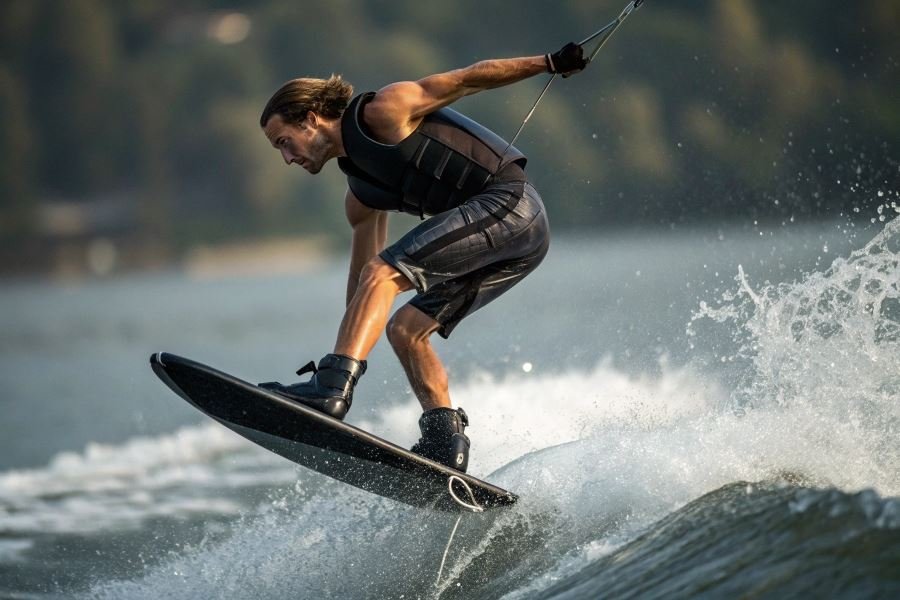
Ever wonder why the skater in the park seems to float effortlessly while you struggle to keep your board straight? The secret isn’t just skill—it’s in the board itself.
Skateboarding’s journey from homemade wooden planks with roller skate wheels in the 1950s to today’s highly specialized equipment is a testament to human innovation. When the first commercial skateboards hit the market in 1959, riders were essentially “sidewalk surfing” on flat, narrow decks. The urethane wheel revolution of the 1970s, pioneered by Frank Nasworthy, transformed what was possible on four wheels, allowing for smoother rides and more technical maneuvers.
How design shapes your ride
Your skateboard isn’t just transportation—it’s a precision tool designed for specific purposes. The relationship between deck shape, width, concave, and wheelbase directly influences how the board responds beneath your feet. A wider deck provides stability for vert ramps, while a narrower profile delivers the quick response needed for technical street tricks.
Anatomy of difference
Three key components create the DNA of any skateboard type:
Deck geometry – From the popsicle-stick symmetry of street decks to the directional shape of cruisers, the deck’s profile determines its purpose.
Truck configuration – The metal axles that connect wheels to deck vary in height and turning radius, affecting stability versus maneuverability.
Wheel characteristics – Diameter, durometer (hardness), and contact patch width dramatically change how your board interacts with surfaces. Smaller, harder wheels excel for technical tricks, while larger, softer options provide smooth cruising over rough terrain.
Understanding these differences isn’t just technical knowledge—it’s the gateway to finding the perfect board for your personal skating journey.
The Ultimate Skateboard Guide: Types That Define the Culture
When you step into a skate shop, the wall of decks can be overwhelming. Each skateboard type serves a distinct purpose, shaped by decades of innovation and rider feedback. What types of skateboards are there and their differences often comes down to subtle design elements that dramatically affect performance. Let’s break down the major categories that have defined skateboarding since its California origins.
Street Skateboards: Urban Playground Masters
Street skateboards are the versatile workhorses of the skateboarding world. Typically measuring 7.5-8.5 inches wide with a pronounced concave and symmetrical popsicle shape, these boards are engineered for technical tricks and urban exploration.
Key design features:
- Medium-steep kicktails on both ends
- Lightweight construction (typically 7-ply maple)
- Smaller wheels (49-54mm) with higher durometer (99a+)
- Low-profile trucks for stability during flip tricks
Street decks excel at technical maneuvers like kickflips, heelflips, and rail slides. Their responsive feel makes them perfect for navigating urban environments where adaptability is crucial. The shorter wheelbase (13-15 inches) provides the quick turning response needed for technical street skating.
Longboards: The Distance Specialists
Longboards represent skateboarding’s cruising and transportation heritage, with boards typically ranging from 32-60 inches in length.
Cruiser Longboards
Built for comfortable transportation, cruisers feature:
- Flexible decks with mild concave
- Softer wheels (78a-85a) for smooth rides over rough terrain
- Wider trucks for stability at moderate speeds
- Kicktail options for urban maneuverability
Downhill Longboards
Engineered for speed demons seeking the thrill of gravity:
- Stiff decks with directional shapes
- Drop-through or drop-down mounting for stability
- Precision trucks that minimize speed wobbles
- Large wheels (70-75mm) with square lips for maximum grip
Dancing Longboards
The artistic expression platform of the longboard world:
- Extra-long decks (42-60 inches)
- Symmetrical shape with minimal flex
- Flat profile for consistent foot placement
- Moderate concave for comfortable cross-stepping
| Longboard Type | Length | Flex | Ideal Use |
|---|---|---|---|
| Cruiser | 32-38″ | Medium-High | Transportation, Carving |
| Downhill | 36-42″ | Minimal | Speed, Technical Descents |
| Dancing | 42-60″ | Low-Medium | Freestyle, Cross-stepping |
Transition/Vert Skateboards: Air Masters
Transition skateboards are purpose-built for vertical terrain like bowls, pools, and halfpipes where air time and flow reign supreme.
Bowl and ramp-specific elements:
- Wider decks (8.25-9.5 inches) for stability in transition
- Steeper kicktails for locked-in stalls and pivots
- Longer wheelbase for high-speed stability
- Medium-soft wheels (95a-99a) for grip on slick surfaces
The performance benefits of transition boards become evident when pumping through corners or launching into the air. Their wider platform provides confidence during aerial maneuvers, while the specialized shape helps riders lock into stalls on coping. Many transition specialists prefer boards with more dramatic concave to help with foot placement when riding fakie or switching stance mid-line.
What separates a great transition board from an average one often comes down to subtle details: the angle of the kicktail, the distribution of concave, and the overall width-to-length ratio that provides that perfect balance of stability and responsiveness when carving at speed.
Each skateboard type represents not just equipment differences, but distinct approaches to the art of skateboarding itself—whether you’re grinding street rails, bombing hills, or catching air in the deep end.
Finding Your Perfect Ride: Matching Skateboard Types to Your Style
The right board for your skill level
Choosing the perfect skateboard isn’t just about picking the coolest design—it’s about finding the right match for your abilities and ambitions. Beginners should gravitate toward traditional street skateboards with wider decks (7.75-8.25 inches) that offer greater stability and forgiveness. The moderate concave and standard popsicle shape create an ideal learning platform.
For those just starting out, a complete setup from brands like Element or Powell-Peralta provides everything needed without overwhelming you with component choices. These boards typically feature softer wheels (78A-87A durometer) that absorb more shock on rough surfaces—perfect for building confidence.
Intermediate riders ready to specialize should consider their primary riding environment:
- Park and transition riders benefit from wider decks (8.25-8.75 inches) with steeper concaves
- Technical street skaters often prefer narrower boards (7.5-8.0 inches) for easier flip tricks
- Cruisers and commuters thrive with directional shapes and softer wheels
Advanced skaters typically know exactly what they want—custom setups with specific truck heights, wheel hardness, and bearing precision tailored to their evolved style.
Budget breakdown across skateboard types
Your skateboard investment should align with both your commitment level and intended use. Here’s what to expect across the spectrum:
| Skateboard Type | Entry Level | Mid-Range | Professional |
|---|---|---|---|
| Street/Trick | $70-100 | $120-180 | $200-300+ |
| Cruiser | $80-120 | $130-200 | $220-350+ |
| Longboard | $90-150 | $160-250 | $300-500+ |
| Electric | $200-350 | $400-700 | $800-1500+ |
Quality matters more than you think. While budget completes might seem appealing, they often feature inferior components that affect performance and durability. Mid-range options typically represent the sweet spot of value, offering quality components that won’t need immediate upgrading.
Remember that replacement parts add up quickly—wheels, bearings, and decks all wear out at different rates depending on your riding style and frequency.
Smart starter selections for new skaters
If you’re new to skateboarding, these recommendations will help you navigate the overwhelming options:
-
For versatile learning: Start with a standard street skateboard (7.75-8.25 inches) with medium-soft wheels (87A-92A). Brands like Santa Cruz and Globe offer excellent complete setups that balance quality and affordability.
-
For comfortable cruising: Consider a cruiser board with a wider deck and softer wheels if you’re primarily interested in transportation. Landyachtz Dinghy or Sector 9 cruisers provide stability and smooth rides.
-
For gradual progression: Mini longboards or hybrid shapes offer a middle ground—stable enough for beginners but versatile enough to explore different styles as you improve.
Don’t overlook protection gear in your budget. A quality helmet from Pro-Tec or Triple Eight is non-negotiable, while knee and elbow pads provide confidence-boosting protection during inevitable learning falls.
The perfect skateboard creates that magical connection between rider and board—where movement becomes intuitive and progress accelerates. Take time to consider your goals, be realistic about your budget, and remember that the right board isn’t always the most expensive one, but the one that matches your unique journey into skateboarding.