
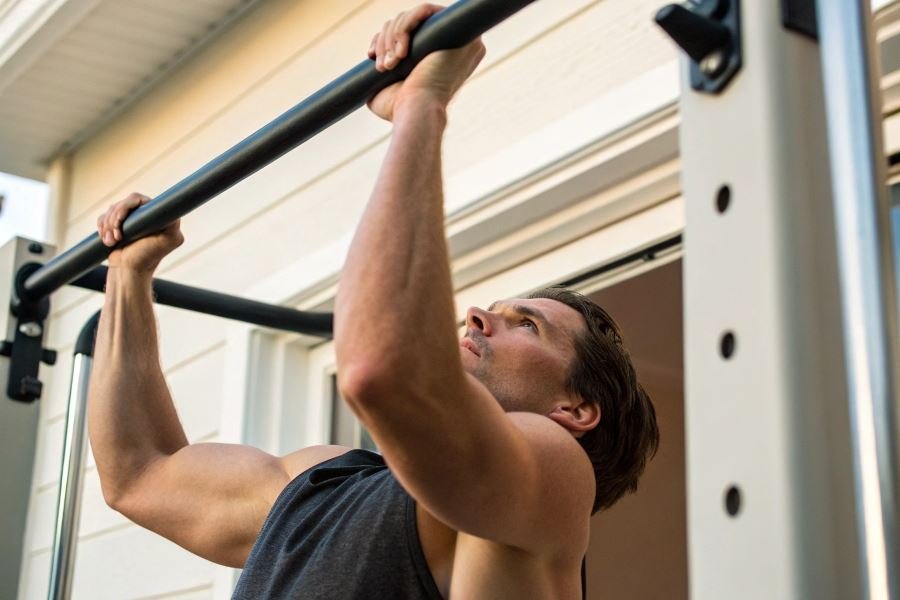
Ever watched someone effortlessly knock out a set of pull-ups and thought, “I wish I could do that”? You’re not alone. Pull-ups represent that perfect blend of simplicity and challenge that makes fitness so rewarding—when you finally nail your first rep, it feels like unlocking a fitness superpower.
The humble pull-up bar might be the most underrated piece of equipment in fitness. This simple horizontal bar delivers tremendous bang for your buck, targeting multiple muscle groups simultaneously while requiring minimal space. Research shows that pull-up exercises engage your lats, biceps, shoulders, and core in ways that few other movements can match, creating that coveted V-shaped torso many fitness enthusiasts pursue.
For beginners, however, the journey to pull-up mastery comes with hurdles. The most common challenge? Simply not having enough upper body strength to complete a single rep. This is perfectly normal! Even seasoned athletes remember struggling with their first pull-up. Other beginners battle with grip strength issues, incorrect form, or simply not knowing how to progress systematically.
Finding your perfect pull-up partner
The market offers several pull-up bar options, each with distinct advantages:
-
Doorway pull-up bars: Perfect for apartments, these leverage-based bars require no drilling and can be removed easily. They’re affordable ($20-50) but have lower weight capacities.
-
Wall/ceiling mounted bars: These permanent fixtures offer superior stability and typically support 300+ pounds. Installation requires some DIY skills but provides peace of mind during intense workouts.
-
Free-standing pull-up stations: Ideal if drilling holes isn’t an option, these standalone units often include dip bars and other attachments for versatility.
Remember, the best pull-up bar isn’t necessarily the most expensive—it’s the one you’ll actually use consistently on your strength-building journey.
Mastering the Bar: Beginner Pull-Up Exercises and Equipment Guide
Let’s face it—pull-ups are the ultimate upper body strength benchmark. They’re simple in concept but challenging in execution, especially when you’re just starting out. The good news? With the right approach and equipment, you can transform from barely hanging on to cranking out multiple reps.
For newcomers looking to build their strength foundation, exercises on the pull-up bar for beginners: which model to choose becomes a critical first question. The journey starts with selecting appropriate equipment that matches your space constraints and fitness goals, followed by mastering progressive exercises that build the necessary muscle groups.
Three Essential Starter Exercises
Dead Hangs – Your gateway to pull-up mastery begins here. Simply grip the bar with hands shoulder-width apart and hang with arms fully extended.
Why it works: This fundamental exercise builds grip strength, shoulder stability, and teaches proper body positioning—all without requiring a single pull.
Start with 20-30 second holds and gradually increase duration as your grip strength improves. Focus on keeping your shoulders engaged rather than completely relaxed.
Negative Pull-Ups – The strength-building secret weapon that many beginners overlook.
- Use a step or jump to position yourself at the top of the pull-up position
- Lower yourself as slowly as possible (aim for 5+ seconds)
- Repeat for 3-5 reps, focusing on controlled descent
Progress indicator: When you can perform 8-10 slow negatives with good form, you’re getting close to your first unassisted pull-up.
Assisted Pull-Ups – Bridge the gap between dead hangs and full pull-ups with these variations:
| Assistance Method | Best For | Considerations |
|---|---|---|
| Resistance Bands | Home users | Portable, adjustable resistance, affordable |
| Partner Assistance | Gym settings | Requires spotter, inconsistent resistance |
| Assisted Pull-Up Machine | Commercial gyms | Consistent support, accurate tracking |
Choosing Your First Pull-Up Bar
When selecting equipment, consider these critical factors:
Mounting Style and Space Requirements
-
Doorway Bars: Perfect for apartments and rentals. Look for models with secure locking mechanisms like the Iron Gym Pull-Up Bar that can support at least 300 pounds.
-
Wall-Mounted Bars: Offer superior stability for more advanced training. Require permanent installation but provide better clearance for full range of motion.
-
Free-Standing Units: Ideal when drilling isn’t an option. Premium options like the Rogue Fitness P-3 Pull-Up System offer stability without wall damage.
Safety Considerations
- Weight Capacity: Never compromise here—choose bars rated for at least 1.5x your body weight
- Installation Quality: Follow manufacturer guidelines precisely
- Clearance Space: Ensure sufficient head room and landing area
Grip Options
The best beginner bars offer multiple grip positions to prevent overuse injuries and target different muscle groups:
- Standard overhand grip (pronated)
- Underhand grip (supinated) for bicep emphasis
- Neutral grip (palms facing each other) for shoulder comfort
Remember that consistency trumps intensity when starting out. Three 10-minute sessions per week will yield better results than a single marathon workout that leaves you too sore to train again for days.
Pull-Up Bar Models That Grow With You: The Ultimate Beginner’s Guide
Doorway Pull-Up Bars: Your Gateway to Upper Body Strength
Doorway pull-up bars represent the perfect entry point for beginners. These compact fitness tools hook onto your door frame and provide immediate access to upper body workouts without permanent installation.
Advantages that make doorway bars shine:
- Installation in seconds with zero tools required
- Typically priced between 25−60
- Portable enough to take anywhere
- Perfect for apartments and rental properties
The Perfect Fitness Multi-Gym Pro stands out with its padded door frame guards and multiple grip positions that allow for wide, neutral, and close-grip pull-ups. For beginners, these grip variations are crucial for developing balanced strength.
However, doorway bars come with limitations. Most support weights up to 300 pounds, and taller individuals may find their feet touch the ground during exercises. The movement range is also somewhat restricted by the doorframe.
Wall/Ceiling Mounted Bars: The Stability Champions
When you’re ready to progress beyond doorway models, wall-mounted pull-up bars deliver rock-solid stability that transforms your workout experience.
Wall-mounted bars eliminate the wobble factor that can undermine confidence during those critical first pull-ups.
Key benefits include:
- Exceptional stability during dynamic movements
- Greater clearance for full range of motion
- Higher weight capacity (typically 400+ pounds)
- Multiple grip positions for exercise variety
The Rogue Fitness P-3 Pull-Up System offers commercial-grade construction with a 24-inch wall clearance that allows for muscle-ups and other advanced movements as you progress. Its powder-coated finish ensures years of sweat-resistant performance.
These mounted options expand your exercise repertoire significantly, allowing for:
- Leg raises for core development
- Muscle-ups (advanced progression)
- Towel pull-ups for grip strength
- Partner-assisted variations
Free-Standing Pull-Up Stations: Your Complete Upper Body Gym
For those with available floor space, free-standing pull-up stations represent the ultimate investment in your upper body development.
The space-to-benefit ratio is impressive:
- Footprint typically 4’×4’ to 5’×7’
- No wall damage or permanent installation
- Multiple workout stations in one unit
- Often includes dip bars and push-up handles
The Stamina Power Tower combines pull-up bars, dip station, push-up bars, and ab training options in one comprehensive unit for under $200, making it an exceptional value for beginners building a home gym.
Your 4-Week Progressive Pull-Up Plan
Regardless of which model you choose, this progressive plan will take you from zero to your first full pull-up:
Week 1: Foundation
- Hanging holds: 3 sets of 20-30 seconds
- Negative pull-ups: 3 sets of 3-5 reps (jump up, lower slowly)
- Inverted rows: 3 sets of 8-10 reps
Week 2: Building Strength
- Scapular pulls: 3 sets of 8 reps
- Band-assisted pull-ups: 3 sets of 5 reps
- Negative pull-ups: 3 sets of 5-7 reps
Week 3: Progression
- Band-assisted pull-ups: 3 sets of 8 reps (lighter band)
- Partial range pull-ups: 3 sets of 3-5 reps
- Australian pull-ups: 3 sets of 10 reps
Week 4: Achievement
- Partial pull-ups: 3 sets of 5 reps
- Full pull-up attempts: 5 sets of 1-2 reps
- Active hangs with pull attempts: 3 sets of 30 seconds
Train consistently three times weekly with rest days between, and you’ll be amazed at how quickly your body adapts to these challenging but rewarding movements.