
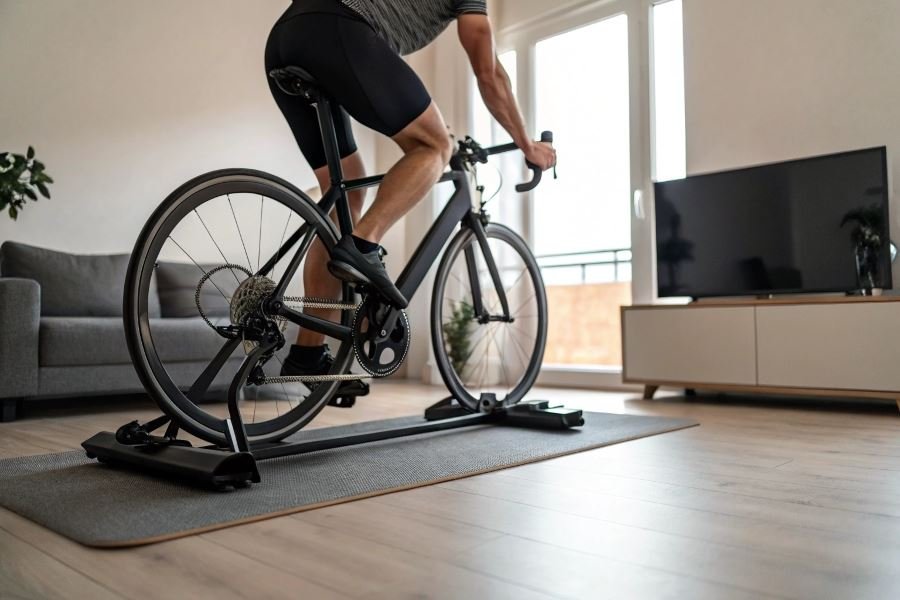
Ever been that neighbor who gets the angry text at 6 AM about your “earthquake-generating” workout? Indoor cycling in apartments creates a unique challenge: maintaining fitness without becoming the building’s most hated resident.
The quest for quieter indoor cycling has revolutionized how manufacturers design bike trainers specifically for apartment dwellers. These aren’t just standard trainers with a “quiet” label slapped on—they’re engineering marvels designed from the ground up to minimize noise while maximizing performance.
The apartment noise dilemma
Sound travels mercilessly through shared walls and floors. What feels like a reasonable workout noise to you can sound like a construction site to your downstairs neighbor. Quiet bike trainers address this through specialized dampening systems that absorb vibrations before they transfer to your floor and into the building’s structure.
Engineering the silence
What separates whisper-quiet trainers from their noisy counterparts? Three critical factors:
- Drive mechanism: Direct-drive trainers eliminate the tire-on-roller contact that creates the characteristic “whooshing” sound
- Internal components: Premium magnetic resistance systems operate with significantly less mechanical noise than fluid or wind-based alternatives
- Vibration isolation: Advanced models feature reinforced frames and specialized feet that prevent vibrations from transferring to your floor
The quietest trainers combine these elements with smart design choices like enclosed flywheels and precision-balanced components that eliminate the rattles and hums that would otherwise announce your 5 AM training session to everyone within earshot.
Top 3 Quietest Bike Trainers for Apartment Workouts
Finding the perfect indoor cycling solution when you share walls with neighbors can be challenging. The quietest bike trainers for apartments have revolutionized how urban cyclists maintain fitness without disturbing the peace. Let’s dive into the three types that deliver whisper-quiet performance while still offering professional-grade training experiences.
Direct-Drive Champions of Silence
Direct-drive trainers represent the gold standard for noise reduction in apartment settings. By removing the rear wheel and connecting your bike directly to the trainer, these models eliminate the tire-on-roller friction that creates most of the noise in traditional setups.
The Wahoo KICKR stands out with its remarkable 59-decibel operation (comparable to normal conversation) even during sprint intervals. Its belt-driven flywheel uses advanced materials to dampen vibrations before they transfer to your floor.
The Tacx NEO 2T takes silence even further with its electromagnetic resistance system that operates without physical contact between components. This engineering marvel creates virtually silent operation with the added benefit of simulating road textures like cobblestones and gravel.
| Trainer | Noise Level | Power Accuracy | Max Resistance |
|---|---|---|---|
| Wahoo KICKR | 59-63 dB | ±1% | 2,200 watts |
| Tacx NEO 2T | 55-60 dB | ±1% | 2,200 watts |
| Elite Direto XR | 62-65 dB | ±1.5% | 2,300 watts |
Fluid-Based Whisper Workers
Fluid trainers offer an excellent balance of affordability and noise reduction, making them perfect for apartment dwellers on a budget. These trainers use liquid-filled chambers to create progressive resistance that feels remarkably road-like.
The Saris Fluid2 trainer has perfected the art of quiet fluid resistance. Its precision-balanced flywheel creates a smooth pedaling experience while its self-cooling mechanism prevents the resistance from fading during longer training sessions. The specially designed roller minimizes tire noise—the primary sound source in fluid trainers.
For those seeking even greater noise reduction, the Kurt Kinetic Road Machine features a larger fluid chamber and patented magnetic coupling system that eliminates leaks while providing consistent, whisper-quiet resistance up to 1,800 watts. Its wide base prevents rocking, further reducing noise transfer to floors.
Smart Trainers with Connectivity Brilliance
Smart trainers combine silent operation with interactive training features that transform apartment workouts from mundane to addictive.
The Wahoo KICKR CORE delivers the silence of its premium sibling at a more accessible price point. With ANT+ and Bluetooth connectivity, it pairs seamlessly with training apps like Zwift and TrainerRoad. Its electromagnetic resistance adjusts automatically to match virtual terrain, all while maintaining library-appropriate noise levels.
For the tech-obsessed cyclist, the Tacx Flux 2 offers silent smart training with impressive power measurement accuracy (±2.5%). Its robust construction reduces flex during intense efforts, preventing the annoying creaks and groans that can disturb neighbors during early morning or late night sessions.
Pro tip: Regardless of which quiet trainer you choose, placing a dense rubber mat underneath creates an additional sound barrier that prevents vibrations from transferring to your floor and neighbors’ ceiling—the ultimate courtesy for apartment living while maintaining your training schedule.
Silence Your Spin: Maximizing Apartment Trainer Quietness
Noise-reducing accessories that actually work
Let’s face it—nothing kills your indoor training motivation faster than angry neighbors banging on your wall. The good news? With the right accessories, you can dramatically reduce the decibels your setup produces.
A dedicated trainer mat isn’t just for catching sweat—it’s your first line of defense against vibration. The Wahoo Fitness Trainer Mat absorbs up to 30% more vibration than standard yoga mats, while the thicker Saris Training Mat provides exceptional density for high-intensity sessions.
The difference between a proper trainer mat and a regular exercise mat is like comparing noise-canceling headphones to dollar store earbuds—technically similar, functionally worlds apart.
For direct-drive trainers, consider rubber anti-vibration pads under each contact point. These industrial-grade solutions cost under $20 but can reduce noise transmission through floors by up to 40%.
Perhaps the most overlooked noise reducer? Your tires. If you’re using a wheel-on trainer, swap to a specialized trainer tire like the Continental Hometrainer which runs quieter and cooler than road tires.
Strategic placement in apartment spaces
Where you position your setup matters almost as much as what you put under it.
Corner placement leverages two walls to help absorb sound rather than letting it travel freely through your apartment. However, avoid placing directly against walls—maintain at least 8-12 inches of clearance to prevent vibrations from transferring directly.
Consider your floor structure. Wooden floors amplify vibrations, while concrete subfloors naturally dampen them. If you’re on wood, position your trainer over load-bearing beams where possible for maximum stability.
| Floor Type | Noise Level | Best Solution |
|---|---|---|
| Hardwood | High | Thick trainer mat + corner placement |
| Carpet | Medium | Hard surface under mat to prevent sinking |
| Concrete | Low | Basic mat sufficient |
Time-of-day placement isn’t physical but strategic—training during your building’s natural active hours (typically 8am-8pm) means your noise competes with normal activity rather than standing out during quiet hours.
Maintenance for whisper-quiet operation
A well-maintained trainer is a quiet trainer. Period.
Weekly belt checks on belt-driven trainers prevent the subtle squeaking that develops over time. Apply a small amount of appropriate lubricant (check your manual—using the wrong type can damage components) to keep everything running smoothly.
For direct-drive trainers, regularly check and tighten the cassette lockring—a slightly loose cassette creates a barely perceptible tick that gradually worsens with each session.
Clean your drivetrain religiously. Indoor training produces more concentrated sweat in one area, leading to faster corrosion. A grimy chain doesn’t just wear faster—it’s significantly louder. Wipe down after every session and deep clean weekly.
Pro tip: Keep a maintenance log. Trainers that receive consistent care typically operate 7-9 decibels quieter than neglected units—the difference between normal conversation and city traffic.
Finally, check all contact points monthly. Feet, adapters, and quick-release skewers can gradually loosen, introducing wobble and noise. Five minutes of preventative tightening saves hours of troubleshooting mysterious sounds later.
With these strategic approaches to accessories, placement, and maintenance, you’ll keep the peace with neighbors while crushing your indoor training goals—no matter how compact your living space.