
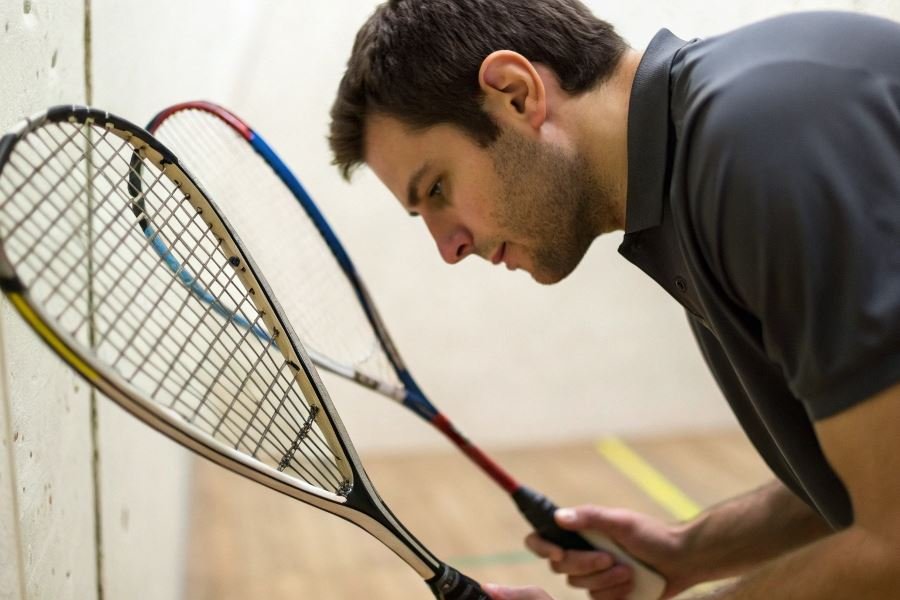
Ever noticed how the pros seem to have their rackets practically glued to their hands during those lightning-fast exchanges? That’s no accident. The secret weapon hiding in plain sight is a properly wrapped grip that transforms good players into great ones.
The difference between victory and defeat in squash often comes down to milliseconds and millimeters. When your racket feels like a natural extension of your arm, you gain precious reaction time and precision control. A well-wrapped grip isn’t just about comfort—it’s about unlocking your full potential on the court.
The grip arsenal you’ll need:
- Replacement grip tape (synthetic or natural)
- Overgrip (for customized feel and sweat absorption)
- Scissors or cutting tool
- Finishing tape
- Optional: grip-enhancing solutions
Your grip deserves regular attention. The general rule? Replace your base grip every 15-20 playing hours, and overgrips even more frequently if you’re playing intensively. Visual indicators don’t lie—when you see discoloration, feel slippage, or notice uneven texture, it’s time for a refresh.
“The grip is your only physical connection to the racket. Neglect it, and you’re essentially playing with one hand tied behind your back.”
Many players underestimate how dramatically a fresh, properly wrapped grip can transform their game. It’s not just equipment maintenance—it’s performance enhancement that costs pennies compared to a new racket but delivers immediate results.
Master the Wrap: Revitalizing Your Squash Racket Grip
Nothing kills your game faster than a slippery, worn-out grip on your squash racket. That satisfying connection between hand and racket is the foundation of every killer shot you’ll make on the court. Learning how to properly wrap the grip on a squash racket isn’t just maintenance—it’s performance enhancement that can dramatically improve your control and confidence during intense rallies.
The process of replacing your squash racket grip might seem straightforward, but the details make all the difference. Professional players understand that grip replacement is an art form that directly impacts their performance. With proper technique and the right materials, you can transform your racket’s feel and responsiveness in under 10 minutes.
Strip Away the Old
Before applying fresh tape, you’ll need to remove the existing grip completely. Start at the butt end of the handle and carefully peel away the old material. Use a small knife or scissors if the grip is particularly stubborn, but be cautious not to scratch the handle underneath. Once removed, clean the handle with rubbing alcohol to eliminate any residual adhesive or sweat buildup—this creates the perfect foundation for your new grip.
Pro tip: Take a photo of your original grip’s pattern before removing it. This reference can be invaluable for maintaining your preferred overlap width and tension.
Position for Success
The starting point makes or breaks your grip job. Begin at the butt end of the racket, with the tapered end of the grip tape positioned so it aligns with the edge of the handle. Leave about half an inch of overhang at the bottom, which you’ll fold over to create a clean finish.
The initial wrap sets the foundation for everything that follows, so take your time here. A rushed start leads to an uneven grip that will frustrate you for weeks.
The Wrapping Technique
Maintaining consistent tension is where amateurs and pros diverge:
- Hold the racket with the head pointing down
- Pull the grip with firm, even tension (about 5-10% stretch)
- Wrap at a 45-degree angle, creating a spiral up the handle
- Maintain consistent overlap between 1/4 and 1/3 of the grip width
| Overlap Width | Feel | Durability | Recommended For |
|---|---|---|---|
| 1/4 inch | Thinner, more feedback | Lower | Advanced players |
| 1/3 inch | Cushioned, shock-absorbing | Higher | Recreational players |
As you wrap, periodically check that the grip feels even by running your hand along the handle. Any bumps or inconsistencies will be magnified during play, potentially causing blisters or reduced control.
Secure the Finish
The final few inches require special attention. As you approach the top of the handle, maintain the same tension but begin to angle the grip more steeply to create a clean endpoint. Once you’ve reached your desired length, cut the excess material at a 45-degree angle.
Apply the finishing tape (typically included with new grips) by wrapping it tightly around the top edge of your grip. This prevents unraveling during those intense matches where every point matters.
Finishing touch: Some players add a small piece of electrical tape under the finishing tape for extra security during tournament play.
With these techniques mastered, you’ll have a professional-quality grip that enhances your performance and lasts through your most demanding matches.
Grip Mastery: Advanced Techniques for Squash Racket Wrapping
Let’s dive into the world of advanced grip techniques that can transform your squash game! The difference between a good player and a great one often comes down to the details – and your racket grip is one of those game-changing elements that deserves serious attention.
Customizing Your Grip for Performance
The beauty of a custom-wrapped grip lies in its adaptability to your unique playing style. Players with a powerful forehand might benefit from a slightly thicker grip on the bottom half of the handle, while those with a finesse game often prefer a thinner, more responsive feel.
Thickness variations: Create a tapered effect by using additional layers of base tape where you need more cushioning. Pro players often add an extra half-wrap at the bottom third of the handle for enhanced control during power shots.
The sweet spot for most competitive players is between 3.8-4.2mm total grip thickness, but this should be adjusted based on hand size and playing style.
For texture customization, consider these professional options:
| Grip Texture | Best For | Notable Characteristics |
|---|---|---|
| Tacky | Control players | Excellent feedback, minimal slippage |
| Perforated | Power hitters | Superior moisture absorption, cooling |
| Cushioned | All-rounders | Vibration dampening, comfort during long matches |
The grip is your only physical connection to the racket – customize it with the same care you’d select your racket frame.
Troubleshooting Common Grip Wrapping Issues
Even experienced players encounter wrapping challenges. Here’s how to solve the most frustrating ones:
Bubbling and wrinkling: This typically occurs when tension isn’t maintained evenly. The fix? Unwrap to the problem area, increase tension by about 15%, and maintain that consistent pull throughout the remainder of the wrap.
Slipping grip: If your freshly wrapped grip rotates during play, you’ve likely missed the critical first anchor wrap. Always start with a full 360° overlap at the butt cap, securing with finishing tape before continuing upward.
Uneven overlap: The professional standard is a 50-75% overlap between layers. Use the edge patterns on most overgrips as guides – they’re designed specifically for this purpose.
For players with sweaty hands, consider pre-stretching your overgrip about 5-10% before application. This creates microscopic expansion room for when the grip absorbs moisture during play.
Extending Your Grip’s Lifespan
A properly maintained grip can last 3-4 times longer than a neglected one. Here’s how the pros keep their grips tournament-ready:
-
Post-match cleaning: Wipe down with a slightly damp microfiber cloth, then allow to air dry completely before storing.
-
Rotation technique: Mark the top position of your grip with a tiny dot. After several sessions, rotate the racket in your hand by about 15° to distribute wear evenly.
-
Environmental protection: Extreme temperatures break down grip materials rapidly. Never leave your racket in a hot car or damp locker overnight.
Pro tip: Apply a thin layer of Wilson Pro Overgrip over your main grip during practice sessions, saving your premium grip for match play. This sacrificial layer can extend your main grip’s life by up to 60%.
By mastering these advanced techniques, you’ll not only enhance your performance but also save significantly on replacement grips throughout the season. Your perfectly wrapped grip becomes an extension of your playing style – responsive, reliable, and ready for whatever the match brings.