
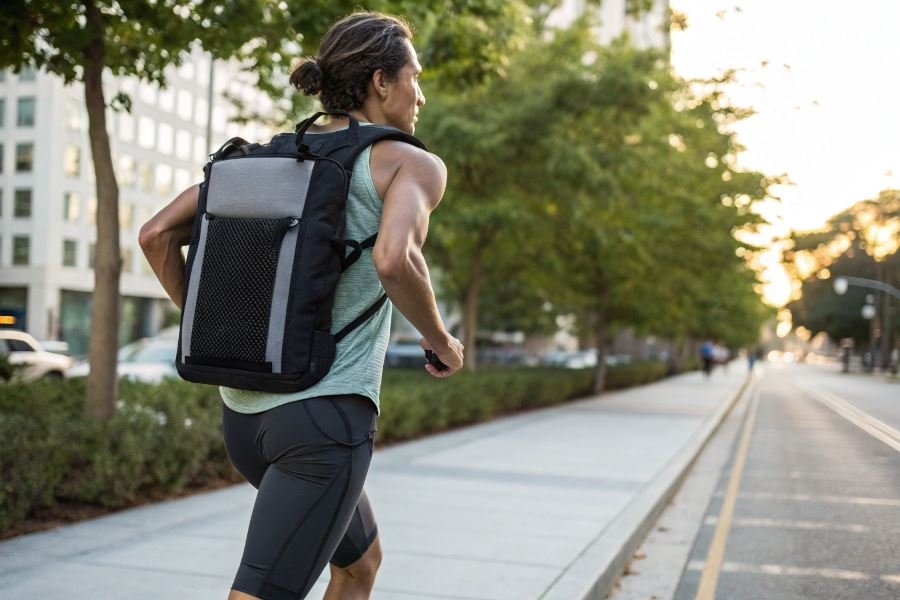
Ever watched a runner frantically juggling keys, phone, and energy gel while trying to maintain pace? That frustration ends now. Waist bags have transformed from the much-maligned “fanny packs” of yesteryear into essential running companions that elite athletes and weekend warriors alike swear by.
The humble waist bag delivers a trifecta of benefits that can revolutionize your running experience. First, they distribute weight evenly around your center of gravity, preventing the shoulder fatigue and posture problems that plague backpack wearers. Second, they provide quick-access storage without breaking stride – no more stopping to dig through pockets! Finally, they keep essentials secure and bounce-free, eliminating that maddening jingle-jangle soundtrack to your morning miles.
But wearing them wrong can sabotage your run. Too loose, and you’ll face the dreaded bounce-and-chafe combo that’s left many runners with raw skin and bruised hips. Too tight, and you’re restricting breathing and natural movement. Positioned incorrectly, your bag might interfere with arm swing or create imbalance that affects your gait.
Before deciding how to wear your waist bag, consider these crucial factors:
- Your running style: Sprinters need different positioning than trail runners
- Body type: Your natural curves affect optimal placement
- Cargo needs: What essentials must you carry?
- Weather conditions: Hydration requirements change everything
The perfect waist bag position isn’t universal – it’s personal. Finding your sweet spot transforms this simple accessory from mere storage to performance enhancement tool.
Master the Art of Running with Waist Bags
When you hit the trail or pavement, having your essentials secure yet accessible can make all the difference between a frustrating run and a personal best. Learning how to properly wear a waist bag while running transforms this simple accessory into a performance-enhancing tool rather than a bouncing distraction. The perfect position, secure fastening, and proper adjustments based on your running conditions can elevate your running experience dramatically.
Finding Your Perfect Position
The positioning of your waist bag is arguably the most critical factor for comfort during your run. Optimal weight distribution starts with finding your body’s natural balance point.
For most runners, this sweet spot sits just above the hips, where the natural curve of your lower back provides a stable platform. Some runners prefer the bag centered at the front, while others position it slightly off-center or directly at the back.
The ideal position should feel like the bag is part of your body, not an afterthought strapped to it.
A properly positioned Nike Running Belt or Salomon Pulse Belt should rest comfortably without restricting breathing or natural movement. When testing positions, load the bag with your typical running items to ensure realistic weight distribution.
| Position | Best For | Potential Drawbacks |
|---|---|---|
| Front-centered | Easy access, visual monitoring | May interfere with breathing |
| Side position | Natural arm swing, balanced weight | Items may shift during movement |
| Back-centered | Out of the way, balanced | Harder to access items while moving |
Securing Against the Bounce
Nothing disrupts running rhythm like a bag that bounces with every stride. Preventing bounce and chafing requires attention to both the bag’s design and how you secure it.
First, tighten the strap enough that the bag doesn’t move independently from your body. You should be able to fit two fingers between the strap and your body—any looser invites bouncing, any tighter risks discomfort.
Many premium running belts like the FlipBelt eliminate bounce by using a tubular design that hugs your body rather than hanging from it.
For traditional waist bags:
- Double-check all buckles and fasteners before starting
- Position heavier items closest to your body
- Distribute weight evenly throughout compartments
- Consider models with compression straps for added stability
Adapting to Your Run
Different runs demand different approaches to wearing your waist bag. Intensity and duration significantly impact how you should configure your setup.
For short, high-intensity interval training, minimize what you carry and position the bag where it least affects your form—typically higher on the waist and more centered. The Lululemon Fast and Free Run Belt excels in these scenarios with its minimalist design.
For marathon training or trail running adventures:
- Loosen the belt slightly for runs exceeding 90 minutes to prevent pressure points
- Reposition the bag periodically during ultra-distance events
- Consider a hydration belt for runs over an hour
- Test your setup during training, never on race day
Weather conditions also matter—in hot weather, position the bag to minimize skin contact and maximize airflow; in cold conditions, wearing it over a base layer but under outer shells provides better access.
By mastering these techniques, your waist bag transforms from a necessary inconvenience into a seamless extension of your running gear, letting you focus on the miles ahead rather than the equipment along for the ride.
Maximizing Comfort and Performance with Your Running Waist Bag
Solving Common Waist Bag Frustrations
Let’s face it—even the perfect waist bag can sometimes feel like an unwelcome training partner. The dreaded bounce is enemy number one for most runners. If your bag is performing an independent workout while you run, try positioning it lower on your hips rather than at your natural waistline. This slight adjustment distributes weight more effectively across your pelvis.
Experiencing chafing? That’s your bag telling you something’s wrong. Apply body glide or anti-chafe balm to potential friction points before heading out. Many elite runners swear by this pre-run ritual, especially for distances beyond 5 miles.
The difference between a comfortable 10-miler and a miserable one often comes down to how well you’ve addressed potential friction points before they become problems.
For those battling with items shifting inside the bag, compartmentalization is your salvation. Place heavier items (like phones) in the center pocket closest to your body, and lighter items (gels, keys) in outer pockets. This weight distribution technique is used by ultramarathoners who need to carry supplies for hours without distraction.
Extending Your Waist Bag’s Lifespan
Quality running waist bags aren’t cheap—most performance models from brands like Nathan or FlipBelt range from $30-45. Protect your investment with proper care.
After sweaty runs, hand wash your bag with mild soap and lukewarm water. Machine washing might seem convenient, but it dramatically accelerates wear on zippers and elastic components. Always air dry completely before storing to prevent mildew and fabric deterioration.
Zipper maintenance deserves special attention. Apply silicone-based lubricant to zipper teeth quarterly to prevent salt and sweat buildup from causing corrosion. This five-minute maintenance task can double your bag’s functional lifespan.
When to Switch Carrying Methods
While waist bags excel in most running scenarios, they’re not universal solutions. Consider these alternatives for specific situations:
| Running Scenario | Recommended Carrying Method | Key Benefit |
|---|---|---|
| Track workouts | Arm band or nothing | Minimizes weight during high-intensity efforts |
| Trail ultras | Hydration vest | Carries required safety gear and nutrition |
| Rainy conditions | Waterproof chest pouch | Keeps electronics completely dry |
| Recovery jogs | Hand-held water bottle | Simplifies hydration for shorter efforts |
For marathon training, many runners transition from waist bags to hydration vests once weekly long runs exceed 16 miles. The additional capacity for fuel becomes essential, and the distributed weight across your shoulders reduces fatigue compared to carrying everything at waist level.
Race day presents unique considerations. Many experienced marathoners opt for minimal carrying solutions, relying instead on course support. However, if you’ve trained exclusively with a waist bag, don’t abandon it on race day—consistency between training and racing equipment prevents unexpected discomfort when performance matters most.
By troubleshooting common issues, maintaining your gear properly, and knowing when to adapt your carrying strategy, you’ll maximize both comfort and performance. Your waist bag should enhance your running experience, not detract from it—these strategies ensure it remains a trusted training partner mile after mile.