
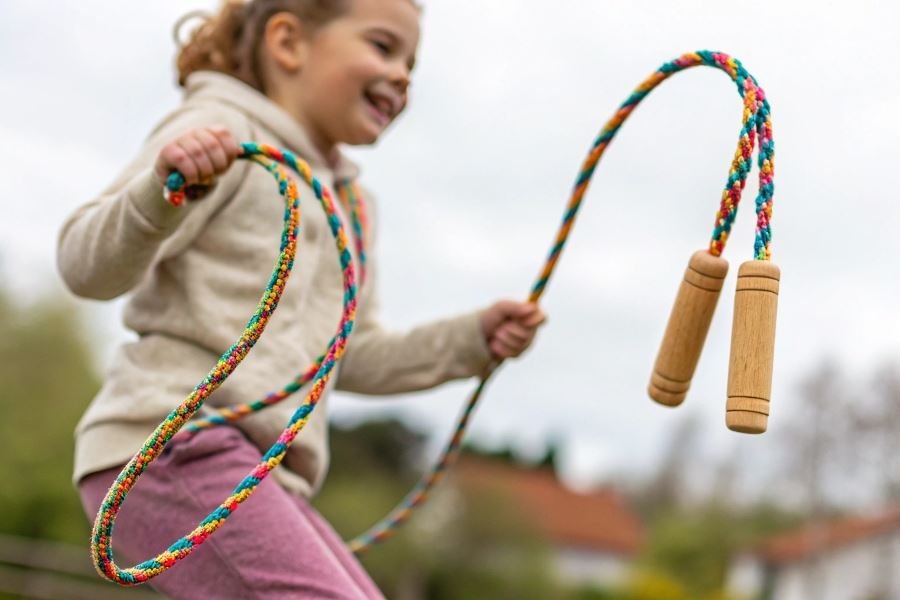
Ever watched a child’s face light up with pure joy while bouncing? That magical moment isn’t just about fun—it’s a powerful developmental catalyst happening right before your eyes.
Children’s jumpers—those bouncy contraptions that range from doorway-suspended activity centers to standalone exersaucers and full-sized trampolines—have become essential tools in modern parenting. These devices do far more than simply entertain; they’re secretly working overtime to develop your child’s vestibular system, strengthen core muscles, and improve coordination through rhythmic movement.
The developmental benefits extend well beyond the physical realm. Regular bouncing activities help children develop spatial awareness as they learn to navigate their bodies through space. The repetitive motion creates neural pathways that enhance balance and proprioception—that sixth sense that tells you where your body is positioned without looking. Many pediatric physical therapists recommend controlled bouncing activities for precisely these reasons.
Finding the right jumper for your child’s stage
Safety must always come first when selecting a jumper. Doorway jumpers typically work best for babies who can hold their heads up steadily (around 4-6 months) but aren’t yet walking. Stationary activity centers provide more stability while still offering bounce benefits. For toddlers and older children, mini-trampolines with safety enclosures offer age-appropriate challenges.
Important: Never leave children unattended in any jumping device, and always follow manufacturer guidelines for weight limits and age recommendations. The right jumper at the right developmental stage transforms a simple bouncing session into a powerful opportunity for growth.
Powering Up: Physical Health Benefits of Children’s Jumpers
When a child bounces in a jumper, they’re not just having fun – they’re engaging in a full-body workout that builds critical physical foundations. The rhythmic bouncing motion creates a perfect environment for developing bodies to thrive, challenging muscles and senses in ways that static play simply cannot match.
Children’s jumpers offer remarkable benefits for health and development that extend far beyond mere entertainment. These springy contraptions transform energy into strength, coordination, and bodily awareness through repetitive movement patterns that children naturally crave. The beauty lies in how jumpers disguise serious developmental work as pure, unbridled joy – the kind that has children begging for “just five more minutes” of what parents recognize as valuable physical training.
Building Little Athletes: Muscle Development
The bouncing motion in jumpers requires children to engage their core, leg, and arm muscles simultaneously. This multi-muscle activation creates a comprehensive strength-building environment that’s difficult to replicate with other activities. Each bounce requires:
- Leg extension and contraction (quadriceps and hamstrings)
- Core stabilization (abdominals and lower back)
- Grip and arm strength (forearms and biceps)
Young jumpers develop muscle memory through repetition, establishing neural pathways that translate to improved coordination in other physical activities. The resistance provided by the springs or elastic components creates just enough challenge to strengthen growing muscles without overexertion.
Finding Their Center: Balance and Spatial Awareness
Perhaps most impressive is how jumpers transform a child’s understanding of their body in space. With each bounce, children learn to:
- Adjust their center of gravity
- Anticipate movement patterns
- Respond to shifting equilibrium
This spatial intelligence becomes the foundation for all future athletic endeavors, from riding a bike to playing soccer. Children who regularly use jumpers often demonstrate advanced proprioception – the sense of how their body moves through space – compared to peers who haven’t had similar experiences.
Heart-Healthy Bouncing: Cardiovascular Benefits
The aerobic nature of jumping delivers significant cardiovascular advantages that shouldn’t be overlooked:
| Cardiovascular Benefit | How Jumpers Help |
|---|---|
| Increased heart rate | Sustained bouncing elevates heart rate to healthy training zones |
| Improved lung capacity | Deep breathing during activity expands lung function |
| Enhanced circulation | Repetitive movement promotes blood flow to growing muscles |
| Endurance building | Extended jumping sessions build stamina naturally |
A 15-minute jumping session can provide comparable cardiovascular benefits to other forms of moderate exercise, but with the added advantage of being perceived as play rather than work. This makes jumpers particularly valuable for children who might resist more structured forms of exercise.
The energy expenditure during jumping sessions also contributes to healthy weight management, establishing positive associations with physical activity that can last a lifetime. Children learn that movement feels good – a crucial lesson in our increasingly sedentary world.
When children bounce, they’re literally jumping toward better health, one spring-loaded movement at a time.
Jumpstarting Young Minds Through Movement
When we watch children bounce in their jumpers, we’re witnessing more than just adorable physical activity—we’re seeing young brains building critical neural connections. The cognitive and social benefits of children’s jumpers extend far beyond the obvious physical advantages, creating a foundation for intellectual and emotional growth that can last a lifetime.
Sensory fireworks in developing brains
Each bounce in a jumper triggers a cascade of sensory input that young brains eagerly process. The vestibular system—responsible for balance and spatial awareness—gets a premium workout during jumping sessions. This stimulation doesn’t just improve physical coordination; it actively builds neural pathways that form the architecture for future learning.
Research shows that rhythmic movement activities stimulate multiple brain regions simultaneously, creating rich neural networks. When a child experiences the up-and-down motion in a jumper, their brain processes information about:
- Gravity and physical forces
- Spatial relationships
- Body awareness
- Visual tracking
- Auditory feedback from movement
These sensory experiences create what developmental specialists call “sensory integration”—the brain’s ability to organize and respond to multiple inputs simultaneously, a critical foundation for later academic learning.
The bounce-and-learn connection
Children’s jumpers offer perfect laboratories for understanding cause and effect—one of the earliest and most important cognitive concepts. When a child pushes against the floor and experiences the resulting bounce, they’re conducting scientific experiments in real-time.
This natural physics lesson teaches babies that their actions have predictable consequences, a cornerstone of logical thinking. Through repeated bouncing experiences, children learn:
- If I push harder, I bounce higher
- If I shift my weight, I move in different directions
- If I reach for a toy while bouncing, I need to coordinate multiple movements
This experiential learning creates cognitive frameworks that support problem-solving abilities later in life. The jumper becomes not just a play station but a cognitive development tool where children test hypotheses about how the world works.
Emotional growth one bounce at a time
Perhaps most surprising is how significantly jumpers contribute to emotional and social development. The sense of agency—”I can make this happen!”—builds confidence in even the youngest children.
The joy of independent movement creates a positive feedback loop that encourages exploration and builds self-esteem from the earliest stages of development.
Children in jumpers experience:
Confidence building: Successfully controlling their movements reinforces a sense of capability
Emotional regulation: The rhythmic nature of bouncing has a naturally calming effect
Social interaction: Jumpers often become centers for parent-child engagement and play
This emotional foundation matters tremendously. Children who develop early confidence in their physical abilities often carry that self-assurance into other developmental domains.
The beauty of jumpers lies in how they seamlessly integrate physical, cognitive, and emotional development. While we might see simple bouncing, a child’s brain experiences a rich developmental symphony—building neural connections, understanding cause-and-effect relationships, and developing emotional resilience that will serve them throughout childhood and beyond.