
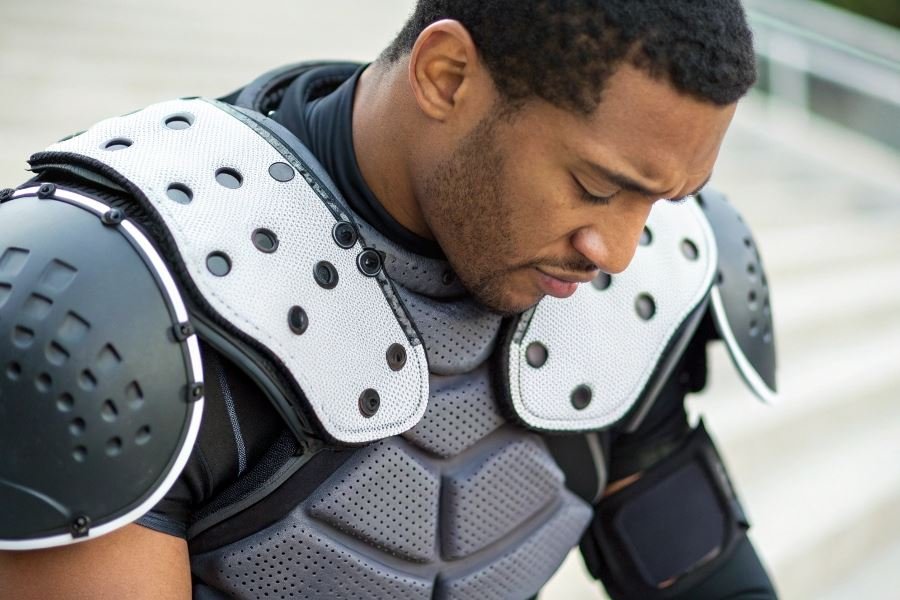
Ever watched a linebacker take a bone-crushing hit and walk away unscathed? That’s not luck—it’s materials science at work. The difference between season-ending injury and playing next weekend often comes down to what’s between your shoulder and impact.
When we talk about shoulder protection materials, we’re exploring the fascinating intersection of biomechanics and material innovation. The shoulder joint—our most mobile but least stable joint—faces unique challenges during physical activity. With over 250,000 Americans suffering serious shoulder injuries annually during sports and recreational activities, the stakes couldn’t be higher.
The vulnerability factor
Your shoulder’s impressive mobility comes at a cost: vulnerability. The rotator cuff, labrum, and AC joint are particularly susceptible to injury during contact sports, overhead activities, and repetitive motions. Modern protective materials don’t just absorb impact—they redistribute force, stabilize movement, and prevent the most common injury mechanisms:
- Traumatic impacts (football tackles, hockey checks)
- Repetitive stress (baseball pitching, swimming)
- Fall-related injuries (skateboarding, mountain biking)
Material evaluation trifecta
When assessing shoulder protection materials, three critical factors form what experts call the “protection triangle”:
- Impact absorption capacity – How effectively does the material disperse force?
- Anatomical conformity – Does it move naturally with your body?
- Thermal regulation – Can you wear it for hours without overheating?
The ideal shoulder protection strikes that elusive balance between fortress-like protection and second-skin comfort. The latest generation of composite materials combines rigid plates with viscoelastic foams that stiffen on impact but remain flexible during movement—a quantum leap from the bulky pads athletes endured just a decade ago.
The Science Behind Shoulder Protection Materials
When athletes hit the field or weekend warriors tackle DIY projects, shoulder protection becomes more than just padding—it’s an engineering marvel designed to absorb impact while maintaining mobility. The materials used in shoulder protection have evolved dramatically, with each innovation bringing improvements in both safety and comfort. Let’s dive into what makes these protective materials tick.
Foam-Based Protection: The Versatile Standard
Foam materials remain the backbone of shoulder protection across sports and activities. Their versatility in materials for shoulder protection: comparison of effectiveness and comfort shows why they’ve maintained popularity despite newer alternatives entering the market.
EVA (Ethylene-Vinyl Acetate) offers exceptional shock absorption with relatively low weight. This closed-cell foam doesn’t absorb moisture and maintains its protective properties even after repeated impacts. You’ll find EVA in everything from football shoulder pads to mountain biking protection.
Polyurethane foam delivers higher density protection, making it ideal for high-impact sports. Its progressive compression means it becomes firmer as impact increases—essentially “smart” protection that responds to the severity of collision.
Memory foam deserves special mention for its body-conforming properties. While slower to reset after impact compared to other foams, it creates custom-fit protection that distributes pressure evenly across the shoulder.
Gel-Based Materials: Fluid Protection
Gel technologies represent the next evolution in impact absorption, offering protection that literally flows with movement.
Silicone gel provides superior impact distribution by allowing force to spread laterally throughout the material. This translates to reduced pressure points and exceptional comfort during extended wear. The material’s natural tackiness also helps pads stay in position during activity.
Polymer gels like D3O have revolutionized protection with their unique molecular structure. These materials remain soft and flexible during normal movement but instantly harden upon impact—transforming from pliable to protective in milliseconds.
Composite Materials: Advanced Protection Systems
The cutting edge of shoulder protection comes from composite materials that combine multiple technologies for optimized performance.
D3O composite systems pair their rate-sensitive polymer with structural elements to create protection that’s both slim and highly effective. Tests show these materials can reduce impact forces by up to 53% compared to traditional foam.
Poron XRD represents another leap forward, with open-cell urethane technology that remains soft until impact, when it instantly forms a protective shell. Its repeated impact performance outshines traditional foams by maintaining protective properties even after thousands of impacts.
Carbon fiber reinforcements add structural integrity without significant weight. When strategically placed within shoulder protection, these reinforcements create a lightweight exoskeleton that distributes force away from vulnerable areas.
Material Performance Comparison
| Material Type | Impact Protection | Comfort | Weight | Durability | Price Range |
|---|---|---|---|---|---|
| EVA Foam | Good | Very Good | Light | Good | −$ |
| Memory Foam | Good | Excellent | Medium | Fair | −$ |
| Silicone Gel | Very Good | Excellent | Heavy | Excellent | −$ |
| D3O Composite | Excellent | Good | Light | Excellent | $−$$ |
| Poron XRD | Excellent | Very Good | Light | Excellent | −$ |
| Carbon Fiber Reinforced | Superior | Good | Very Light | Superior |
The ideal shoulder protection often combines these materials in strategic layers—perhaps using memory foam against the body for comfort, D3O for impact absorption, and lightweight carbon fiber reinforcement for structural integrity. This multi-material approach delivers protection that’s both effective and comfortable enough for extended wear.
Shoulder Protection Mastery: Finding Your Perfect Match
When it comes to shoulder protection, the material you choose can make the difference between confident performance and sidelined frustration. After examining the various options available, it’s time to synthesize what we’ve learned and identify the optimal materials for your specific needs.
Activity-Specific Material Champions
Different activities demand different protective solutions. For high-impact sports like football and hockey, the combination of dual-density foam with an outer shell of carbon fiber composite delivers unmatched protection. These materials absorb and distribute impact forces while maintaining a relatively lightweight profile.
For baseball catchers and pitchers, D3O technology has emerged as a game-changer. This smart material remains flexible during normal movement but instantly hardens upon impact, offering protection exactly when needed.
Mountain bikers and snowboarders benefit most from EVA foam combined with HDPE plastic shells. This pairing offers excellent protection against falls and collisions while conforming to the body’s natural movements during these dynamic activities.
Athletes recovering from rotator cuff injuries should prioritize materials with graduated compression properties like neoprene blends with Kevlar reinforcement, which provide both stability and protection without compromising blood flow.
The Protection-Comfort Balance
| Material Combination | Protection Level | Comfort Rating | Mobility Score | Best For |
|---|---|---|---|---|
| Carbon Fiber + D3O | 9/10 | 7/10 | 7/10 | Contact sports |
| EVA + HDPE | 8/10 | 8/10 | 8/10 | Action sports |
| Neoprene + Kevlar | 7/10 | 9/10 | 9/10 | Recovery/Prevention |
| TPU + Memory Foam | 6/10 | 10/10 | 10/10 | Daily activities |
Finding the sweet spot between protection and comfort isn’t about compromise—it’s about optimization. The latest thermoplastic polyurethane (TPU) overlays combined with memory foam padding offer an excellent balance for everyday athletes who need protection without restriction.
For those prioritizing mobility, perforated neoprene with strategic silicone reinforcement provides targeted protection while maintaining nearly full range of motion. This combination has become increasingly popular among volleyball players and tennis athletes who need shoulder stability without hindering their swing or serve.
The best shoulder protection doesn’t just guard against injury—it becomes an extension of your body, forgotten until the moment it saves you from harm.
Longevity Through Proper Material Care
The lifespan of your shoulder protection depends significantly on material selection and maintenance practices. Closed-cell foams resist moisture absorption, making them less prone to bacterial growth and deterioration compared to their open-cell counterparts.
Materials with antimicrobial treatments like those found in premium Under Armour and Nike protective gear require less frequent cleaning while maintaining hygiene standards.
For washing, most synthetic materials benefit from cold water hand washing with mild detergent. However, TPU components and carbon fiber shells should only be wiped down with a damp cloth to prevent degradation of adhesives and protective coatings.
Silicone-based protectors offer exceptional durability, often maintaining their protective properties for 3-5 years with proper care, while gel inserts typically need replacement after 1-2 years of regular use as they gradually lose their shock-absorbing properties.
The most sustainable approach combines replaceable impact modules with durable base materials, allowing you to refresh only the components that wear out rather than replacing entire protective systems—better for both your wallet and the environment.
By selecting materials that match your specific activity needs, finding your personal protection-comfort balance, and implementing proper maintenance routines, you’ll maximize both the effectiveness and lifespan of your shoulder protection investment.