
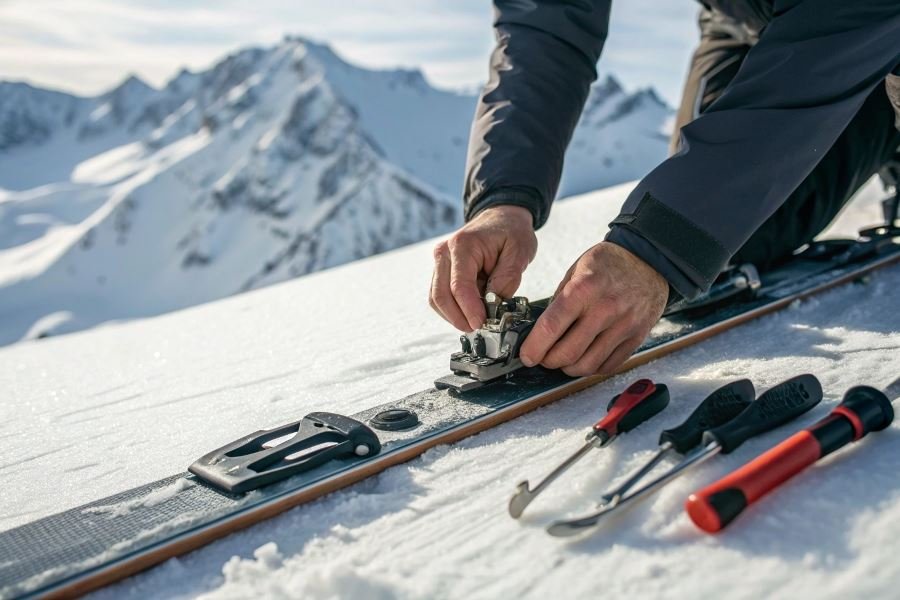
Ever stood at the summit, heart racing, only to feel that nagging doubt about your bindings? That moment when you wonder if they’ll release when needed—or worse, when they shouldn’t? Proper binding setup isn’t just about convenience; it’s your invisible safety net on the mountain.
Ski bindings serve as the critical connection between you and your skis, designed to release during falls to prevent injuries while maintaining control during normal skiing. According to the National Ski Areas Association, properly adjusted bindings can reduce injury risk by up to 75%. That’s not just a statistic—it’s potentially your ACL, intact.
When to DIY vs. seeking professional help depends largely on your experience level and the complexity of your setup. First-time mounting requires precision drilling and should typically be left to certified technicians. However, adjusting existing bindings to accommodate new boots or changing DIN settings is absolutely within reach for most skiers with the right tools and knowledge.
Speaking of tools, your DIY binding adjustment arsenal should include:
- A properly calibrated torque screwdriver
- Binding adjustment chart (or manufacturer’s app)
- Boot sole length (BSL) measurement
- Phillips and flathead screwdrivers
- Your current weight, height, age, and skiing ability information
Remember: Even self-adjusted bindings should be professionally tested with a certified binding calibration machine before each season for maximum safety.
Taking ownership of your binding setup not only saves money but connects you more deeply to your equipment—knowing exactly how your gear works might just be the confidence boost that helps you tackle that double black diamond you’ve been eyeing.
DIY Ski Binding Setup: The Ultimate Guide
Mastering the art of setting up your own ski bindings isn’t just a money-saving hack—it’s a rite of passage for serious skiers. The perfect binding setup creates that sweet spot between safety and performance, where your skis become a natural extension of your body. Setting up ski bindings by yourself allows you to fine-tune your equipment to your exact specifications, ensuring optimal performance on the slopes while giving you intimate knowledge of how your gear functions.
Finding Your Perfect DIN Setting
Your DIN (Deutsches Institut für Normung) setting is the holy grail of binding setup—it determines when your bindings will release during a fall. Getting this wrong can mean either frustrating pre-releases or, worse, bindings that won’t release when they should.
To calculate your ideal DIN value:
- Gather your stats: Weight, height, age, skiing ability, and boot sole length (BSL)
- Consult a DIN chart: Most binding manufacturers provide these online
- Be honest about your ability: “Expert” doesn’t mean “highest DIN possible”
Remember: DIN settings are not a competition. A properly calibrated lower setting is infinitely better than an ego-driven higher one that might keep you attached to your ski during a catastrophic fall.
| Skier Type | Description | DIN Adjustment |
|---|---|---|
| Type I | Cautious, beginners | Lower end of range |
| Type II | Moderate, intermediate | Middle of range |
| Type III | Aggressive, advanced | Upper end of range |
Mounting Bindings: Precision Is Everything
Mounting bindings requires patience and precision—rush this step, and you’ll regret it on your first run.
- Find the ski’s balance point: Most skis have a recommended mounting point marked by the manufacturer
- Use a binding jig: A Wintersteiger binding jig or similar tool ensures perfect alignment
- Mark your drill points: Double-check measurements before drilling
- Drill with care: Use the correct bit size and depth stop
- Apply epoxy: A small amount in each hole prevents moisture intrusion
- Secure the bindings: Tighten screws in a star pattern to ensure even pressure
Pro tip: If you’re mounting on brand new skis, consider having the first mounting done professionally at a shop like REI. Future remounts will be easier once you have reference points.
Testing and Fine-Tuning for Safety
The final step—and arguably most critical—is testing your newly mounted bindings. This isn’t optional; it’s essential safety protocol.
- Visual inspection: Check that all parts are properly aligned and secured
- Forward pressure test: Ensure the heel piece has the correct tension against your boot
- Release testing: Use a binding testing device or have a professional test the release function
- Lateral release check: The toe piece should release smoothly when lateral force is applied
- Fine-tune as needed: Make small adjustments until release is consistent and appropriate
For the ultimate peace of mind, consider investing in a portable binding tester like those from MONTANA to verify your settings throughout the season.
Remember that binding settings aren’t set-and-forget. Reassess after significant weight changes, improvements in skiing ability, or if you experience unexplained releases or non-releases. Your perfect setup today might need adjustment tomorrow as conditions and your skiing evolve.
Keep Those Bindings Singing: Maintenance After DIY Installation
You’ve conquered the mountain of DIY binding installation—impressive work! But like any relationship worth having, your bindings need ongoing attention to keep that connection strong and reliable. Let’s dive into the post-installation care that will keep you carving confidently for seasons to come.
The regular checkup routine
Think of binding maintenance like brushing your teeth—skip it at your peril. After every 5-7 ski days, take a few minutes for these essential checks:
- Visual inspection: Look for cracks, excessive wear, or loose screws in both toe and heel pieces
- DIN setting verification: Ensure your release values haven’t shifted during use
- Boot-binding interface: Check for debris or ice buildup that could affect release function
- Mounting screws: Give each a gentle test with a screwdriver—they should be snug but not overtightened
The most dangerous binding isn’t the one set too tight or too loose—it’s the one you haven’t inspected recently.
For seasonal maintenance, apply a light lubricant to moving parts and check the anti-friction devices (AFDs) for wear. These slick pads help your boot release smoothly when needed, and worn AFDs can compromise safety.
Troubleshooting the DIY danger zones
Even careful DIYers encounter issues. Here are the most common problems and their solutions:
Binding pre-release issues
If your skis are ejecting when they shouldn’t, check:
- Boot sole length matches binding adjustment
- DIN settings appropriate for your weight/ability
- Toe height adjustment correct for your boot type
- Heel lugs free of excessive wear
Bindings won’t release in testing
This is particularly dangerous. Verify:
- DIN settings haven’t been accidentally maxed out
- Release mechanisms aren’t gummed up with dirt or old lubricant
- Boot sole dimensions match current industry standards
Mounting alignment problems
If your skis feel “off” when skiing:
| Symptom | Likely Cause | Solution |
|---|---|---|
| Ski pulls to one side | Bindings mounted off-center | Remount if severe, or adjust technique for minor issues |
| Unstable at speed | Mounting position too far forward/back | Consider professional remount if unbearable |
| Chattering in turns | Uneven mounting pressure | Check and retighten mounting screws evenly |
When to wave the white flag
DIY spirit is admirable, but sometimes professionals need to step in. Seek expert help when:
- Your bindings fail a torque test – If you can’t verify proper release function with a certified testing device
- You notice mounting screws backing out repeatedly despite tightening
- Visible cracks appear in the binding housing or ski mounting area
- Your boots have significant wear that affects the boot-binding interface
- You experience unexplained falls that might indicate inconsistent release
Most Marker, Look, and Salomon bindings can be maintained at home, but manufacturer-specific quirks sometimes require specialized knowledge.
Remember that binding maintenance isn’t just about performance—it’s about preventing season-ending injuries. A properly maintained DIY binding installation can deliver thousands of vertical feet of reliable performance, but only if you give it the attention it deserves after that initial setup.