
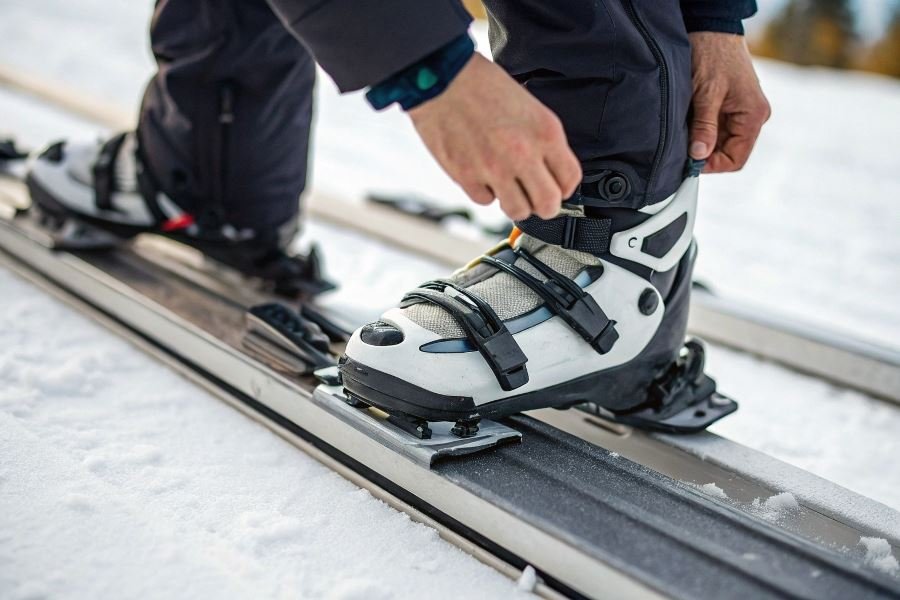
Ever wondered why some skiers walk away from high-speed crashes while others suffer season-ending injuries from seemingly minor falls? The answer often lies not in skill level, but in the critical connection between your boots and bindings.
When it comes to skiing safety and performance, compatibility between your ski boots and bindings isn’t just important—it’s everything. This invisible relationship determines whether your equipment releases when it should during a fall or holds firm when you’re carving through fresh powder. Getting it wrong can mean the difference between an epic powder day and a ride in the ski patrol toboggan.
The DIN system (Deutsche Industrie Norm) serves as the universal language between your boots and bindings. This standardized measurement dictates the force needed to release your boot from the binding during a fall. Your DIN setting is calculated based on your height, weight, age, skiing ability, and boot sole length—creating a personalized safety profile unique to you.
Despite standardization efforts, compatibility issues persist. Modern ski boots with specialized features like “walk modes,” ultra-lightweight touring designs, or worn-down soles can create dangerous misalignments with bindings. Even more concerning, many skiers are unaware their equipment might not work together properly until it’s too late.
The most advanced binding in the world becomes useless if it can’t properly communicate with your boot.
The Perfect Match: Essential Compatibility Factors for Boots and Bindings
When you’re carving down a black diamond run at 40mph, the last thing you want is equipment failure. The connection between your boots and bindings isn’t just important—it’s literally what keeps you attached to your skis! Getting this relationship right can be the difference between an epic powder day and a frustrating (or even dangerous) experience on the mountain.
Understanding the compatibility of bindings with ski boots and what to pay attention to requires knowing a few key technical details that many skiers overlook. This isn’t just about whether things “fit” together—it’s about ensuring proper release function, power transfer, and safety on the slopes.
Boot Sole Standards: The Foundation of Compatibility
The ski industry has developed several standardized boot sole types, each designed for specific skiing styles:
Alpine (ISO 5355): The traditional flat-soled boot used for downhill skiing. These have a distinctive smooth, flat sole with defined toe and heel lugs that create a standardized interface with alpine bindings.
GripWalk: A newer standard gaining massive popularity since its introduction in 2016. GripWalk soles feature a rockered (curved) design with rubber treads for improved walking comfort while maintaining compatibility with specially designed GripWalk-compatible bindings.
Walk-To-Ride (WTR): Similar to GripWalk but with a different specification. This standard is being phased out as GripWalk becomes the dominant walking-friendly option.
Alpine Touring (ISO 9523): Designed for backcountry enthusiasts, these boots have rockered soles with significant rubber tread patterns for hiking uphill. They require specific AT-compatible bindings.
Pro Tip: Never assume a binding will work with your boot sole type. Always verify compatibility before purchasing or mounting!
Binding Types and Their Compatibility Matrix
| Binding Type | Alpine | GripWalk | WTR | Alpine Touring |
|---|---|---|---|---|
| Traditional Alpine | ✓ | ✗ | ✗ | ✗ |
| GripWalk Compatible | ✓ | ✓ | Usually | ✗ |
| Multi-Norm (MNC) | ✓ | ✓ | ✓ | ✓ |
| Tech/Pin | ✗ | ✗ | ✗ | ✓ |
Most Marker bindings produced after 2018 are GripWalk compatible, while many Salomon and Look bindings now feature Multi-Norm Certification (MNC) that accommodates multiple sole types.
The compatibility landscape is evolving rapidly. Manufacturers are increasingly designing bindings that work with multiple boot sole standards, but you should never assume compatibility without verification.
Boot Size Considerations and Adjustment Ranges
Beyond sole type, proper sizing alignment is crucial:
-
Boot Sole Length (BSL): Measured in millimeters and usually printed on the heel of your boot. This is the actual physical length of your boot sole, not your shoe size!
-
Adjustment Range: Most bindings can accommodate a range of BSL measurements (typically ±15mm from center). This matters if:
-
You’re sharing skis with family members
-
You’re planning to upgrade boots in the future
-
You’re buying used equipment with pre-mounted bindings
-
Forward Pressure: Modern bindings require proper forward pressure settings to ensure consistent release characteristics. Too much or too little can compromise safety.
For growing teenagers or those between sizes, consider bindings with wider adjustment ranges like the Tyrolia Attack2 series, which offers up to 30mm of adjustment without remounting.
Remember that proper binding adjustment isn’t a DIY project—have a certified technician set up your equipment to ensure safety on the slopes. Your knees will thank you!
Maximizing Boot-Binding Harmony on the Slopes
The art of professional mounting
When it comes to skiing performance and safety, few relationships matter more than the connection between your boots and bindings. Professional mounting isn’t just a recommendation—it’s essential. Certified technicians at shops like REI or Evo use specialized tools to ensure bindings are positioned precisely according to manufacturer specifications and your personal metrics.
DIN settings are non-negotiable safety features that must be calibrated to your weight, height, skiing ability, and boot sole length. A professional will use a torque wrench to set release values with precision that simply can’t be matched by DIY attempts. Remember that even a 1mm misalignment can dramatically affect performance and potentially lead to premature release or, worse, no release during a fall.
The mounting position also affects your skiing style—more forward for aggressive turns, centered for all-mountain versatility, or back for powder performance. Only trust this critical adjustment to certified technicians who understand the nuances of your specific equipment combination.
Test before you invest
Before committing to a purchase or even a rental, compatibility testing is crucial. Most reputable ski shops offer binding testing services using specialized equipment that measures release forces.
The best compatibility test is one that happens before you’re halfway down a black diamond run wondering why your turns feel unstable.
When testing compatibility:
- Bring your actual boots to the shop when purchasing new bindings
- Perform a visual inspection for sole type compatibility (Alpine, GripWalk, WTR)
- Check that the boot sole length falls within the binding’s adjustment range
- Request a binding function test that simulates forward pressure and lateral release
Compatibility maintenance throughout the season
| Maintenance Task | Frequency | Why It Matters |
|---|---|---|
| Clean boot soles | Before each use | Prevents debris interference with binding mechanism |
| Check forward pressure | Monthly | Ensures consistent release performance |
| Inspect AFD (Anti-Friction Device) | Monthly | Critical for lateral release function |
| Professional inspection | Annually | Identifies wear patterns before they become dangerous |
Snow, ice, and dirt are the sworn enemies of proper binding function. Always clean your boot soles before stepping in. This simple habit prevents premature wear of the AFD and ensures consistent release values. Salt and grime can corrode metal components and create friction that alters release characteristics.
Wax buildup on boot soles is particularly problematic as it creates a slippery surface that can cause pre-release. Use a plastic scraper to remove excess wax after boot fitting or maintenance.
For those who ski frequently, consider investing in a Marker Binding Adjustment Tool or similar device that allows for minor forward pressure adjustments as boot soles wear down throughout the season. Temperature fluctuations can affect plastic components, so checking binding function after significant weather changes is smart preventative maintenance.
Remember that compatibility isn’t a one-time achievement—it’s an ongoing relationship that requires attention. With proper mounting, thorough testing, and consistent maintenance, your boot-binding system will deliver reliable performance from first chair to last run all season long.