
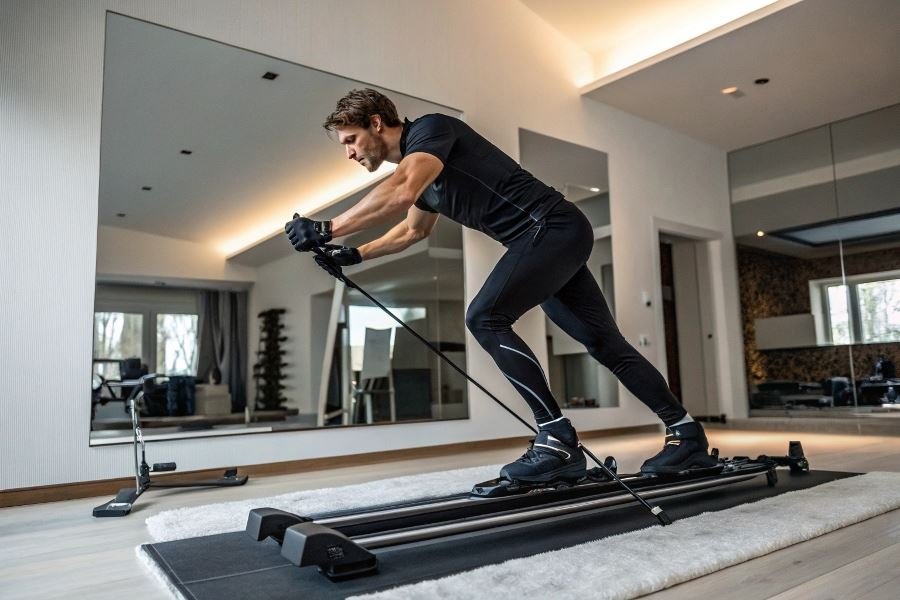
Ever wondered how Olympic skiers maintain that edge-of-your-seat performance when the snow melts? The secret weapon in their training arsenal might just revolutionize your fitness routine too.
Ski simulators have transformed from niche training equipment into mainstream fitness powerhouses. These ingenious devices replicate the lateral movements and muscle engagement of downhill skiing, allowing enthusiasts to maintain technique and build strength regardless of season or geography. Comparing models across the price-quality spectrum reveals fascinating insights about what truly matters in this specialized equipment category.
What makes a ski simulator worth its weight in powder?
At their core, ski simulators deliver three primary benefits: technique refinement, targeted muscle conditioning, and cardiovascular training. The magic happens through resistance mechanisms that mimic the forces encountered on actual slopes. Entry-level models (typically 200−400) offer basic sliding platforms with minimal resistance adjustment, while mid-range options (500−900) introduce variable resistance systems and more durable construction.
“The difference between a $300 and $1,200 simulator isn’t just about durability—it’s about biomechanical accuracy and training specificity.” — Sports Equipment Quarterly
Professional-grade simulators ($1,000+) represent an entirely different category, featuring sophisticated electronic feedback systems, customizable resistance profiles, and construction that withstands thousands of training hours. These premium models often incorporate motion sensors that analyze technique and provide real-time coaching.
Market segments: finding your perfect match
The entry-level market serves recreational skiers looking to maintain basic fitness during off-seasons. Mid-range simulators target dedicated enthusiasts who ski regularly and understand the value of technique maintenance. The professional segment caters to competitive athletes, ski instructors, and training facilities where precision and durability justify the investment.
The quality-price relationship hinges on four key factors: resistance mechanism sophistication, structural durability, biomechanical accuracy, and additional features like performance tracking. Understanding these elements helps navigate the market with confidence, ensuring your investment delivers the perfect balance of performance and value.
Finding Your Perfect Ski Simulator: The Ultimate Price-Quality Breakdown
When winter sports enthusiasts can’t hit the slopes, ski simulators offer the next best thing. These innovative fitness machines replicate the movements and muscle engagement of downhill skiing, providing year-round training opportunities regardless of weather conditions.
Our comprehensive ski simulators: comparison of models by price and quality reveals significant differences across price points that directly impact your training experience. From basic models that get you moving to professional-grade equipment used by Olympic athletes, your investment level dramatically affects performance, durability, and training effectiveness.
Entry-Level Options: Budget-Friendly Training (200−500)
The entry-level category offers accessible options for beginners or casual users without breaking the bank. These models typically feature:
- Basic resistance mechanisms (usually hydraulic)
- Simplified motion patterns
- Smaller footprints for apartment living
- Weight capacities around 220-250 lbs
The NordicTrack Ski Machine stands out in this category, delivering surprising value around $399. While you’ll miss advanced features like digital tracking or variable resistance, these machines effectively target core skiing muscles.
Limitations worth noting: Entry-level simulators often use less durable materials, have shorter warranties (typically 1 year), and provide less realistic skiing sensations. The resistance systems may feel jerky rather than smooth, and stride length is usually restricted.
Mid-Range Marvels: Serious Training Tools (500−1,200)
Mid-range ski simulators represent the sweet spot for dedicated recreational skiers and fitness enthusiasts seeking quality without professional-level prices.
| Feature | Entry-Level | Mid-Range | Professional |
|---|---|---|---|
| Resistance Types | Basic hydraulic | Magnetic/air | Electromagnetic |
| Tracking Metrics | Minimal/none | Heart rate, calories, distance | Advanced performance analytics |
| Max User Weight | 220-250 lbs | 275-300 lbs | 350+ lbs |
| Warranty | 1 year | 3-5 years | 5-10+ years |
The SkiErg by Concept2 dominates this category at approximately $970, offering air-resistance technology that responds to your effort level. These machines typically include:
- Digital performance tracking
- Multiple resistance levels
- More anatomically correct motion paths
- Sturdier construction with 3-5 year warranties
Mid-range models strike an impressive balance between affordability and functionality, making them ideal for serious recreational skiers seeking off-season conditioning.
Professional-Grade: Elite Performance ($1,200+)
For competitive athletes, coaches, and training facilities, professional ski simulators deliver uncompromising quality and performance features that justify their premium price tags.
Top-tier options like the Pro-Ski Simulator ($2,500+) offer:
- Biomechanically perfect motion paths that precisely mimic downhill skiing
- Electromagnetic resistance systems with instant, smooth adjustments
- Advanced telemetry and performance tracking
- Commercial-grade construction with 10+ year lifespans
- Integration with training apps and virtual coaching
These machines represent significant investments but deliver exceptional long-term value for serious athletes. The precision of movement and resistance quality directly translates to improved on-snow performance, making them essential training tools for competitive skiers.
When evaluating professional models, focus on the specificity of the skiing motion and the quality of performance feedback—these factors most directly impact training effectiveness and skill transfer to actual slopes.
Finding Your Perfect Ski Simulator Match
The Elite Three: Value Champions
When it comes to ski simulators that deliver maximum bang for your buck, three models consistently outperform the competition. The NordicTrack S15i stands tall with its immersive 15-inch touchscreen and 20-degree incline capability. At $1,499, it offers studio-quality training experiences through iFit integration, making it ideal for serious enthusiasts who want guided workouts.
The Concept2 SkiErg delivers professional-grade performance at $970, making it a favorite among Olympic athletes and weekend warriors alike. Its flywheel resistance system mimics the feeling of actual skiing with remarkable accuracy, while its space-saving wall-mount option makes it apartment-friendly.
For those seeking premium features without breaking the bank, the ProForm Carbon HIIT ($899) delivers cross-training versatility with both skiing and stepping motions. Its 10-inch vertical and 5-inch horizontal path creates a more dynamic workout than standard machines, engaging more muscle groups during each session.
Beyond the Price Tag: Long-Term Investment
The initial purchase price tells only part of the story. The Concept2 SkiErg shines in maintenance economy, requiring only occasional chain oiling and a new chain ($25) every 2-3 years with regular use. Its commercial-grade construction typically delivers 7-10 years of reliable service before major parts replacement becomes necessary.
By contrast, the technology-heavy NordicTrack S15i comes with subscription costs ($39/month for iFit) and potential electronic repairs after warranty expiration. However, its comprehensive 3-year parts warranty offsets some long-term concerns.
The true cost of ownership extends beyond the purchase price to include:
| Model | Initial Cost | Annual Maintenance | 5-Year Subscription Costs | Total 5-Year Ownership |
|---|---|---|---|---|
| NordicTrack S15i | $1,499 | $50 | $2,340 | $4,089 |
| Concept2 SkiErg | $970 | $30 | $0 | $1,120 |
| ProForm Carbon HIIT | $899 | $75 | $468 (optional) | $1,742 |
Matching Machines to Goals and Budgets
Your training objectives should ultimately guide your selection. For endurance athletes focused on cardiovascular conditioning and upper body strength, the Concept2 SkiErg delivers specialized training with minimal frills and maximum durability.
Those seeking full-body transformation with varied workout options will find the ProForm Carbon HIIT offers versatility that prevents workout plateaus. Its ability to target different muscle groups makes it ideal for cross-training programs.
If technique refinement and guided progression top your priority list, the NordicTrack S15i with its trainer-led sessions and performance tracking justifies its premium price point and subscription costs.
The best ski simulator isn’t necessarily the most expensive one—it’s the one that aligns with your specific fitness goals while respecting your budget constraints.
For budget-conscious shoppers under $500, consider the **Sunny Health & Fitness SF-E3912** ($429), which sacrifices some durability and resistance precision but delivers the fundamental skiing motion that builds endurance and strength.
Remember that space requirements vary dramatically—from the compact 2×2 foot footprint of a wall-mounted SkiErg to the substantial 5×3 foot space needed for the NordicTrack. Measure twice, purchase once to ensure your investment doesn’t become an expensive clothes hanger due to spatial incompatibility with your training area.