
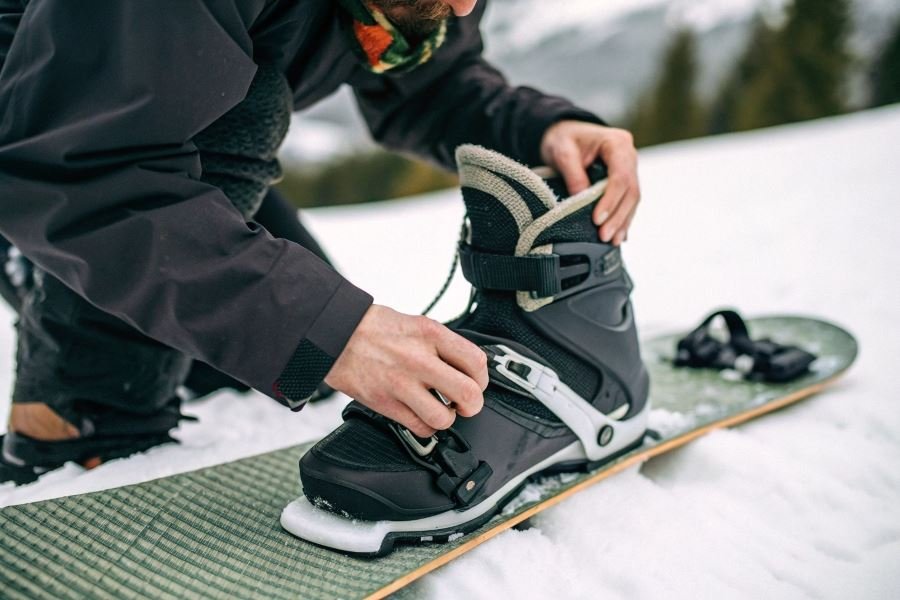
Ever watched a snowboarder effortlessly carve through fresh powder, their board responding like it’s an extension of their body? That seamless performance isn’t just skill—it’s engineering. The secret connection between your boots and bindings might be the most underappreciated factor in your entire snowboarding setup.
Think of binding-boot compatibility as the handshake between your body and your board. When they match perfectly, energy transfers efficiently from your movements to the board’s edge. When they don’t? You might as well be trying to text with mittens on—clumsy, frustrating, and potentially dangerous.
The performance equation isn’t complicated: proper binding-boot compatibility = better control + enhanced safety + improved comfort. This critical relationship affects everything from how quickly you can initiate turns to how your knees feel after a full day on the mountain.
Modern snowboarding has evolved around three primary binding systems:
- Traditional strap bindings – The most common system, featuring adjustable ankle and toe straps
- Rear-entry (flow) bindings – Featuring a reclining highback for quick entry
- Step-in bindings – Using cleats or bars that connect directly to compatible boots
“Your binding-boot interface is the control center of your entire setup. Mismatched components can reduce response time by up to 30%.” — Snowboard Technology Institute
Your riding style should dictate your binding-boot pairing. Freestyle riders typically benefit from more flexible systems allowing for tricks and park features, while freeriders tackling steep terrain need stiffer, more responsive setups that transmit power instantly to their edges.
The terrain you ride most frequently should also influence your choice—what works perfectly for groomed runs might feel dangerously unresponsive in deep powder or icy conditions.
The Perfect Match: Binding and Boot Compatibility Decoded
Finding the right combination of snowboard bindings and boots isn’t just about aesthetics—it’s the foundation of your entire riding experience. The interface between your boots and board dictates response time, comfort, and control in ways that can make or break your day on the slopes.
Traditional strap bindings remain the most versatile option in the snowboarding ecosystem, offering exceptional compatibility with nearly all boot types on the market. The compatibility of bindings with different types of snowboard boots hinges primarily on the binding’s baseplate design, strap configuration, and highback structure. Traditional two-strap systems feature adjustable ankle and toe straps that can accommodate various boot profiles from different manufacturers like Burton, ThirtyTwo, and Vans.
Traditional strap bindings: universal soldiers
Traditional strap bindings excel in their adaptability across boot styles. Their key compatibility features include:
- Adjustable heel cups that can expand or contract to match your boot’s footprint
- Customizable strap positions that accommodate different instep heights
- Highback rotation capabilities that align with your boot’s contours
Most traditional bindings work with standard, freestyle, and all-mountain boots without issue. However, ultra-stiff freeride boots may benefit from bindings with reinforced baseplates and highbacks for optimal response.
Rear-entry systems: speed with specificity
Rear-entry (or speed entry) binding systems prioritize convenience with their fold-down highbacks, but this design introduces specific compatibility considerations:
| Compatibility Factor | Consideration |
|---|---|
| Boot flex | Mid-flex boots work best; ultra-stiff boots may not seat properly |
| Boot profile | Lower-profile boots typically offer better performance |
| Heel cup width | Must match boot dimensions for proper heel hold |
Brands like Flow and GNU have refined their rear-entry systems to work with a wider range of boots, but they still perform optimally with boots that have a consistent flex pattern and moderate profile. The reclined entry requires boots that can slide easily into position without catching on the binding’s frame.
Step-in systems: the perfect partnership
Step-in binding systems represent the most boot-specific category, often requiring proprietary boots or special adapters:
- Burton Step On bindings work exclusively with Burton Step On boots or licensed partners
- K2 Clicker systems require compatible K2 boots with the appropriate baseplate inserts
- NOW Skate Tech offers adapter plates for some step-in compatibility
The revival of step-in technology in recent years has addressed many of the performance limitations that plagued earlier iterations. Modern step-in systems deliver impressive response and comfort, but the trade-off remains their limited cross-compatibility.
When selecting your binding and boot combination, consider not just current compatibility but future flexibility. A traditional binding system offers the most options for boot replacement down the line, while step-in systems lock you into a specific ecosystem—albeit one with increasing options as more manufacturers license compatible technologies.
Remember that proper sizing is critical regardless of binding type. Even perfectly compatible binding and boot combinations will perform poorly if sizing is incorrect, with too much play reducing response and too tight a fit creating pressure points and discomfort.
Perfect Harmony: Mastering Binding and Boot Compatibility
Decoding your current setup compatibility
Let’s face it—even the most premium Burton boots paired with top-tier Union bindings can deliver a miserable riding experience if they’re not compatible. Assessing your current setup starts with three critical checkpoints:
Flex matching is your foundation. Your binding flex rating should complement your boot’s stiffness. When you flex forward in your stance, both should work together—not fight each other. Try this quick test: strap in at home, lean forward, and feel for pressure points or resistance. The motion should feel smooth, not restricted.
Size alignment matters tremendously. Insert your boot into the binding and check three zones:
- Heel cup should secure your boot without excessive pressure
- Straps should center over your boot when tightened
- Toe ramp should support but not extend beyond your boot sole
The ideal fit leaves minimal overhang while maintaining responsive edge control.
Interface compatibility varies by system. Traditional disc bindings work with most boards, but specialized systems like Burton’s EST require matching Channel boards. Similarly, boots with specific features like Adidas Power Straps need bindings with adequate highback clearance.
Three compatibility disasters to avoid
Flex mismatch syndrome
Nothing ruins performance faster than pairing ultra-stiff bindings with soft park boots. This creates a “dead zone” where energy transfer becomes unpredictable. Equally problematic: soft bindings with rigid boots prevent proper response when navigating technical terrain.
Size discrepancy disaster
| Boot Size | Binding Size | Result |
|---|---|---|
| Too small | Standard | Excessive movement, reduced control |
| Too large | Standard | Pressure points, toe/heel drag |
| Standard | Wrong size | Improper strap placement, discomfort |
Boots extending too far beyond binding edges create dangerous leverage points. Meanwhile, undersized bindings force boots into unnatural positions, causing pain and compromising circulation.
System incompatibility crisis
The snowboard industry’s innovation sometimes creates compatibility headaches. Burton’s Step On system requires specific boots, while K2’s Clicker system demands matching components. Attempting to force incompatible systems together isn’t just ineffective—it’s potentially dangerous.
Optimizing compatibility by riding style
Freestyle riders benefit from medium-flex synchronicity. Your boots and bindings should share similar flex patterns (typically 4-6 on the 1-10 scale) to allow for tweaking grabs while maintaining enough support for landings. Consider bindings with adjustable highbacks to fine-tune your setup.
All-mountain enthusiasts need versatile setups. Look for bindings with customizable forward lean and straps that distribute pressure evenly across varied boot constructions. The sweet spot is often medium-stiff boots (6-8 flexibility) paired with similarly rated bindings.
Backcountry adventurers require maximum response. Your boots and bindings should both fall in the 8-10 stiffness range, with precise interface alignment. The connection between boot and binding becomes critical when navigating technical terrain—even minor misalignments amplify fatigue over long days.
The perfect binding-boot relationship isn’t about brand matching—it’s about performance matching. When your equipment works in harmony, you’ll feel it immediately.
Remember that compatibility evolves with wear. As boots break in and bindings age, reassess your setup regularly to maintain that perfect connection between rider, board, and snow.