
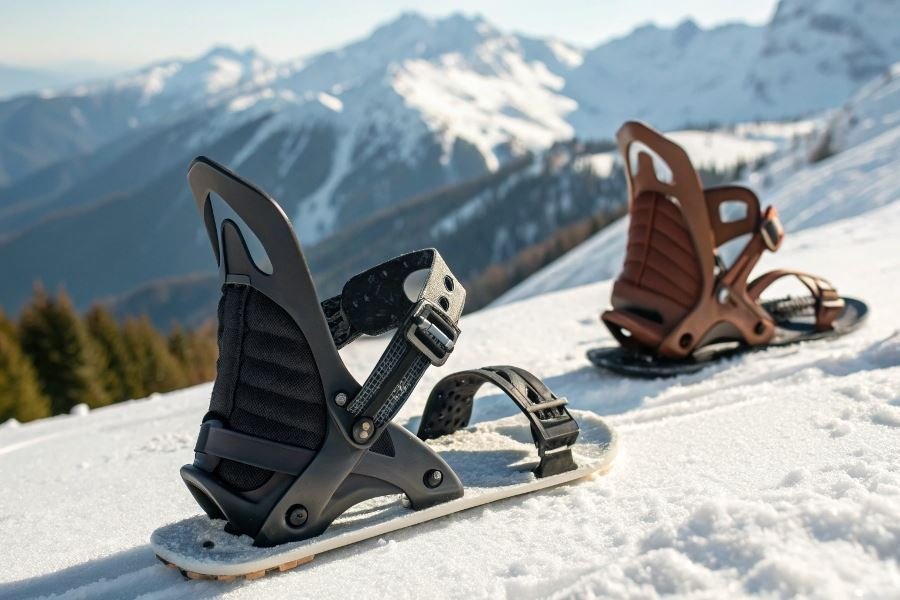
Ever stood at the edge of a pristine powder field, heart racing, only to feel that subtle disconnect between intention and execution? That microscopic delay between thought and action might just be your bindings talking.
The debate between hard and soft snowboard bindings isn’t just gear talk—it’s about unlocking your true riding potential. Think of bindings as the neural pathway between your brain and your board. The right connection transforms good riders into great ones, while the wrong match can make even perfect powder days feel like a struggle.
Hard bindings (also called “plate” or “step-in” bindings) deliver uncompromising response—every micro-movement transfers instantly to your board’s edge. They’re precision instruments, offering surgical control for carving those perfect S-turns down groomed runs. Meanwhile, soft bindings bring forgiveness and flexibility, allowing your board to flex naturally while absorbing impacts that would otherwise rattle your knees into submission.
Your riding style dictates your ideal binding match. Aggressive freeriders and racers often gravitate toward harder bindings for their direct power transmission. Freestyle riders and park enthusiasts typically prefer soft bindings for their forgiving nature and ability to tweak grabs and presses.
The binding decision impacts three critical aspects of your ride:
- Response time: How quickly your movements transfer to the board
- Comfort level: Especially during long days and rough landings
- Control precision: Particularly in technical terrain or high-speed situations
Finding your perfect binding match means honestly assessing not just where you ride now, but where you want your snowboarding journey to take you.
Hard vs Soft Bindings: Matching Your Ride Style
When you strap into your snowboard, the connection between your boots and board isn’t just hardware—it’s the neural pathway that translates your intentions into action. The binding choice you make fundamentally shapes your riding experience, determining everything from how quickly your board responds to how forgiving it feels when you make a mistake.
Understanding hard vs soft bindings and which suits your riding style isn’t just gear talk—it’s about unlocking your full potential on the mountain. The binding flex pattern you choose creates a distinct personality for your setup, affecting response time, energy transfer, and overall feel as you navigate varied terrain.
Hard Bindings: Precision Machines
Hard bindings are the Formula 1 cars of the snowboarding world—engineered for performance at the expense of comfort. These stiffer, more responsive systems excel in specific conditions:
Carving Dominance: The minimal flex in hard bindings creates immediate edge-to-edge response, allowing riders to carve precise lines through hardpack and ice. The direct energy transfer means your movements translate to board action with virtually zero delay.
Speed Stability: At high speeds, hard bindings provide the stability needed to maintain control. The rigid highbacks prevent unwanted flex when hitting speeds that would make softer bindings wobble and chatter.
Aggressive Riding Benefits: For riders who attack the mountain with powerful, deliberate movements, hard bindings deliver the support needed for charging steep lines and maintaining control through variable conditions.
“Hard bindings won’t forgive mistakes, but they’ll reward precision with performance that feels telepathic.”
Soft Bindings: Freestyle Freedom
Soft bindings prioritize mobility, forgiveness, and comfort—making them the preferred choice for riders focused on:
Freestyle Performance: The increased flex allows for easier tweaking of grabs, more comfortable landings, and greater board manipulation for spins and technical tricks. This flexibility gives riders the freedom to express themselves creatively.
Park Perfection: When hitting rails, boxes, and jumps, soft bindings provide the forgiveness needed to absorb impact and the flexibility to adjust mid-trick. The forgiving nature helps prevent small mistakes from becoming painful falls.
All-Mountain Versatility: For riders who want one setup that can handle everything from powder to park, soft bindings offer the adaptability to enjoy varied terrain without specializing in any single aspect.
Flex Patterns: The Performance Connection
| Flex Characteristic | Hard Bindings | Soft Bindings |
|---|---|---|
| Response Time | Immediate | Slightly delayed |
| Energy Transfer | Direct and efficient | Dampened and forgiving |
| Impact Absorption | Minimal | Substantial |
| Fatigue Factor | Higher on rough terrain | Lower over long days |
| Weight | Typically heavier | Usually lighter |
The flex pattern of your bindings creates a distinct performance profile that extends beyond simple categorization. Medium-flex bindings attempt to bridge these worlds, offering a compromise that many all-mountain riders prefer.
Energy Transfer Dynamics: Stiffer bindings create a more direct connection, transferring energy from your body to the board’s edge with minimal loss. This efficiency comes at the cost of comfort, as impacts and vibrations travel more directly into your body.
Forgiveness Factor: Softer bindings absorb minor mistakes, allowing you to recover from slight balance issues that might send you tumbling with harder bindings. This forgiveness is particularly valuable for progression, letting riders push their limits with a safety net.
The binding choice ultimately comes down to riding priorities—precision and response versus comfort and forgiveness. Many advanced riders eventually maintain multiple setups, each optimized for specific conditions and riding objectives.
Making Your Decision: The Perfect Binding Match for Your Riding Style
Know Thyself: Skill Level, Terrain, and Goals
Choosing between hard and soft bindings isn’t just about preference—it’s about performance alignment. Before dropping cash on new gear, take an honest inventory of three critical factors that should drive your decision.
First, assess your current skill level. Beginners often benefit from the forgiveness of soft bindings while they develop fundamental techniques. As pro rider Jake Burton once said during the 2018 Winter Olympics:
“The binding isn’t just equipment—it’s your translator between mind and mountain.”
Your preferred terrain forms the second pillar of this decision. Park riders hitting technical features need different response characteristics than backcountry powder hounds. Track your riding for a typical season—where do you spend 70% of your time? That’s your binding sweet spot.
Finally, consider your progression goals. Are you pushing toward more aggressive carving? Looking to add technical tricks to your repertoire? Your bindings should support where you’re going, not just where you are.
Three Scenarios Where Hard Bindings Dominate
Hard bindings (also known as plate bindings) outshine their softer counterparts in specific scenarios that demand precision and power transfer.
Scenario 1: High-speed carving on groomed runs
When you’re laying trenches at speed, hard bindings provide the direct energy transfer that transforms subtle weight shifts into immediate edge engagement. The difference becomes most apparent when carving at speeds exceeding 40mph, where milliseconds of response delay can mean the difference between a clean carve and a washout.
Scenario 2: Technical terrain navigation
Navigating through tight trees or technical chutes requires instantaneous board response. Hard bindings eliminate the “slop” that can occur with softer setups, giving you confidence when precision matters most.
Scenario 3: Competition environments
When hundredths of a second matter, hard bindings deliver consistent performance under pressure. This is why you’ll see them dominating in racing disciplines where predictable response is non-negotiable.
Testing and Transitioning Between Binding Types
Making the switch between binding types requires adaptation time. Here’s a strategic approach to testing and transitioning:
-
Demo before you commit – Most quality shops like Burton or Ride Snowboards offer demo programs. Spend at least 3-4 hours on each binding type in similar conditions for valid comparison.
-
Gradual transition technique – If moving from soft to hard bindings, start with a medium-flex option before going full rigid. This step-up approach reduces the learning curve shock.
-
Adjust your riding style – Hard bindings reward a more technical, precise approach. Focus on smaller, more efficient movements rather than dramatic weight shifts.
| Binding Type | Adaptation Period | Key Adjustment Focus |
|---|---|---|
| Soft to Hard | 3-5 riding days | Reduced body movement, increased edge precision |
| Hard to Soft | 1-2 riding days | More dynamic movement, anticipatory turning |
Remember that binding choice isn’t permanent. Many advanced riders maintain multiple setups for different conditions and riding objectives. The most versatile riders can adapt to either style, leveraging the strengths of each binding type for specific terrain and snow conditions.