
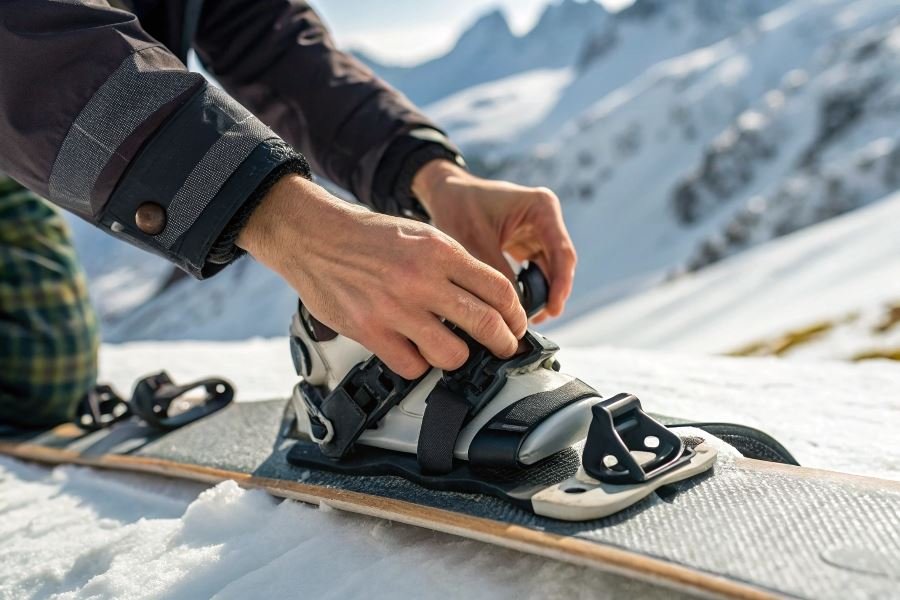
Ever watched a snowboarder effortlessly carve down a mountain and wondered what makes that seamless control possible? The secret isn’t just in the board—it’s the bindings that create that magical connection between rider and equipment. Think of bindings as the translator between your body’s movements and your board’s response.
For beginners stepping into the snowboarding world, binding selection might seem overwhelming, but it’s absolutely critical to your progression and safety. The right bindings don’t just keep your feet attached to your board; they determine how efficiently your movements transfer to the board, how comfortable you’ll be during long days on the slopes, and ultimately, how quickly you’ll advance.
Safety meets performance
Properly fitted bindings create a secure connection that prevents unwanted board separation while allowing for quick release when needed. This balance is crucial—too loose and you risk injury from lack of control; too rigid and you might struggle with natural movement or emergency exits.
Binding types for newcomers
Three main binding styles dominate the beginner market:
- Strap bindings: The most common type, featuring adjustable straps over your boots
- Rear-entry bindings: Featuring a hinged highback for easier entry
- Step-on bindings: The newest technology offering tool-free, quick attachment
Selection factors that matter
Your binding choice should consider:
- Flex rating: Softer flex (more forgiving) for beginners
- Riding style: All-mountain versatility is ideal for learning
- Boot compatibility: Ensuring your boots and bindings work together
- Board compatibility: Matching your binding mounting system to your board
Remember, the perfect binding creates a connection so intuitive you’ll forget it’s there—until you notice how much better you’re riding.
Essential Features for Beginner Snowboard Bindings
When you’re just starting your snowboarding journey, the right bindings can make the difference between frustration and pure joy on the slopes. Selecting appropriate snowboard bindings for a beginner requires understanding several key features that will support your learning curve and progression.
Flex Rating: Your Binding’s Personality
The flex rating of bindings might be the most crucial factor in how your board responds to your movements. Think of flex as your binding’s personality—soft, medium, or stiff.
Beginner-friendly flex ratings typically fall between 1-4 on a 10-point scale. These softer bindings forgive mistakes and allow for easier turn initiation. They’re more comfortable and less punishing when you’re learning the fundamentals of how to choose snowboard bindings for a beginner.
Medium flex (5-7) offers a balance that works across various terrain types. As your skills improve, you might appreciate this versatility:
| Flex Rating | Best For | Riding Style |
|---|---|---|
| Soft (1-4) | Beginners, park riders | Forgiving, playful |
| Medium (5-7) | All-mountain | Versatile, responsive |
| Stiff (8-10) | Advanced, freeride | Precise, powerful |
Remember that a binding that’s too stiff will fight against you while you’re learning, making progression unnecessarily difficult.
Boot and Board Compatibility: The Perfect Match
Your bindings must play nice with both your boots and board. This three-way relationship determines your overall riding experience.
Size compatibility is non-negotiable. Bindings come in general size ranges (S/M/L), but always check the manufacturer’s specific size chart against your boot size. A binding that’s too large creates slop and delayed response; too small and you’ll struggle to fit your boot properly.
Boot-binding interface matters tremendously. Most modern bindings work with standard snowboard boots, but specialized systems exist:
- Traditional strap bindings from brands like Burton and Union offer universal compatibility
- Step-on systems like Burton Step On require matching boots
- Rear-entry systems from Flow work with standard boots but offer a different entry mechanism
Your board’s mounting pattern must also match your bindings. The industry standard 4×4 pattern works with most setups, but some boards (particularly Burton models) use proprietary systems like Channel or 3D.
Mounting Systems and Adjustability: Fine-Tuning Your Ride
The ability to adjust your bindings transforms an off-the-shelf product into a custom-fitted extension of your body.
Mounting systems vary across manufacturers:
- 4×4 pattern (industry standard)
- Burton Channel system (requires EST or Re:Flex bindings)
- 3-hole patterns (less common)
Critical adjustment points that beginners should look for include:
- Highback rotation allows you to align the highback parallel to your heel edge
- Forward lean adjustment controls how much the highback pushes your calves forward
- Strap position options let you center straps perfectly over your boots
- Tool-free adjustments make on-mountain tweaks possible without carrying tools
The best beginner bindings offer simple, intuitive adjustment mechanisms that don’t require an engineering degree to operate.
Look for bindings with multiple adjustment points but straightforward mechanisms. Brands like Rome SDS and K2 excel at creating user-friendly adjustment systems that grow with your skills.
When properly fitted and adjusted, your bindings should feel like they were made specifically for you—responsive enough to translate your movements to the board, but forgiving enough to let you develop proper technique without punishment.
Sealing the Deal on Your First Bindings
Choosing your first set of snowboard bindings doesn’t need to feel like rocket science. After understanding the types, flex patterns, and sizing considerations, it’s time to make that final decision. Let’s break down the last crucial factors that will help you confidently select bindings that’ll support your progression from first-timer to confident rider.
Smart spending for lasting value
Budget considerations shouldn’t be an afterthought—they’re central to your decision. Entry-level bindings from reputable brands like Burton or Union typically range from 150−250, offering the essential features beginners need without unnecessary bells and whistles.
Wisdom nugget: The cheapest bindings rarely deliver the best value. Invest in quality now to avoid replacing subpar equipment mid-season.
Consider this value assessment framework:
| Price Range | What to Expect | Best For |
|---|---|---|
| $100-150 | Basic functionality, limited adjustability | Occasional riders (1-5 days per season) |
| $150-250 | Good durability, adequate adjustability | Regular beginners (5-15 days per season) |
| $250-350 | Enhanced comfort, better materials, more adjustability | Committed beginners planning rapid progression |
Remember that last season’s models often sell for 20-40% less while offering nearly identical performance to current versions. This represents one of the smartest ways to maximize your binding budget.
Test drive before commitment
Nothing replaces hands-on experience. Most specialty snowboard shops offer demo programs where you can test bindings before purchasing. This typically costs $30-50 per day, but many shops will apply this fee toward your purchase.
When testing bindings, focus on:
- Ease of entry and exit – Can you comfortably strap in while seated and standing?
- Responsiveness – Do the bindings translate your movements to the board effectively?
- Comfort level – Any pressure points after 30+ minutes of riding?
- Adjustability – Can you easily make micro-adjustments on the mountain?
Try at least 2-3 different models back-to-back on the same day and same terrain for the most accurate comparison. The differences will be surprisingly noticeable, even to beginners.
Future-proofing your purchase
While you’re a beginner today, your skills will evolve. The ideal first bindings should accommodate at least 1-2 seasons of progression.
Look for:
- Adjustable forward lean – This feature lets you modify your binding’s responsiveness as your skills improve
- Replaceable parts – Straps and highbacks that can be swapped if damaged or worn
- Compatibility with multiple mounting systems – Ensures your bindings work with future board purchases
Avoid bindings marketed as “beginner-only” as these often lack the adjustability to grow with you. Instead, seek out all-mountain bindings with a softer flex that can handle your progression from green runs to challenging blues and beyond.
Many riders find that quality mid-flex bindings from brands like Rome SDS or K2 offer the perfect balance of forgiveness for learning and performance for progression, making them ideal first purchases that won’t need immediate upgrading.