
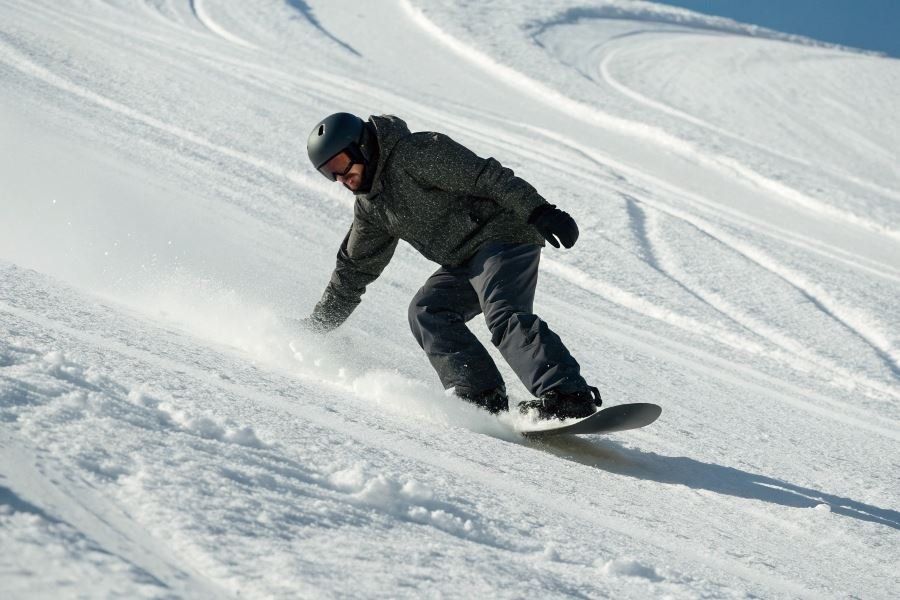
Ever picked up a snowboard and felt it bend under your weight? That’s stiffness in action – the invisible force that can make or break your mountain experience. While most riders obsess over length and width, the flex pattern of your board might be the most underrated performance factor in your quiver.
Snowboard stiffness refers to how much a board resists bending when force is applied. Manufacturers typically rate stiffness on a 1-10 scale (1 being noodle-soft, 10 being military-grade rigid), though these ratings aren’t standardized across the industry. Burton’s 7/10 might feel completely different from Lib Tech’s 7/10, creating a confusing landscape for consumers.
The physics behind flex patterns is fascinating – it’s all about materials science and load distribution. Modern boards combine materials like carbon fiber stringers, basalt strips, and varying wood core profiles to create targeted flex zones. A board might be torsionally stiff (resistant to twisting) while remaining longitudinally playful (easy to bend tip-to-tail).
Stiffness ratings decoded
| Manufacturer | Scale Used | What Their “Medium” Actually Feels Like |
|---|---|---|
| Burton | 1-10 | Balanced, slightly forgiving |
| Lib Tech | 1-10 | Stiffer than industry average |
| Arbor | Soft/Mid/Stiff | True medium, consistent across models |
| Jones | 1-10 | Tends toward responsive/stiff |
| Never Summer | 1-5 | Their 3 feels like most brands’ 6-7 |
The materials, core profile, and geometry all influence how a board flexes under your feet. This isn’t just tech-talk – it translates directly to how your board will perform in powder, park, or carving deep trenches on groomers.
Snowboard Stiffness Types: Finding Your Perfect Flex
When you strap into a snowboard, you’re not just choosing a shape or size – you’re selecting a personality. The flex pattern of your board dictates everything from how it handles powder to how it responds when you’re charging down a steep face. Snowboard stiffness: what it is and how it affects riding represents one of the most critical yet often overlooked aspects of board selection that can make or break your experience on the mountain.
Let’s dive into the three primary flex categories and discover which might be your perfect match for dominating the slopes this season.
Soft Flex: The Playful Personality
Flex rating: Typically 1-3 on a 10-point scale
Soft flex snowboards are the forgiving friends of the mountain. These boards flex easily under pressure, making them incredibly maneuverable and responsive to subtle weight shifts.
Perfect for:
- Beginners learning edge control
- Park riders hitting rails and boxes
- Jibbers who need forgiveness on landings
- Low-speed creative riding
The magic of soft flex boards lies in their forgiveness. When you make a mistake (and we all do), these boards won’t punish you like their stiffer counterparts. They twist more easily between the feet, allowing for quicker turn initiation at slower speeds.
A soft flex board feels like it’s working with you rather than demanding perfection from you.
However, this playfulness comes with tradeoffs. At higher speeds, soft boards can feel “washy” or unstable, chattering across hardpack and struggling to maintain edge hold when carving aggressively.
Medium Flex: The Versatile Virtuoso
Flex rating: Typically 4-6 on a 10-point scale
Medium flex snowboards are the Swiss Army knives of the mountain. They strike that golden balance between responsiveness and stability, making them ideal for riders who refuse to be confined to one terrain type.
Ideal terrain mix:
- All-mountain exploration
- Occasional park sessions
- Powder days
- Groomed runs
The beauty of medium flex lies in its adaptability. These boards provide enough pop for jumps, enough torsional response for technical tree runs, and enough stability for moderate speeds. They’re the “Goldilocks zone” of snowboard stiffness.
| Riding Style | Medium Flex Performance |
|---|---|
| Carving | Good edge hold without being punishing |
| Jumps | Balanced pop with forgiving landings |
| Powder | Adequate float with manageable control |
| Trees | Responsive enough for quick direction changes |
For the rider who might hit the park in the morning, explore some trees midday, and carve groomers in the afternoon, medium flex boards from brands like Burton or Lib Tech offer that do-it-all capability without significant compromise.
Stiff Flex: The Speed Demon
Flex rating: Typically 7-10 on a 10-point scale
Stiff snowboards mean business. These boards are precision instruments designed for riders who prioritize response, edge hold, and stability at high speeds.
Designed for:
- Advanced to expert riders
- High-speed carving
- Big mountain lines
- Backcountry exploration
The defining characteristic of stiff boards is their unwavering stability. When you’re bombing down a steep face or navigating variable backcountry conditions, a stiff board from Jones or Capita transmits every input with laser precision while dampening chatter that would throw a softer board off course.
Warning: These boards demand technical proficiency. They’re unforgiving of sloppy technique and require more physical strength to manipulate. But for those with the skills to handle them, they deliver unmatched performance when pushing limits.
The stiffness also translates to explosive pop off jumps and superior edge hold when carving hard on icy surfaces – making them the weapon of choice for riders who live for those perfect high-speed carves that send rooster tails of snow into the air.
Matching Your Snowboard Flex to Riding Style
Finding your perfect snowboard stiffness isn’t just about preference—it’s about unlocking your full potential on the mountain. The right flex pattern transforms your riding experience from frustrating to fluid, allowing your board to become a natural extension of your body.
Body Metrics That Matter
Your physical attributes play a crucial role in determining ideal board stiffness. Here’s why:
Weight considerations directly impact how a board responds. Heavier riders (190+ lbs) typically need stiffer boards to prevent excessive flex and maintain control at speed. Lighter riders (under 150 lbs) often benefit from softer boards that flex more easily under less pressure.
Height affects leverage—taller riders generate more force through longer limbs, potentially overpowering softer boards. A 6’2″ rider might find a medium-stiff board feels similar to how a medium-flex board responds to someone 5’8″.
Experience level might be the most critical factor:
| Experience Level | Recommended Stiffness | Benefits |
|---|---|---|
| Beginner | Soft (1-3/10) | Forgiving, easier turn initiation, less catching edges |
| Intermediate | Medium (4-6/10) | Balance of forgiveness and response, versatility |
| Advanced | Medium-Stiff to Stiff (7-10/10) | Precision, stability at speed, powerful carving |
Terrain-Specific Flex Recommendations
Different mountain environments demand specific board characteristics:
Park and Freestyle: Opt for softer flex (2-4/10) for better press ability, more forgiving landings, and easier switch riding. Burton Freestyle boards exemplify this category with their playful, buttery feel.
All-Mountain: Medium flex (4-7/10) provides the versatility to handle varied terrain. These boards, like the Jones Mountain Twin, offer enough stiffness for stability while maintaining maneuverability.
Backcountry and Powder: Medium-stiff to stiff boards (7-10/10) deliver the response needed for precise navigation through technical terrain. The Lib Tech T.Rice Pro showcases how a stiffer board maintains float in powder while providing stability for landing drops.
Carving and Racing: Ultra-stiff boards (8-10/10) maximize edge hold and stability at high speeds. The Kessler Alpine Race boards demonstrate how extreme stiffness translates to uncompromising precision.
Testing and Adapting to Different Flex Patterns
Finding your ideal stiffness requires hands-on experience:
Demo before you buy. Most resorts offer demo days where manufacturers bring their latest models. Test multiple stiffness ratings in a single day on familiar terrain for direct comparison.
Progressive adaptation works best. If transitioning from a soft to stiffer board, consider incremental changes—jumping from a 3/10 to an 8/10 flex can be jarring and potentially dangerous.
The first three turns tell you everything you need to know about a board’s flex. If it feels right immediately, you’re on the right track.
Adjust your riding style to match your board’s characteristics. Stiffer boards require more aggressive input and weight commitment, while softer boards respond to subtler movements.
Remember that flex patterns vary between manufacturers—a 7/10 stiffness from Capita might feel different than a 7/10 from Arbor. Always consult brand-specific flex ratings when comparing across companies.
The perfect board stiffness creates that magical feeling where the snowboard responds exactly as intended, whether you’re slashing powder, launching off kickers, or carving groomers at sunrise.