
Ever stood at the edge of a pristine powder field with the wrong board strapped to your feet? It’s like bringing a Ferrari to an off-road trail—technically impressive, but painfully mismatched.
The relationship between rider and snowboard is intimate and consequential. Your board isn’t just equipment; it’s your dance partner on the mountain, your trusted companion through terrain parks, and your lifeline down steep backcountry faces. Choosing the right snowboard based on your riding style isn’t just about preference—it’s about unlocking your full potential on the mountain.
The three mountain personalities
Snowboarding has evolved into three distinct riding approaches, each demanding specific board characteristics:
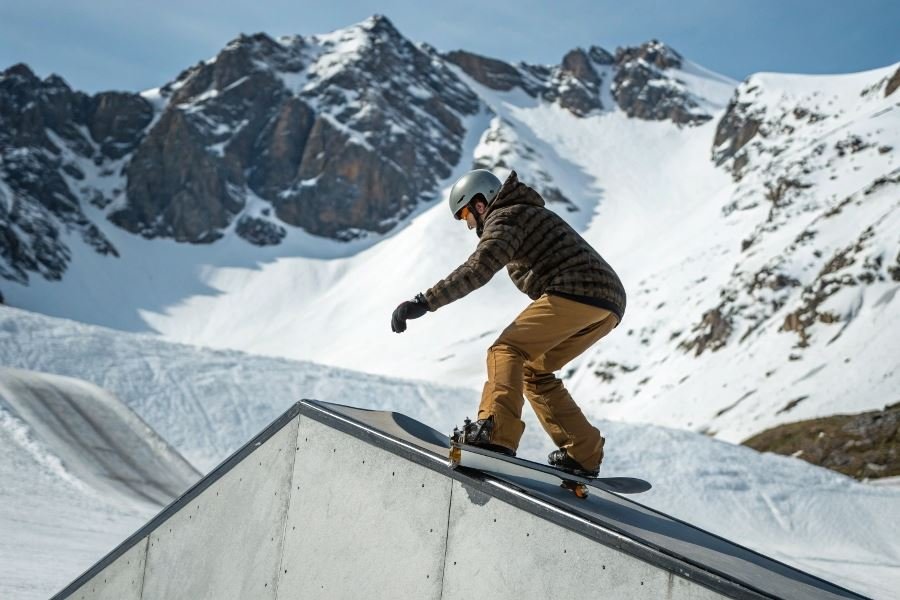
- Freestyle riders thrive in terrain parks, seeking air time, rails, and technical tricks. They need responsive, shorter boards with twin tips and medium flex.
- Freeriders chase untouched powder and natural terrain, requiring directional boards with setback stances and stiffer flex for stability at speed.
- All-mountain enthusiasts want versatility above all—boards that perform reasonably well everywhere, from groomed runs to occasional powder and park sessions.
“The right board doesn’t just improve your riding—it transforms your entire mountain experience.”
When your snowboard aligns with your riding style, progression accelerates dramatically. Turns become more intuitive, landings feel more stable, and that elusive flow state—where rider and mountain connect seamlessly—becomes increasingly accessible. The right board doesn’t fight your natural tendencies; it amplifies them, turning good days into unforgettable ones.
The Snowboard Selection Matrix
Finding your perfect snowboard match isn’t just about what looks cool in the lift line. The relationship between rider and board is intimate—every curve, flex point, and millimeter matters when you’re carving through powder or hitting features in the park.
Understanding the criteria for choosing a snowboard depending on the riding style transforms an overwhelming shopping experience into a strategic decision. Whether you’re a powder hound seeking float in the backcountry or a park rat perfecting your press game, your board’s design elements directly impact performance.
Board Shapes That Speak Your Language
Board shape isn’t just aesthetics—it’s the foundation of your riding experience. Each profile serves a distinct purpose:
- Camber: The traditional profile with contact points at the tip and tail, offering superior edge hold and pop. Park riders and carving enthusiasts gravitate toward camber for precision and response.
- Rocker: Also called reverse-camber, these boards feature a lifted center that resembles a banana shape. Perfect for powder days and forgiving for beginners.
- Hybrid: Combining elements of both, hybrid profiles like Burton’s Flying V or Lib Tech’s C2 deliver versatility for all-mountain exploration.
Directional shapes excel in powder and freeriding, while true twins offer symmetrical performance for switch riding in the park. Directional twins bridge the gap for all-mountain versatility.
Flex Patterns That Match Your Mission
Your board’s flex pattern is the personality beneath the graphics:
| Riding Style | Recommended Flex | Performance Benefits |
|---|---|---|
| Freestyle | Soft to Medium | Forgiving landings, easier presses, playful feel |
| All-Mountain | Medium | Balanced response, versatility across terrain |
| Freeride | Medium-Stiff | Stability at speed, precision in carves |
| Backcountry | Stiff | Maximum response, power through variable conditions |
The flex pattern influences everything from turn initiation to stability at speed.
Torsional flex (twist) matters too—freestyle riders benefit from boards that twist more easily for creative edge control, while freeriders need torsional rigidity for confident edge hold on steep terrain.
Size and Width: The Science of Fit
Finding your ideal board dimensions requires more nuance than simply matching your height:
Length Considerations:
- Shorter boards (3-5cm below chin height): More maneuverable, easier to spin, ideal for park and freestyle
- Longer boards (nose at eye level or higher): Greater stability, improved float in powder, better for freeriding
Width Calculations:
Your boot size dictates your board width. Too narrow and you’ll experience toe/heel drag—a performance killer and potential safety hazard. Too wide and you’ll sacrifice edge-to-edge quickness.
Boot sizes 10+ (men’s US) typically require mid-wide to wide boards. The sweet spot is when your boots extend just slightly beyond the edges—enough for leverage without drag.
Weight Factors:
Weight trumps height in board selection. A 5’6″ rider weighing 200 pounds needs more surface area than a 6’2″ rider weighing 150 pounds. Most manufacturers provide weight ranges in their size charts.
The perfect snowboard becomes an extension of your body, translating your intentions into precise movements across the mountain. When you match your board’s design elements to your riding style, that magical connection transforms ordinary days into extraordinary mountain experiences.
Beyond the Basics: Advanced Snowboard Selection for Your Riding Style
Terrain-Specific Technologies That Transform Your Ride
The snowboard beneath your feet isn’t just equipment—it’s your partner in crime on the mountain. When you’re carving through powder or hitting park features, terrain-specific technologies make all the difference.
For backcountry adventurers, boards with Jones Snowboards Spoon Technology deliver unmatched float in deep powder. These boards feature 3D base contours that eliminate edge catch and enhance maneuverability in unpredictable terrain. Similarly, Burton’s Family Tree line incorporates directional shaping with setback stances that keep your nose up when the snow gets deep.
Park riders benefit from technologies like Lib Tech’s Magne-Traction—serrated edges that provide superior grip on icy park landings. Meanwhile, GNU’s Asymmetrical designs account for the biomechanical differences between heel and toe-side turns, creating a more responsive ride for technical park maneuvers.
The right terrain-specific technology can transform a good day on the mountain into an unforgettable one.
Skill Level Nuances Within Riding Styles
Even within a specific riding style, your skill level dramatically impacts which board will serve you best:
| Riding Style | Intermediate Rider Needs | Advanced Rider Preferences |
|---|---|---|
| Freestyle | Medium flex (4-6), catch-free edges | Stiffer flex (6-8), precise edge control |
| All-Mountain | Directional twin shape, medium flex | True twin or directional twin, variable flex patterns |
| Freeride | Moderate setback stance, medium-stiff flex | Significant setback, tapered shapes, stiff flex (7-10) |
Advanced freeriders typically seek out boards with carbon stringers for added response without additional weight. The Capita Mercury exemplifies this with its Holysheet fiberglass and carbon-infused sidewalls that deliver precision at high speeds without sacrificing playfulness.
For freestyle progression, consider how your board’s flex pattern changes as you advance. Beginners benefit from softer, forgiving boards, but as you master more technical tricks, a board with stiffer sections between the bindings provides the pop and stability needed for bigger features.
How Seasonal Conditions Reshape Your Board Selection
The mountain environment is constantly changing, and your board selection should adapt accordingly:
Early season conditions often mean harder, machine-groomed surfaces. During these times, boards with effective edge technologies like Arbor’s Grip Tech or enhanced edge hold systems shine.
Mid-season powder days call for boards with substantial nose rocker and potentially a tapered shape. The K2 Excavator excels here with its Volume Shift design—shorter length with increased width for float without sacrificing maneuverability.
Spring slush sessions benefit from boards with sintered bases that maintain speed in wet conditions. Many riders opt for slightly softer flex patterns to match the forgiving nature of spring snow.
The perfect snowboard isn’t just matched to your style—it’s synchronized with the season, terrain, and your evolving skill level.
When selecting your next board, consider not just where you ride now, but where you want to progress. The best snowboards grow with you, revealing new capabilities as your skills advance. By matching terrain-specific technologies to your preferred riding environment, accounting for your skill level within your chosen style, and adapting to seasonal conditions, you’ll find a board that doesn’t just perform—it transforms your mountain experience.