
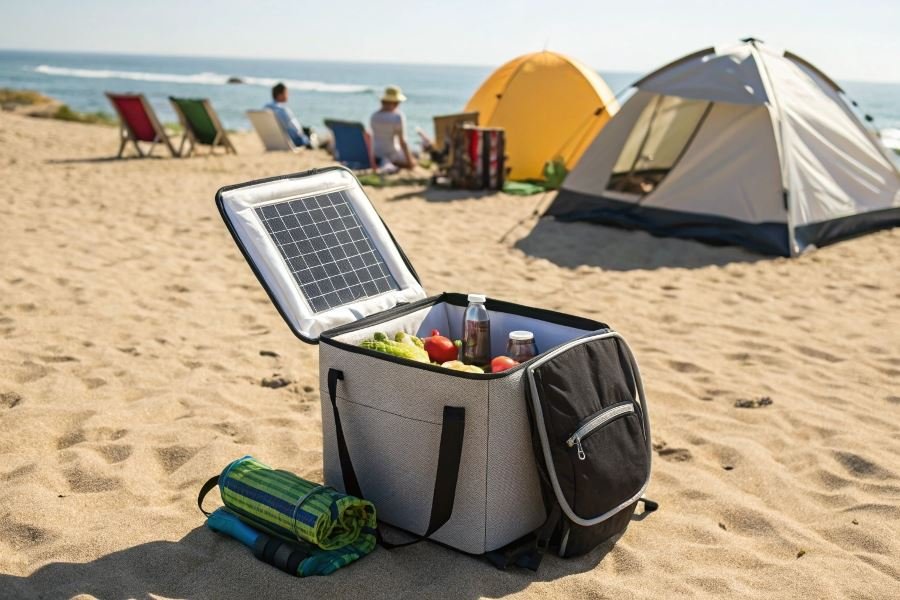
Ever opened your cooler after a long hike expecting an ice-cold drink, only to find lukewarm disappointment? The difference between that refreshing sip and tepid frustration often comes down to what’s hiding between the walls of your cooler bag.
At its core, cooler insulation is a battle against physics. Heat naturally flows from warmer areas to cooler ones—your cooler’s job is to slow this process down as much as possible. The materials that accomplish this feat aren’t just random choices; they’re carefully engineered solutions to a thermodynamic challenge.
The invisible barrier: How insulation actually works
The science behind effective cooler insulation isn’t complicated, but it is fascinating. The best insulating materials create dead air spaces that trap air molecules, preventing them from transferring heat through convection. This is why materials like closed-cell foam perform so impressively—they contain millions of tiny air pockets that dramatically slow heat transfer.
“The difference between a $30 cooler and a $300 cooler often comes down to insulation density and quality, not just brand name.”
Beyond the material: What else matters
While material selection forms the foundation of insulation performance, several other factors play crucial roles:
- Thickness matters: A thicker insulation layer generally provides better temperature retention
- Construction quality: Seams and closures can create thermal bridges where cold escapes
- External conditions: Even the best cooler will struggle in direct sunlight at 95°F
- Usage patterns: Frequent opening dramatically reduces efficiency
The right combination of premium insulation materials and thoughtful design can mean the difference between ice that lasts hours versus days—turning your outdoor adventures from good to unforgettable.
The Science Behind Cold Retention: Materials That Keep Your Cooler Frosty
When you’re heading out for a day-long hike or packing refreshments for your kid’s weekend tournament, the last thing you want is lukewarm drinks or spoiled food. The difference between a good cooler and a great one often comes down to what’s hidden between its walls. Understanding the best materials for cooler bags and what provides maximum insulation can transform your outdoor experience from merely acceptable to genuinely enjoyable.
Let’s dive into the molecular marvels that keep your beverages cold and your food fresh, even when the mercury rises. The insulation game is all about thermal resistance, and three materials stand head and shoulders above the rest.
Closed-Cell Polyethylene Foam: The Reliable Workhorse
Closed-cell polyethylene foam deserves its status as the industry standard for a reason. Unlike open-cell foams that allow air and moisture to pass through, closed-cell structures contain tiny sealed pockets of air that dramatically slow heat transfer.
What makes it special?
- R-value between 4.0 and 5.0 per inch (compared to standard foam’s 3.0)
- Moisture resistance that prevents insulation degradation
- Compression recovery that maintains performance over time
The cellular structure of this material creates millions of tiny air pockets that act as barriers against heat flow. Think of each cell as a miniature thermos, trapping cold air and preventing warm air from infiltrating your cooler’s interior.
Most premium coolers like those from YETI use closed-cell foam at thicknesses between 1.5 to 2.5 inches, providing insulation that can maintain ice for up to five days in optimal conditions.
Reflective Foil Liners: The Radiation Shield
While foam battles conductive heat transfer, reflective foil liners tackle a different thermal enemy: radiation. These metallic barriers work much like emergency blankets used by marathon runners or the gold foil you see on spacecraft.
How exactly do they work? Radiant heat travels in straight lines as electromagnetic waves. When these waves hit a reflective surface, they bounce back rather than being absorbed and converted to heat energy.
The most effective reflective liners use:
- Aluminum foil with 99.9% reflectivity
- Multiple layers separated by air gaps
- Bubble construction for added insulation value
When combined with foam insulation, reflective liners can improve thermal performance by 25-40%, especially in direct sunlight where radiant heat poses the greatest challenge.
High-Density Polyurethane: The Premium Performer
For those who demand the absolute best thermal performance, high-density polyurethane foam represents the gold standard in cooler insulation technology.
| Property | Standard PE Foam | High-Density PU Foam |
|---|---|---|
| R-value per inch | 4.0-5.0 | 6.0-8.0 |
| Weight | Moderate | Lighter |
| Cost | Lower | Higher |
| Longevity | Good | Excellent |
Why the superior performance? High-density polyurethane features a more complex molecular structure with additional cross-linking between polymer chains. This creates smaller, more numerous air pockets and a more tortuous path for heat to navigate.
The injection molding process used to create polyurethane insulation also eliminates gaps and inconsistencies that plague lesser materials. The result is a seamless insulation barrier that maintains temperatures with remarkable efficiency.
Premium cooler manufacturers like Pelican and Orca leverage this technology to create products that can maintain ice for 7-10 days—performance that justifies their higher price points for serious outdoor enthusiasts.
When selecting your next cooler, remember that the invisible materials between the walls will determine whether your refreshments stay refreshing or become a lukewarm disappointment. Choose wisely, and your cooler will reward you with days of perfectly chilled contents.
Maximizing Your Cooler’s Potential
Material combinations that redefine cold
The secret to exceptional cooler performance isn’t about finding one perfect material—it’s about strategic layering. The most effective cooler bags utilize a multi-material approach that creates thermal barriers impossible to achieve with single-layer construction. Leading manufacturers like YETI and RTIC have perfected this science by combining closed-cell foam cores with reflective aluminum linings and durable outer shells.
This layering technique creates what engineers call a “thermal cascade”—each material addresses a specific heat transfer mechanism. The foam blocks conduction, the reflective layer prevents radiation, and the sealed construction minimizes convection. Tests show that properly combined materials can maintain ice retention for up to 30% longer than single-material alternatives.
Pro tip: Look for coolers featuring both EVA foam and reflective barriers—this combination consistently outperforms in independent temperature retention tests.
Maintenance practices that matter
Even the most advanced cooler bag will underperform without proper maintenance. Insulation effectiveness degrades over time, but simple care routines can dramatically extend performance life.
The three pillars of cooler maintenance:
-
Thorough drying – Moisture trapped in insulation layers creates thermal bridges that bypass your insulation. Always prop open and completely air-dry after each use.
-
Contamination prevention – Food particles and spills can create permanent thermal pathways through insulation. Use a solution of mild soap and water for cleaning, avoiding harsh chemicals that break down insulative properties.
-
Compression avoidance – Storing heavy items on top of soft-sided coolers permanently compresses insulation. Store empty and unstacked.
A study by outdoor equipment testers found that properly maintained coolers retained their insulation effectiveness for 5+ years, while neglected units showed up to 40% degradation after just two seasons.
The cooling revolution ahead
The cooler bag industry is experiencing unprecedented innovation, with several technologies poised to transform performance expectations.
| Technology | Expected Impact | Current Development Stage |
|---|---|---|
| Aerogel insulation | 2-3× current efficiency | Commercial prototypes |
| Phase-change materials | Consistent temperature control | Early market adoption |
| Vacuum insulation panels | Dramatic size reduction | Premium market integration |
| Smart cooling systems | Temperature monitoring/control | Concept development |
Hydro Flask has already begun incorporating phase-change materials into their premium coolers, allowing for more consistent temperature regulation rather than the gradual warming typical of traditional designs.
Perhaps most exciting is the development of ultra-thin vacuum insulation panels (VIPs) that provide superior insulation at a fraction of traditional thickness. These panels, similar to those used in laboratory cryogenic storage, create near-perfect insulation barriers by removing air molecules that transfer heat.
The bottom line: Today’s best coolers already combine multiple insulation technologies, but maintaining them properly is essential for peak performance. The next generation of coolers will likely be thinner, lighter, and capable of maintaining temperatures for days rather than hours—making your current maintenance habits even more valuable as you eventually upgrade to these advanced systems.