
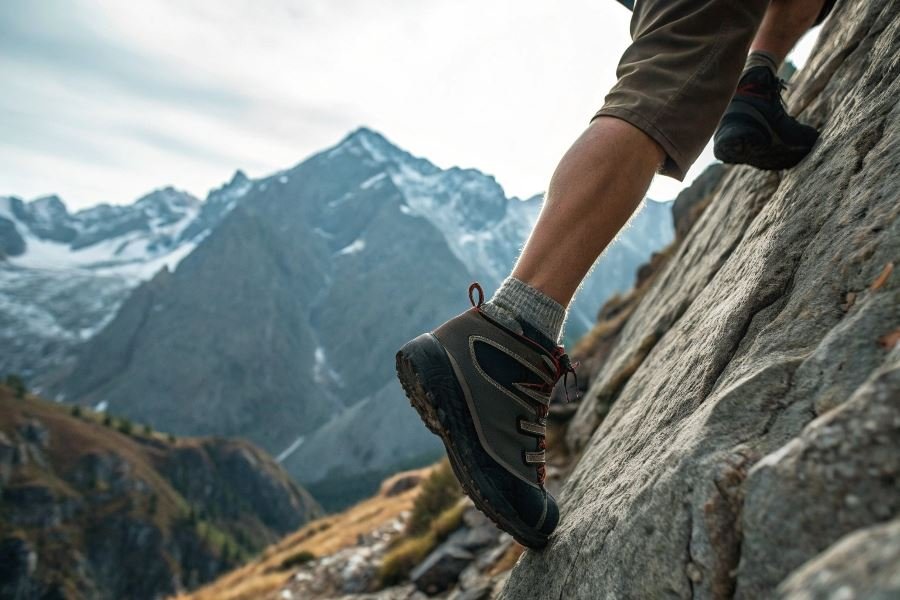
Ever stood atop a snow-covered ridge with nothing between you and frostbite but a few millimeters of material? When temperatures plummet and terrain turns treacherous, your choice of footwear isn’t just about comfort—it’s about survival.
Winter mountaineering demands specialized equipment that regular climbing or hiking boots simply cannot provide. The stakes are higher, the margins for error smaller. Your feet are your foundation, and in winter conditions, they become your most vulnerable asset.
Traditional climbing footwear excels in delivering sensitivity and precision on rock faces, but winter climbing boots must balance this with crucial insulation and protection. The difference? Winter-specific boots feature multiple layers of insulation, rigid crampon compatibility, waterproof membranes, and extended height to prevent snow entry.
“The right winter boot is the difference between an epic summit and a dangerous retreat.”
When selecting your winter climbing arsenal, focus on these critical performance factors:
Temperature rating
Look for boots rated to at least -20°F (-29°C) for serious winter ascents. Remember that manufacturer ratings often assume movement—standing still requires additional warmth.
Crampon compatibility
Your boots must accept fully rigid crampons for technical ice climbing. Semi-automatic or automatic crampon systems provide the secure attachment needed for vertical ice.
Insulation vs. weight
The eternal mountaineering tradeoff. Modern synthetic insulations offer impressive warmth-to-weight ratios, while traditional double-boot systems provide unmatched versatility in extreme conditions.
Boot stiffness
Winter climbing requires significantly stiffer soles than summer hiking—this provides crucial platform stability when front-pointing on ice and standing on small edges.
Essential Features of Winter Climbing Boots
When temperatures plummet and mountain faces transform into glittering ice fortresses, your choice of footwear becomes a matter of both performance and survival. The specialized boots needed for winter ascents represent some of the most technically advanced footwear in the outdoor industry, engineered specifically to handle extreme conditions while providing the precision needed for technical climbing.
Determining what climbing boots are suitable for winter ascents requires understanding the critical balance between insulation, waterproofing, and technical performance. Unlike standard hiking boots, winter climbing footwear must create a microclimate for your feet that remains stable despite external temperatures that can drop well below zero, while simultaneously providing the rigidity and support needed for technical ice climbing and mixed terrain.
Insulation Technologies for Extreme Cold
The battle against frostbite begins with proper insulation. Modern winter climbing boots employ multi-layer systems that trap heat while allowing moisture to escape:
- Synthetic Insulation: Materials like PrimaLoft and Thinsulate provide excellent warmth-to-weight ratios and continue insulating when wet
- Natural Materials: High-altitude boots often incorporate wool felt or down in removable liners
- Reflective Technology: Aluminum-coated footbeds reflect body heat back toward the foot
Temperature ratings for winter climbing boots typically range from -20°F to -40°F (-29°C to -40°C) for serious mountaineering models. However, these ratings should be considered guidelines rather than guarantees, as individual metabolism and circulation vary significantly.
The most advanced boots feature active heating systems with rechargeable batteries that can provide up to 8 hours of supplemental warmth on extreme expeditions.
Waterproofing and Moisture Management
Nothing compromises insulation faster than moisture, making waterproofing essential for winter climbing footwear:
| Waterproofing System | Benefits | Limitations |
|---|---|---|
| Gore-Tex Membranes | Breathable, durable, reliable | Reduced breathability in extreme cold |
| Proprietary Membranes | Often more affordable | Variable performance |
| Outer Shell Materials | First line of defense | Requires regular maintenance |
The most effective winter climbing boots employ a double-boot system with removable liners that can be dried overnight. This design prevents accumulated moisture from freezing inside the boot during multi-day expeditions. Advanced models also feature integrated gaiters that create a seamless barrier against snow infiltration.
Crampon Compatibility and Sole Stiffness
Winter climbing demands a perfect marriage between boot and crampon:
Sole Stiffness Classifications:
- B1: Semi-rigid soles for snow hiking (compatible with C1 crampons)
- B2: Stiff soles for moderate technical terrain (compatible with C1/C2 crampons)
- B3: Fully rigid soles for technical ice climbing (compatible with C1/C2/C3 crampons)
For serious winter ascents, B3-rated boots with fully rigid soles are essential. These boots feature specialized welts at the toe and heel that accept step-in (automatic) crampons, providing the most secure attachment for technical ice climbing.
The outsole material must balance grip on rock with durability and cold-resistance. Vibram Arctic Grip and Megagrip compounds maintain flexibility and traction even in sub-zero temperatures, while specialized lug patterns shed snow to prevent dangerous buildup.
Modern winter climbing boots also incorporate strategic reinforcement in high-wear areas, with protective rands made from materials like TPU (thermoplastic polyurethane) that shield against abrasion from rocks and crampon points without adding significant weight.
When selecting boots for winter ascents, remember that compromising on any of these essential features isn’t just a comfort issue—it’s a safety consideration that could determine your success on the mountain.
Winter Warriors: Choosing the Right Climbing Boots for Ice and Snow
When temperatures plummet and mountains transform into frozen fortresses, your choice of footwear becomes critical. The right winter climbing boots can mean the difference between summit glory and frostbitten retreat. Let’s dive into the three essential categories of winter climbing boots that will keep you performing at your peak when conditions get brutal.
Single Boots: The Lightweight Contenders
Single boots represent the most streamlined option in the winter climbing arsenal. Constructed as one-piece units, these boots excel in moderate winter conditions where mobility and technical precision are paramount.
When to choose single boots:
- Day climbs in temperatures above 15°F (-9°C)
- Technical mixed routes requiring precise footwork
- Approaches with significant hiking components
- Lower-altitude winter ascents
Single boots like the La Sportiva Nepal Cube GTX deliver impressive insulation while maintaining the responsive feel climbers crave on technical terrain. The Scarpa Phantom Tech offers exceptional ankle support and crampon compatibility without the bulk of heavier options.
The modern single boot has come light years from its predecessors, with advanced synthetic insulation providing warmth-to-weight ratios that would have seemed impossible a decade ago.
For winter climbing in places like the Cascades or moderate days in the Canadian Rockies, a quality single boot paired with good gaiters and warm socks can be your perfect companion.
Double Boots: The Cold Weather Champions
When temperatures plunge and expeditions extend into multiple days, double boots become essential equipment. These two-piece systems feature removable liners that can be dried overnight or even brought into your sleeping bag.
Double boot advantages:
- Superior insulation for extreme cold (suitable to -40°F/-40°C)
- Removable liners for drying between climbing days
- Enhanced protection against frostbite
- Ideal for high-altitude expeditions
The La Sportiva Olympus Mons Cube has become legendary among high-altitude climbers, while the Scarpa Phantom 8000 offers exceptional warmth without sacrificing walkability.
Double boots truly shine on extended winter expeditions in places like Denali or for winter ascents of 14ers in Colorado during the harshest conditions. The ability to remove and dry liners overnight transforms multi-day comfort and significantly reduces frostbite risk.
Hybrid Boots: The Versatile Performers
Hybrid boots (sometimes called super-gaiter boots) represent the innovative middle ground, combining single boot performance with enhanced insulation and weather protection.
What makes hybrid boots special:
- Integrated gaiters seal out snow and spindrift
- Warmer than single boots but more technical than doubles
- Excellent versatility across varied winter conditions
- Reduced weight compared to traditional double boots
The Scarpa Phantom Guide exemplifies this category with its built-in gaiter and impressive technical performance. Similarly, the La Sportiva G5 Evo delivers exceptional warmth-to-weight with its innovative closure system and integrated gaiter.
| Boot Type | Temperature Range | Weight (pair) | Best For |
|---|---|---|---|
| Single | 15°F to 32°F (-9°C to 0°C) | 3-4 lbs | Technical routes, day climbs |
| Double | -40°F to 10°F (-40°C to -12°C) | 5-7 lbs | Expeditions, extreme cold |
| Hybrid | 0°F to 20°F (-18°C to -7°C) | 4-5 lbs | Mixed conditions, versatility |
Hybrid boots have become increasingly popular for challenging winter ascents in variable conditions, offering the perfect balance for routes that demand both technical precision and serious weather protection.
Choose your winter climbing boots based on your specific objectives, the temperatures you’ll face, and the technical demands of your routes. The right boots will keep you pushing your limits when others retreat to the warmth of the lodge.