
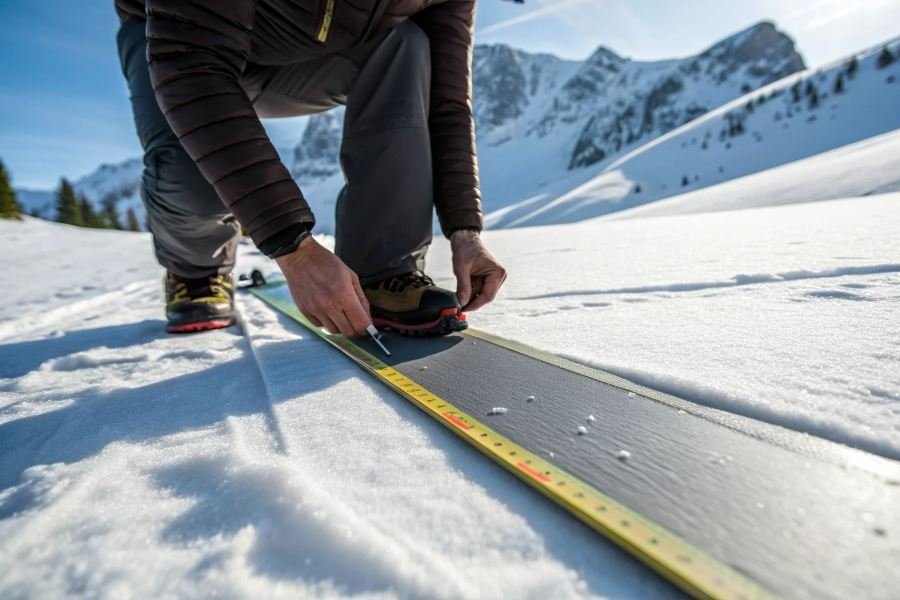
Standing atop a pristine backcountry ridge, you spot an untouched powder field below. Your splitboard is about to transform this moment into either pure bliss or frustrating struggle—and it all comes down to size.
When transitioning from resort riding to backcountry splitboarding, many riders make a critical mistake: assuming their regular snowboard size will translate perfectly to a splitboard. This misconception can not only hamper your performance but potentially compromise your safety in remote terrain where rescue is hours away.
Splitboards fundamentally differ from traditional snowboards in how they distribute weight and perform across varied backcountry conditions. While a standard snowboard is designed primarily for descent, a splitboard must excel in both uphill efficiency and downhill performance—a delicate balance that begins with proper sizing.
Three key factors determine your ideal splitboard dimensions:
- Rider profile: Your weight, height, and riding style create your baseline requirements
- Terrain preferences: Deep powder demands different dimensions than variable conditions
- Touring objectives: Longer approaches require different considerations than quick laps
Unlike traditional boards where freestyle riders often size down for maneuverability, splitboards typically run 3-5cm longer than your resort board. This additional length provides essential float in deep snow and improved stability when navigating challenging terrain with a loaded pack.
“The right splitboard size creates confidence in the backcountry. Too short and you’ll sink; too long and you’ll struggle on technical ascents.”
Finding this sweet spot transforms backcountry adventures from exhausting slogs into effortless explorations—where both the journey up and the ride down become equally rewarding experiences.
Sizing Your Splitboard for Epic Backcountry Adventures
Finding the perfect splitboard size isn’t just about what looks good strapped to your roof rack—it’s about unlocking the full potential of your backcountry experience. When riders nail their splitboard sizing, they discover that sweet spot where control, float, and maneuverability come together in powder paradise.
Your body weight serves as the foundation for determining the right splitboard length. Heavier riders need longer boards to distribute weight effectively across snow surfaces. Understanding how to choose the right size of a splitboard starts with this critical relationship between your weight and board length. Typically, riders under 150 pounds should consider splitboards in the 145-155cm range, while those between 150-180 pounds might find their match in the 156-163cm range. Riders over 180 pounds generally need boards 164cm and up to maintain proper float and stability.
Weight-to-Length Ratio: The Golden Rule
The physics behind splitboard sizing isn’t complicated, but it’s absolutely crucial:
- Too short for your weight = sinking in powder and reduced stability
- Too long for your weight = difficult maneuvering and exhausting uphill travel
Your riding style dramatically influences your ideal splitboard dimensions. Let’s break it down:
Freeride Focus
Freeride-oriented splitboarders typically benefit from longer boards with directional shapes. These provide:
- Enhanced stability at high speeds
- Superior float in deep powder
- Better edge hold on steep, technical terrain
A freeride splitboard might be 3-5cm longer than your resort board to maximize these benefits without sacrificing too much maneuverability.
Freestyle Flexibility
If your backcountry adventures include natural features and playful riding:
- Consider a shorter, more maneuverable splitboard
- Look for twin or directional-twin shapes
- Aim for 2-4cm shorter than a pure powder board
Touring Efficiency
For those focused on covering maximum distance:
- Moderate lengths balance uphill efficiency with downhill performance
- Lighter construction becomes more important than specific length
- Width should be minimized (while still preventing boot drag) to reduce weight
The terrain you’ll typically encounter should heavily influence your sizing decision. Different environments demand different dimensions:
| Terrain Type | Ideal Sizing Approach | Key Benefit |
|---|---|---|
| Open powder bowls | Longer boards (2-5cm above average) | Maximum float and stability |
| Tight trees | Shorter boards (1-3cm below average) | Enhanced maneuverability |
| Variable conditions | Mid-range length with versatile shape | Adaptability across terrain |
| High alpine | Slightly longer with stiffer flex | Wind-crust penetration |
Boot Size: The Width Factor
Your boot size determines the appropriate width of your splitboard. This is non-negotiable—too narrow and you’ll experience toe and heel drag; too wide and you’ll lose responsiveness.
Riders with boots size 10 (US men’s) and up should consider wide or mid-wide splitboard models. The width measurement at the waist of the board (narrowest point) typically ranges:
- Standard width: 245-255mm
- Mid-wide: 255-265mm
- Wide: 265mm+
Your stance width also plays a role in sizing. Wider stances generally benefit from slightly longer boards to maintain proper leverage between contact points.
Remember that splitboard sizing isn’t just about the numbers—it’s about finding the right tool for your specific backcountry mission. When all these factors align, you’ll experience that magical feeling of floating through untouched powder with perfect control and efficiency.
Finding Your Perfect Splitboard Size
Selecting the right splitboard size isn’t just about your height or weight—it’s about creating harmony between your body, riding style, and the terrain you’ll conquer. When your splitboard fits properly, you’ll experience better control, improved efficiency on the uphill, and more enjoyable descents through that untouched powder.
Decoding Manufacturer Size Charts
Manufacturer size charts are your starting point, but they’re not all created equal. Most brands like Jones Snowboards, Burton, and Arbor provide detailed sizing guides that factor in:
- Weight (primary factor)
- Height (secondary factor)
- Boot size (for width considerations)
- Riding style preferences
Pro tip: Don’t just look at one brand’s chart. Compare several to spot patterns in recommendations for your specific measurements.
These charts typically suggest a range rather than a single size. For example, if you weigh 175 lbs and stand 5’10″, you might see recommendations between 156-162cm. This is where your personal preferences and riding style enter the equation.
Testing Your Splitboard Fit
Charts get you close, but nothing beats hands-on testing. Here are foolproof techniques to confirm proper fit:
-
The stance width test: Stand in your riding stance on the board. Your feet should be positioned at approximately shoulder width without feeling stretched or cramped.
-
The nose press check: In soft boots, stand on a flat surface with the board on its edge. Press down on the nose—you should feel resistance but still be able to flex it.
-
The carry test: A properly sized splitboard should rest comfortably under your arm with the tail not dragging on the ground when carried.
Remember that splitboards generally run slightly longer than regular snowboards due to their dual uphill/downhill functionality.
When to Adjust Your Size
| Scenario | Sizing Recommendation | Reasoning |
|---|---|---|
| Deep powder focus | Size up 3-5cm | Extra surface area for float |
| Technical terrain | Size down 1-3cm | Enhanced maneuverability |
| Long approaches | Consider shorter | Less weight to carry uphill |
| Larger rider (200+ lbs) | Size up | Prevents excessive flex |
| Beginner splitboarder | Standard size | Balanced learning platform |
Your splitboard should match your ambitions. If you’re planning multi-day expeditions, the extra float of a longer board might be worth the additional weight. Conversely, if you’re tackling tight tree lines, the maneuverability of a slightly shorter board could be your best friend.
Avoiding Common Sizing Pitfalls
The most frequent sizing mistakes happen when riders:
-
Blindly transfer regular board size: Splitboards serve dual purposes and typically run 3-5cm longer than your resort board.
-
Ignore width considerations: Wide boots on a narrow board create toe drag; narrow boots on a wide board reduce responsiveness.
-
Prioritize weight over performance: Choosing too short a board just to save weight compromises downhill performance.
-
Forget about pack weight: Your loaded backpack adds significant weight—factor this into your calculations.
The ultimate test: If you’re between sizes, ask yourself where you’ll ride most often. Size up for open bowls and powder; size down for technical terrain and trees.
Finding your ideal splitboard size combines science and intuition. Trust the manufacturer guidelines as a starting point, but let your riding style and terrain preferences guide your final decision. Your perfect splitboard awaits—one that will carry you up efficiently and bring you down exhilaratingly.