
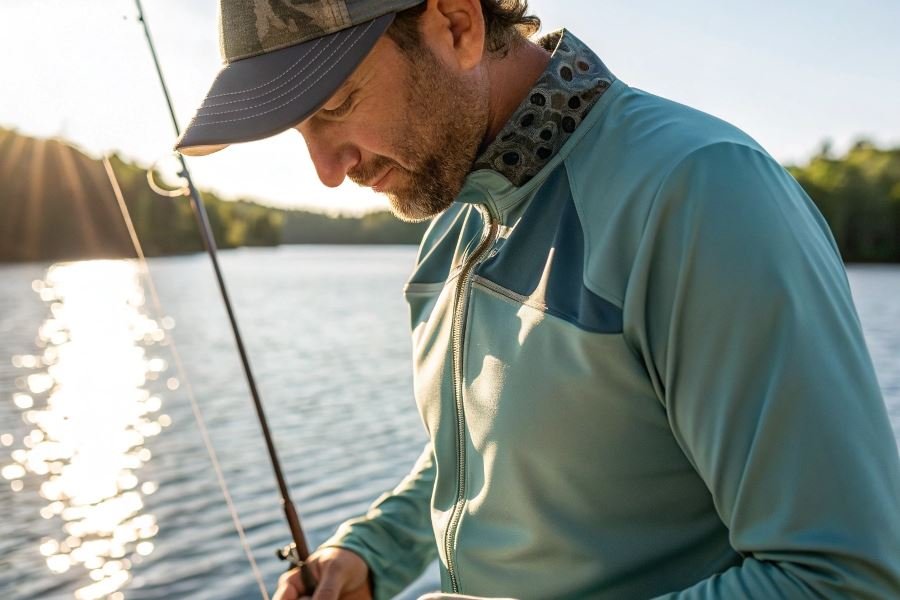
Ever stood waist-deep in rushing water, rain pelting your face, while that “waterproof” jacket slowly surrenders to the elements? That sinking feeling of cold water trickling down your spine isn’t just uncomfortable—it’s a fishing trip killer.
Waterproof fishing hoodies have undergone a remarkable transformation since their humble beginnings as waxed canvas garments. Today’s technical fishing apparel merges cutting-edge materials science with thoughtful design to create gear that performs in the harshest conditions. The difference between staying on the water landing that trophy catch or heading home early often comes down to your choice in waterproof technology.
The survival equation: Why waterproofing matters
When you’re miles from shelter on an open lake or standing in a coastal downpour, your clothing becomes your first line of defense. Hypothermia doesn’t care about your expensive rod or premium lures—it only takes a core temperature drop of a few degrees to impair judgment and motor skills. Quality waterproof gear isn’t a luxury; it’s essential safety equipment.
From wax to wonder fabrics
The evolution of waterproof fishing apparel tells a fascinating story of innovation. Traditional materials like oiled canvas and rubber slickers have given way to breathable membranes and hydrophobic treatments. Modern technologies like Gore-Tex, eVent, and proprietary membranes now allow moisture vapor to escape while blocking water droplets—solving the age-old problem of staying dry without feeling like you’re wearing a plastic bag.
Choosing your waterproof weapon
When evaluating waterproof fishing hoodies, focus on these critical factors:
- Water pressure rating: Measured in millimeters, this indicates how much water pressure the fabric can withstand before leaking
- Breathability: Expressed in g/m²/24hrs, showing how much water vapor can escape
- Seam construction: Taped, welded, or critically sealed seams make the difference between “water-resistant” and truly waterproof
- Hood design: Features like adjustable visors and face guards protect without limiting visibility
The perfect waterproof hoodie balances these elements with comfort, durability, and functionality specific to fishing environments.
The Waterproof Revolution: Technology Behind Fishing Hoodies
When you’re standing waist-deep in rushing water with rain pelting down, the difference between staying dry and getting soaked comes down to the technology in your gear. Today’s fishing hoodies aren’t just about keeping water out—they’re engineering marvels designed to balance waterproofing with breathability.
The evolution of waterproof technologies has transformed fishing apparel dramatically over the past decade. Waterproof hoodies for fishing: technology comparison reveals that not all waterproofing methods deliver the same performance, especially when subjected to the harsh conditions anglers face. Let’s dive into the three dominant technologies that are keeping anglers dry in 2025.
Membrane Magic: Gore-Tex, eVent, and H2No
Membrane-based technologies represent the gold standard in waterproof breathability. These microscopically porous materials work on a fascinating principle: the pores are small enough to block water droplets but large enough to allow water vapor (sweat) to escape.
Gore-Tex remains the industry leader with its ePTFE (expanded polytetrafluoroethylene) membrane containing over 9 billion pores per square inch. Each pore is approximately 20,000 times smaller than a water droplet but 700 times larger than a water vapor molecule. This translates to exceptional waterproofing with a 28,000mm water column rating while maintaining breathability.
eVent takes a different approach with its “Direct Venting” technology. Unlike Gore-Tex, eVent doesn’t use a PU layer, allowing sweat vapor to pass directly through the membrane:
| Technology | Water Column Rating | Breathability (MVTR) | Weight |
|---|---|---|---|
| Gore-Tex Pro | 28,000mm | 25,000g/m²/24hrs | Medium |
| eVent DValpine | 30,000mm | 30,000g/m²/24hrs | Light |
| Patagonia H2No | 20,000mm | 15,000g/m²/24hrs | Medium |
Patagonia’s proprietary H2No technology offers excellent performance at a more accessible price point, making it popular among weekend warriors who still demand serious protection.
Surface Defenders: DWR and PU Coatings
Coating-based technologies represent a more affordable but still effective approach to waterproofing. These treatments are applied directly to the fabric’s surface or as a laminate.
Durable Water Repellent (DWR) coatings create a hydrophobic surface that causes water to bead up and roll off rather than saturate the fabric. Modern C6 DWR formulations balance environmental concerns with performance, though they typically require reapplication after 15-20 washes.
Polyurethane (PU) coatings provide a more durable solution by creating an impermeable layer on the fabric’s interior. While highly effective at blocking water, traditional PU coatings sacrifice breathability:
| Coating Type | Durability | Breathability | Environmental Impact |
|---|---|---|---|
| C6 DWR | Moderate (15-20 washes) | Excellent | Medium |
| PU Coating | High (50+ washes) | Low-Medium | Low |
| Silicone-based | Very High | Medium | Very Low |
The latest microporous PU coatings from brands like Columbia with their Omni-Tech technology have significantly improved breathability while maintaining waterproof integrity.
Best of Both Worlds: Hybrid Technologies
Hybrid waterproof technologies represent the cutting edge of fishing apparel design, combining multiple approaches to maximize performance in variable conditions.
The most effective hybrid systems pair a durable DWR outer treatment with a high-performance membrane and strategic seam sealing. Simms Fishing Products leads this category with their G4 Pro collection, which utilizes a 3-layer Gore-Tex Pro membrane with a proprietary DWR finish and reinforced zones in high-wear areas.
Zoned construction is another hybrid approach gaining traction, using different waterproofing technologies in different garment areas based on exposure needs and heat generation. This creates fishing hoodies that protect critical areas while maximizing comfort and mobility.
The future of waterproof fishing hoodies lies in these sophisticated hybrid approaches, giving anglers the confidence to pursue their passion regardless of conditions.
Making the Perfect Choice: Waterproof Hoodie Technology for Anglers
Matching Technology to Your Fishing Environment
The waterproof hoodie you choose should be as specialized as your fishing technique. Coastal saltwater anglers face different challenges than freshwater lake enthusiasts. Environmental conditions dictate technology needs in ways that can make or break your experience on the water.
For harsh coastal conditions with heavy spray and unpredictable weather, 3-layer Gore-Tex or eVent technologies offer superior protection. Their molecular structure repels water while allowing sweat vapor to escape—critical when you’re battling that trophy fish in driving rain.
Inland lake fishing often requires less extreme protection. Here, 2.5-layer technologies like Patagonia’s H2No or Columbia’s Omni-Tech provide adequate waterproofing with greater flexibility and comfort during long casts.
River fly fishing demands mobility above all. The constant movement and varied casting positions require breathable waterproofing that moves with you. Technologies like Simms’ GORE-TEX Pro Shell excel in these environments, offering articulated designs that don’t restrict your casting arm.
The Breathability-Waterproofing Balance
Finding the sweet spot between keeping water out and letting perspiration escape represents the central challenge in waterproof apparel design.
| Technology Type | Waterproof Rating (mm) | Breathability (g/m²/24hrs) | Best For |
|---|---|---|---|
| 3-Layer Membranes | 20,000+ | 15,000-25,000 | Extended trips, harsh conditions |
| 2.5-Layer Coatings | 10,000-20,000 | 10,000-15,000 | Day trips, moderate conditions |
| DWR-Treated Softshells | 5,000-10,000 | 20,000+ | Active fishing, light precipitation |
The higher the waterproof rating, the better the fabric resists water penetration. However, breathability becomes increasingly important during active fishing. When you’re hiking to remote spots or fighting fish, your body generates heat that needs to escape.
Modern technologies like Polartec NeoShell have revolutionized this balance, achieving air permeability without sacrificing waterproofing. This dynamic breathability responds to your activity level—a game-changer for anglers who alternate between periods of intense activity and stationary fishing.
Investment Strategy for Waterproof Fishing Gear
Quality waterproof fishing hoodies represent a significant investment, with premium options ranging from $200-400. However, the cost-per-use calculation favors higher-end technologies for serious anglers.
The most expensive hoodie is the one that fails when you’re miles from shelter with changing weather and active fish.
Consider these factors when evaluating long-term performance:
- Membrane durability – Premium membranes maintain their waterproof/breathable properties significantly longer than budget alternatives
- Delamination resistance – Higher-quality bonding techniques prevent the separation that renders waterproof gear useless
- DWR longevity – Better Durable Water Repellent treatments require fewer refreshes, maintaining performance through more fishing trips
For weekend warriors, mid-range options from brands like Frogg Toggs offer reasonable performance at lower price points. However, if you’re logging serious hours on the water in variable conditions, the performance gap between budget and premium options becomes increasingly apparent.
The true value of waterproof technology reveals itself not on day one, but on day one hundred—when lesser garments have long since surrendered to the elements, while quality pieces continue performing season after season.