
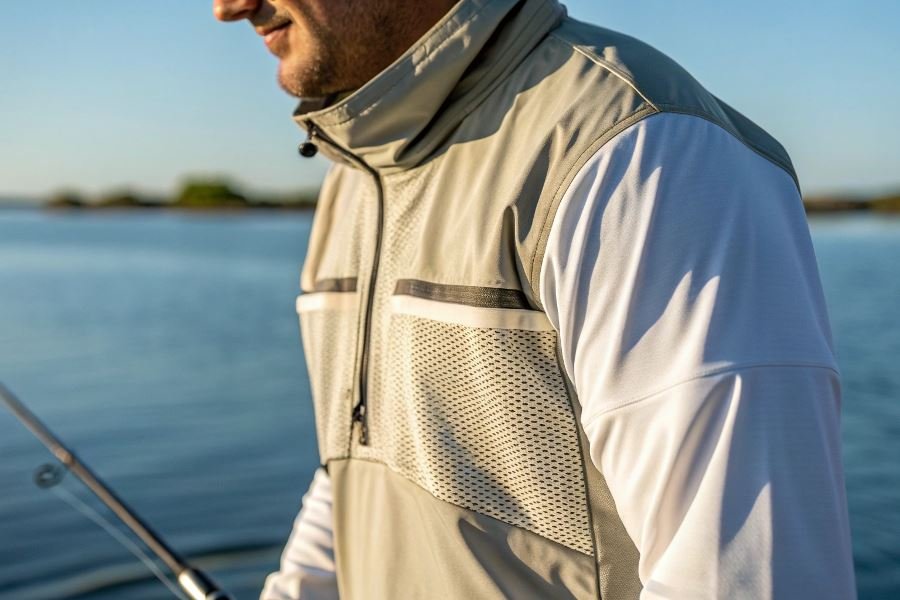
Ever stood waist-deep in rushing water, feeling the sun beating down while a regular cotton t-shirt clings uncomfortably to your back? That moment perfectly illustrates why specialized fishing apparel isn’t just a luxury—it’s essential equipment that can make or break your day on the water.
Technical fishing shirts aren’t just clothes—they’re tools. While that everyday button-down might look similar to a fishing shirt, the differences are profound. Purpose-built fishing shirts incorporate UV protection that doesn’t wash out after 40 cycles, moisture-wicking fabrics that dry in minutes rather than hours, and ventilation systems strategically placed where anglers need them most.
“The right shirt can extend your time on the water by hours, especially during summer months when heat exhaustion becomes a real concern.”
What truly separates fishing shirts from regular outdoor wear is their functional design. Features like roll-tab sleeves allow quick adjustment as conditions change, while reinforced shoulders prevent wear from backpack straps. Many include specialized pockets positioned for easy access while wearing waders or a fishing vest.
When selecting your fishing shirt, three considerations should top your list:
- Environmental protection – UV blocking, insect repellency, and appropriate insulation
- Mobility features – Articulated sleeves, vented backs, and stretch panels
- Practical details – Quick-drying fabric, secure pockets, and snag-resistant materials
The evolution of fishing shirt technology has transformed what anglers can expect from their gear. Today’s technical shirts work harder so you can focus on what matters—landing that trophy catch.
Fishing Shirts That Work As Hard As You Do
When you’re out on the water for hours, your shirt isn’t just clothing—it’s equipment. The functional features of shirts for active fishing have evolved dramatically, transforming what was once basic apparel into technical gear that can make or break your experience on the water.
Sun Shield Technology That Actually Works
UV protection isn’t optional anymore—it’s essential. Modern fishing shirts offer UPF (Ultraviolet Protection Factor) ratings of 30-50+, blocking up to 98% of harmful rays. Brands like Columbia have pioneered technologies such as Omni-Shade™, which combines tight weave construction, UV-reflective threads, and UV-absorbing compounds.
The difference between UPF 30 and UPF 50+ becomes apparent after 8+ hours on reflective water surfaces.
What separates premium shirts from basic options is comprehensive coverage—thoughtfully designed collars that protect the neck, longer sleeves with thumb holes for back-of-hand protection, and extended hems that stay tucked when casting or reaching.
Moisture Management Systems
Nothing ruins a day faster than being soaked in sweat under the hot sun. The moisture-wicking capabilities in today’s performance fishing apparel use multi-layer fabric technologies that:
- Pull moisture away from skin
- Disperse it across the fabric surface
- Accelerate evaporation
| Technology | Drying Time | Comfort Level | Price Range |
|---|---|---|---|
| Basic Polyester | 45-60 min | Moderate | $30-45 |
| Advanced Poly-Blend | 20-30 min | High | $50-75 |
| Premium Nylon Microfiber | 10-15 min | Exceptional | $80-120 |
Simms Fishing Products and HUK have developed proprietary fabrics that can wick moisture while maintaining structure—crucial when you’re alternating between intense activity and stillness while waiting for fish.
Strategic Ventilation Architecture
The most innovative aspect of modern fishing shirts is their ventilation systems. These aren’t just random mesh panels—they’re strategically engineered airflow networks.
Back yoke vents create chimney effects that channel hot air upward and away from the body. Underarm gussets provide mobility while introducing cooling airflow to high-sweat zones. Side panel mesh maintains core temperature regulation without compromising sun protection.
A well-designed fishing shirt can create a microclimate that’s up to 7°F cooler than ambient temperature in direct sunlight.
The temperature regulation design in premium shirts incorporates:
- Mesh-backed pockets that double as vents when empty
- Adjustable sleeve systems that convert from full protection to cooling options
- Collar designs that protect while allowing neck cooling
- Strategic seam placement that prevents chafing during repetitive casting motions
What makes these features truly effective is their integration. When moisture-wicking fabrics work in concert with ventilation systems under a UV-protective outer layer, you get performance that adapts to changing conditions throughout your fishing day.
The best shirts don’t just perform well—they perform intelligently, with features that complement rather than compete with each other. This holistic approach to design is what separates truly functional fishing apparel from basic outdoor clothing with a few fishing-specific features tacked on.
Engineering the Ultimate Fishing Shirt
Strategic pocket placement that makes sense
When you’re waist-deep in rushing water with a trophy trout on the line, the last thing you need is to fumble through poorly designed pockets. Modern fishing shirts have evolved beyond basic button-ups into technical command centers. The strategic placement of specialized pockets has become a science in itself.
Today’s premium fishing shirts feature chest pockets positioned at the perfect height for quick access without looking down. Many designs now incorporate waterproof zippered compartments specifically sized for fly boxes, while others include specialized tool docks for nippers and forceps. The Columbia PFG line exemplifies this with their rod-holder loops and sunglasses cleaning patches built directly into chest pockets.
The difference between a good fishing shirt and a great one often comes down to whether you can access what you need without taking your eyes off your line.
Vertical entry pockets prevent items from falling out when you bend over, while mesh interior dividers keep smaller items organized. Some advanced models even feature hidden security pockets perfect for storing licenses or car keys.
Antimicrobial magic keeps the funk away
Let’s face it—fishing is a sweaty, slimy, sometimes smelly affair. After a full day on the water handling bait, fish, and working under the sun, traditional fabrics would typically retain odors that no amount of washing seems to eliminate.
Enter antimicrobial technology. Modern fishing shirts incorporate silver-ion treatments that actively prevent bacteria growth—the real culprit behind persistent odors. These treatments bond to the fabric fibers and create an environment hostile to microorganisms.
The science behind these treatments has advanced significantly, with brands like Simms incorporating proprietary blends that maintain effectiveness through hundreds of wash cycles. The result? Shirts that remain remarkably fresh even after multiple days on the water.
| Treatment Type | Effectiveness Duration | Environmental Impact |
|---|---|---|
| Silver Ion | 100+ washes | Low |
| Zinc Oxide | 50+ washes | Very Low |
| Copper Infused | 200+ washes | Medium |
These technologies don’t just fight odor—they also reduce the need for frequent washing, extending garment life and reducing environmental impact.
Built to withstand nature’s worst
Fishing environments can be brutally unforgiving. From jagged rocks and thorny brush to corrosive saltwater and relentless UV radiation, fishing shirts face challenges few other garments encounter.
Modern fishing shirts employ reinforced stitching patterns at high-stress points like shoulders and elbows. Many feature double-layered fabric panels in areas most prone to abrasion. Orvis has pioneered ripstop nylon blends that prevent small tears from expanding into garment-destroying gashes.
UV protection has become standard, with most technical fishing shirts offering UPF 30-50+ ratings. This isn’t just about preventing sunburn—it’s about maintaining fabric integrity. Standard fabrics can degrade after just 500 hours of sun exposure, while UV-treated technical fabrics maintain their strength for thousands of hours.
Salt resistance technology has made remarkable advances as well. Specialized fabric treatments create a barrier that prevents salt crystals from embedding in fibers, while quick-dry technologies ensure shirts don’t remain damp for long—crucial for preventing salt damage and chafing.
The best fishing shirts now incorporate reinforced button threads and corrosion-resistant zippers specifically designed to withstand repeated exposure to saltwater without failing when you need them most.