
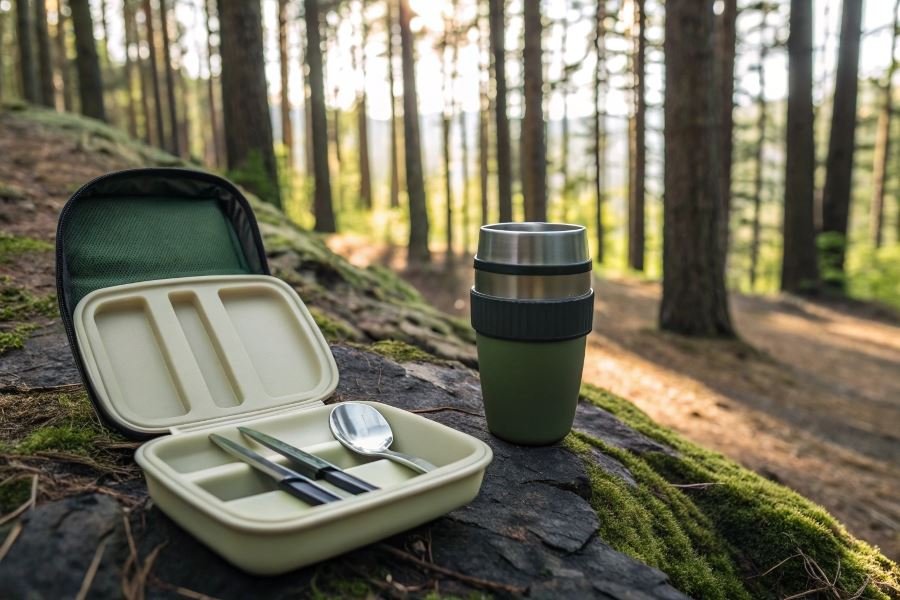
Ever stood at the summit of a mountain, unwrapping your sandwich while wondering what to do with the plastic wrapper that might outlive your grandchildren? The outdoor dining dilemma is real—and it’s getting a sustainable makeover.
Biodegradable disposable tableware represents the intersection where convenience meets conservation for outdoor enthusiasts. These products—designed to break down naturally after use—are transforming how we approach meals during hiking trips, camping excursions, and outdoor adventures.
What exactly counts as biodegradable tableware?
The market now offers an impressive array of options:
- Plates and bowls made from compressed palm leaves, bamboo fibers, or wheat straw
- Utensils crafted from cornstarch, potato starch, or sustainable wood
- Cups and containers derived from paper lined with plant-based PLA instead of plastic
The materials behind these innovations tell a fascinating story. Bamboo, one of nature’s fastest-growing plants, creates durable yet decomposable products. Palm leaf tableware uses fallen leaves that would otherwise become waste. Cornstarch-based items feel remarkably like plastic but return to the earth in months rather than centuries.
This shift toward eco-friendly alternatives isn’t just trendy—it’s necessary. National parks reported collecting over 70 million pounds of waste annually before implementing sustainability initiatives. The biodegradable tableware movement addresses this challenge head-on, allowing adventurers to enjoy convenience without compromising their environmental values.
The Green Revolution in Outdoor Dining
When you’re scaling that mountain trail or setting up camp by a pristine lake, the last thing you want to worry about is your environmental footprint. That’s where biodegradable tableware enters the picture, transforming how outdoor enthusiasts approach mealtime. The advantages of using biodegradable disposable tableware for tourism extend far beyond simple convenience—they represent a fundamental shift in how we interact with natural spaces.
The exploration of biodegradable disposable tableware for tourism: advantages and disadvantages reveals that the benefits significantly outweigh the drawbacks for most outdoor scenarios. From backpacking through national parks to family picnics at local beaches, these eco-friendly alternatives are changing the game.
Nature’s Best Friend
The environmental benefits of biodegradable tableware are substantial and immediate. Unlike traditional plastic plates and utensils that can take 450+ years to decompose, properly certified compostable options break down in as little as 180 days in commercial composting facilities. This dramatic reduction in decomposition time means less waste accumulating in our most treasured natural settings.
Reduced landfill pressure becomes evident when you consider the statistics: the average hiker generates approximately 1.5 pounds of trash per day on multi-day trips. By switching to biodegradable options, that waste transforms from persistent pollution to natural nutrients.
The true measure of our respect for wilderness isn’t just what we take in, but what we leave behind.
Biodegradable tableware also addresses the microplastic crisis. While conventional plastics fragment into harmful microparticles that contaminate water sources and soil, properly certified compostable alternatives from companies like Eco-Products leave no toxic residue.
Trail-Ready Practicality
For the active outdoor enthusiast, the practical advantages of biodegradable tableware are game-changing:
Weight savings make a significant difference on longer expeditions. A set of biodegradable plates, cups, and utensils weighs approximately 60% less than durable plastic alternatives and 85% less than traditional metal camping cookware.
| Tableware Type | Average Weight (oz) | Durability Rating | Environmental Impact |
|---|---|---|---|
| Biodegradable | 0.3-0.8 | Single-use | Minimal |
| Plastic | 0.8-2.0 | Multi-use | Severe |
| Metal | 2.5-6.0 | Years | Moderate |
Safety considerations also favor biodegradable options. Unlike plastic that can leach chemicals when exposed to heat or sunlight, plant-based alternatives from manufacturers like Repurpose maintain food safety even in challenging outdoor conditions.
The convenience factor cannot be overstated. After enjoying a meal at your campsite, the ability to compost your tableware (where facilities exist) or know it will break down naturally eliminates the need to pack out greasy, food-soiled items.
Community Impact Champions
Perhaps the most overlooked advantage is the positive social impact biodegradable tableware has on tourism destinations. Popular outdoor recreation areas often struggle with waste management infrastructure. When visitors choose compostable options, they significantly reduce the burden on local communities.
Economic benefits flow to destination areas as well. Many biodegradable tableware companies partner with local agricultural operations to source materials like sugarcane fiber, corn starch, and bamboo. This creates sustainable income streams for communities that host tourism activities.
By demonstrating environmental leadership, tourists using biodegradable tableware help establish new norms that influence both fellow travelers and local businesses. This ripple effect has already transformed waste management practices in tourism hotspots from Yosemite to the Appalachian Trail.
The choice of biodegradable tableware represents more than convenience—it’s a statement about how we value the places we love to explore.
The Hidden Costs of Going Green on the Trail
The premium price tag of eco-friendly dining
Let’s face it—doing right by Mother Nature often hits your wallet first. Biodegradable tableware typically costs 20-30% more than traditional plastic options. While a standard pack of 50 plastic plates might run you $5.99, comparable plant-based alternatives from brands like Eco-Products often command $7.99 or higher. For budget-conscious adventure planners, this price differential creates a genuine decision point.
The cost gap becomes even more pronounced when outfitting larger groups. A family reunion of 50 people using biodegradable options might spend an additional $25-40 on tableware alone—money that could otherwise cover trail snacks or campsite fees.
The economics improve at scale, but most tourists don’t purchase in bulk quantities that would trigger meaningful discounts. This creates a practical barrier to adoption, especially for those planning occasional outings rather than regular excursions.
When eco-plates meet Mother Nature’s mood swings
The performance limitations of biodegradable tableware can be frustratingly real. Many plant-based plates and utensils simply don’t handle extreme conditions with the resilience of their plastic counterparts.
Hot foods present a particular challenge. Pour steaming chili into a corn-starch bowl, and you might find it softening uncomfortably fast. Similarly, many biodegradable utensils lack the structural integrity to handle dense foods like steak or frozen desserts without bending or breaking.
Weather conditions compound these challenges:
| Weather Condition | Biodegradable Performance | Traditional Plastic Performance |
|---|---|---|
| High Humidity | Softens prematurely | Maintains structure |
| Heavy Rain | May begin decomposing | Unaffected |
| Extreme Heat | Warps and weakens | Generally stable |
| Cold/Freezing | Becomes brittle | Maintains flexibility |
For hikers and campers facing unpredictable elements, these performance variables create legitimate concerns about reliability when miles from civilization.
The composting catch-22
Perhaps the most significant limitation lies in disposal infrastructure—or rather, its absence. The bitter irony of biodegradable tableware is that it requires specific composting conditions to break down properly. Without access to commercial composting facilities, these products often end up in standard landfills where they can’t decompose as designed.
Most tourist destinations—particularly remote natural areas—lack appropriate composting infrastructure. National parks like Yellowstone and Yosemite have made strides in waste management, but comprehensive composting remains the exception rather than the rule.
The uncomfortable truth: biodegradable products incorrectly disposed of in landfills can actually generate more methane than conventional plastics as they break down in anaerobic conditions. This creates a situation where well-intentioned tourists might inadvertently cause more environmental harm than if they’d used traditional disposables and properly packed them out.
For tourism operators and eco-conscious travelers, this infrastructure gap represents the most significant barrier to realizing the environmental benefits these products promise. Without closing this loop, the additional cost and performance compromises become harder to justify on environmental grounds alone.