
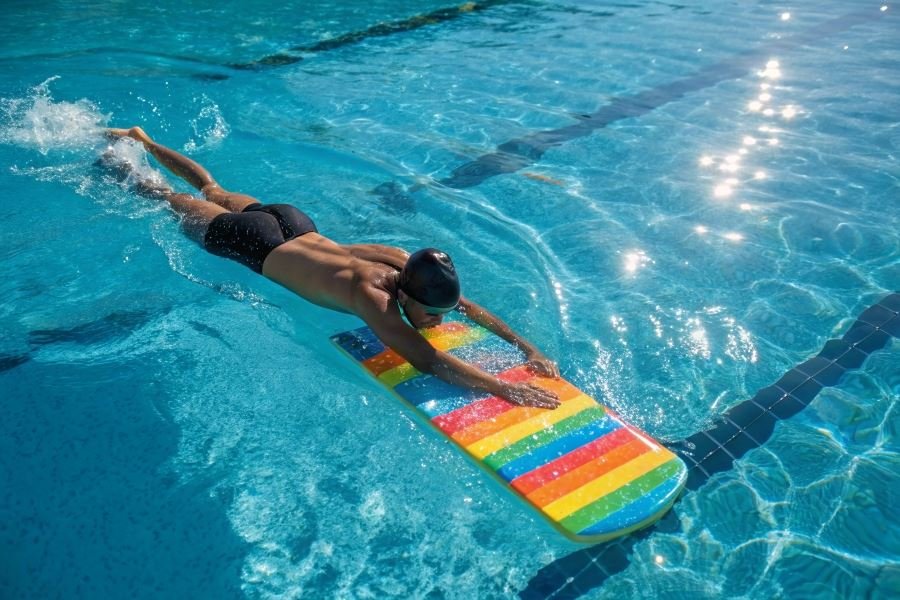
Ever watched open-water swimmers gliding confidently through vast lakes or ocean swells and wondered what that bright object trailing behind them was? That’s a swim buoy – your silent guardian in open water and possibly the most underrated piece of swimming equipment you’ll ever own.
Swimming buoys aren’t just colorful accessories; they’re potentially life-saving devices that deserve proper understanding. Whether you’re training for a triathlon or simply enjoying recreational swims, knowing how to use these floating companions correctly can make all the difference between a fantastic aquatic experience and a risky venture.
Types of buoys: Your floating companions
Different waters call for different buoys. Tow floats are lightweight, inflatable buoys that create minimal drag while providing visibility. Dry bags serve dual purpose – they increase visibility and keep your valuables dry. For those focused on training, pull buoys are placed between your thighs to isolate upper body muscles and improve stroke technique.
Safety first: Why buoys matter
The fluorescent colors of swim buoys make swimmers visible to boats and other water users from up to 400 meters away. Beyond visibility, many models provide flotation support during fatigue – a feature that saved countless swimmers during the 2023 World Open Water Championships when unexpected currents challenged even elite athletes.
Before you float: Essential preparation
Never hit the water without checking your buoy’s inflation and securing the waist strap properly. A loose connection can mean losing your buoy mid-swim. Test the tether length – too short restricts movement, too long creates dangerous drag. And remember: even with a buoy, always inform someone about your swimming route and expected return time.
Mastering Buoy Techniques for Every Swim Environment
Swimming with a pull buoy transforms your water experience, creating a powerful platform for technique refinement and upper body development. The difference between casually using a buoy and strategically implementing it into your training regimen is dramatic – like comparing a casual jog to interval training. Let’s dive into the technical aspects that make buoy training truly effective.
Body Positioning in Open Water
Open water swimming demands a completely different approach to buoy placement than pool training. The proper technique for using a swimming buoy in open water environments starts with positioning the buoy high between your thighs, creating maximum hip elevation. This higher placement counteracts the natural wave action that tends to drop your legs in open water.
Key positioning tips:
- Place the buoy firmly between upper thighs, not at the knees
- Maintain a horizontal body line from fingertips to toes
- Keep your head aligned with your spine, looking slightly forward
- Engage your core to prevent excessive hip rotation
When swimming in lakes or oceans, the buoy becomes not just a training tool but a stability anchor. Many competitive triathletes practice with slightly smaller buoys in open water to simulate race conditions while maintaining proper form.
Effective Stroke Mechanics
Your stroke mechanics change significantly when swimming with a buoy. Without leg kick propulsion, your upper body must generate all forward momentum, revealing any inefficiencies in your pull pattern.
Focus on these technical elements:
- Extend your arm fully before initiating the catch phase
- Drive your elbow high during the recovery
- Maintain a strong forearm position throughout the pull
- Finish each stroke completely before beginning the next
The buoy eliminates the tendency to rely on leg kick to compensate for poor upper body technique. This isolation creates the perfect environment to develop a more powerful, efficient stroke that translates to faster swimming even when you return to full-body swimming.
Adapting to Different Water Conditions
Water conditions dramatically impact how you should use your buoy. The technique variations required between calm pool water, choppy lakes, and ocean swells are substantial.
| Water Condition | Buoy Placement | Body Position Adjustment | Stroke Modification |
|---|---|---|---|
| Calm Pool | Standard mid-thigh | Neutral spine | Focus on rotation |
| Choppy Lake | Higher placement | Slightly elevated head position | Shortened stroke cycle |
| Ocean Swells | Tightest possible grip | More aggressive body roll | Deeper catch position |
In rougher conditions, grip the buoy more firmly and consider a slightly wider arm recovery to maintain balance. For current or tidal situations, your body position becomes even more critical – maintain a lower profile in the water when swimming against current.
Advanced technique: In particularly challenging open water conditions, some elite swimmers alternate between standard and “offset” buoy positions, where the buoy is slightly angled to one side to counterbalance crosscurrents.
The versatility of buoy training makes it invaluable for swimmers at every level. By mastering these environment-specific techniques, you’ll develop adaptability that translates to confident, efficient swimming regardless of conditions. Your buoy isn’t just a flotation device – it’s the cornerstone of technical swimming excellence.
Maximizing Safety and Performance With Swimming Buoys
Common mistakes that sink your swim
Even experienced swimmers make critical errors with buoys that compromise both safety and training effectiveness. The most prevalent mistake? Improper positioning. Many swimmers place the buoy too far forward or backward, creating unnecessary drag and potentially dangerous instability. Your buoy should rest comfortably at your lower back, not riding up toward your shoulders or slipping down toward your legs.
Another frequent error is over-reliance on the buoy for flotation. Remember, these devices are training aids, not lifesaving equipment. I’ve watched countless swimmers develop poor technique by letting the buoy do all the work instead of maintaining proper body position through core engagement.
Incorrect strap adjustment ranks third among common mistakes. Too loose, and your buoy becomes a distraction; too tight, and it restricts blood flow and natural movement. The perfect fit allows for comfortable breathing while keeping the buoy securely in place during dynamic movements.
Buoy maintenance that extends performance life
Your swimming buoy deserves the same care as your premium goggles or technical swimsuit. After each session, rinse thoroughly with fresh water to remove chlorine, salt, and other contaminants that accelerate material breakdown. This simple 30-second habit can double your buoy’s lifespan.
For deeper cleaning, use mild soap monthly to remove body oils and sunscreen residue that can degrade materials over time. Avoid harsh chemicals that can compromise buoyancy and structural integrity.
Storage matters tremendously. Never leave your buoy deflated and crumpled in your swim bag. Instead:
| Storage Do’s | Storage Don’ts |
|---|---|
| Store partially inflated | Leave in direct sunlight |
| Keep in cool, dry place | Compress under heavy items |
| Hang to maintain shape | Store while still wet |
Inspect valve integrity regularly—a failing valve means a failing buoy at precisely the wrong moment. Most quality buoys from manufacturers like Speedo and TYR include replacement valves that extend product life significantly.
Progressing your swimming with strategic buoy usage
The swimming buoy isn’t just a safety device—it’s a sophisticated training tool when used progressively. Begin with basic familiarization drills, focusing on maintaining proper body position while the buoy supports your legs. This foundation builds confidence and technique simultaneously.
As your comfort increases, incorporate interval training. Try 5x100m sets with 30 seconds rest, focusing on arm technique while the buoy stabilizes your lower body. This targeted approach accelerates upper body strength development without the fatigue of full-body swimming.
Advanced swimmers should experiment with periodic buoy removal during longer sets. This contrast training heightens proprioception—your body’s awareness of position in water—creating more efficient movement patterns when the buoy returns.
For those pursuing open water swimming, practice sighting techniques with your buoy. The added stability allows you to perfect the quick head lift needed to navigate open water without disrupting your stroke rhythm.
Track your progress methodically. Record swim times with and without the buoy to measure improvements in arm strength and overall efficiency. Many swimmers discover their non-buoy times improve dramatically after consistent buoy training, proving its effectiveness beyond simple flotation.
By avoiding common mistakes, maintaining your equipment properly, and following a progressive training approach, your swimming buoy becomes more than just a safety accessory—it transforms into a catalyst for swimming excellence.