
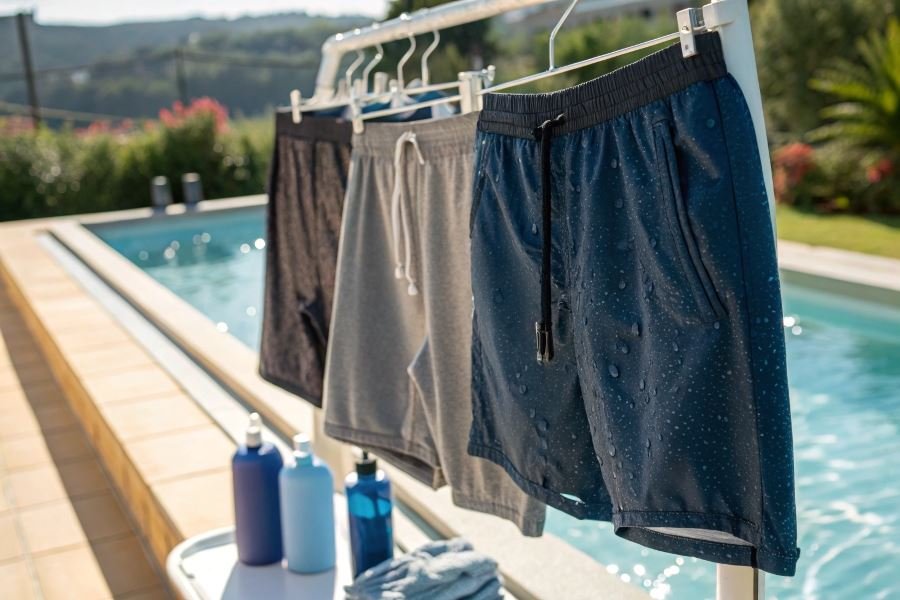
Ever jumped into a pool only to have your shorts balloon up like a parachute or, worse, felt that uncomfortable restriction that makes every stroke a struggle? That’s not just annoying—it’s compromising your entire swimming experience.
When Michael Phelps clinched his record-breaking 8th gold medal at the 2008 Olympics, he wasn’t battling ill-fitting swimwear. The difference between championship performance and frustration often comes down to something seemingly simple: proper fit. For everyday swimmers, the stakes might be lower, but the comfort factor remains just as crucial.
Swimming shorts aren’t just shorter versions of your everyday casual wear. They’re engineered differently, with specific fabrics that interact with water, linings designed for support, and cuts that accommodate the full range of swimming motions. Unlike regular shorts that might feel fine standing around, swimming shorts need to perform during lateral movements, kicks, and submersion.
Common sizing misconceptions plague even experienced swimmers. Many assume their regular pants size translates directly to swimwear (it often doesn’t). Others believe tighter always means better performance (not necessarily). Some even select sizes based solely on waist measurements, ignoring crucial factors like thigh circumference and inseam length.
“The right swimming shorts should feel like a natural extension of your body—noticeable when wrong, invisible when right.”
Understanding proper swimming shorts sizing isn’t just about looking good poolside—it’s about enhancing your water experience, whether you’re doing serious laps or just enjoying a casual swim with family.
Get the Perfect Fit: Swimming Shorts Measurements That Matter
Finding swimming shorts that fit like they were made for you isn’t just about comfort—it’s about confidence in and out of the water. The right measurements can transform your swimming experience from awkward tugging to effortless enjoyment. Let’s dive into the essential measurements that will help you nail that perfect fit.
Mastering the Waist Measurement
Your waist measurement forms the foundation of how to choose the right size of swimming shorts. Unlike regular pants that might sit below your natural waist, swim trunks typically rest at or slightly below your navel.
The Natural Waist Technique:
- Stand naturally and breathe normally
- Find the narrowest part of your torso (usually around your navel)
- Wrap a flexible measuring tape around this point
- Keep the tape snug but not tight—you should be able to slip a finger underneath
Remember that swimming shorts often feature drawstrings or elastic waistbands that provide 1-2 inches of flexibility, but the base measurement should still be accurate.
Many swimmers make the mistake of buying shorts based on their pant size alone. However, swimming shorts from brands like Speedo or TYR often use different sizing systems that may not directly correlate with your everyday clothes.
Inseam Length: The Style and Function Factor
The inseam measurement dramatically affects both your mobility in water and your overall look.
| Inseam Length | Style | Best For |
|---|---|---|
| 1-3 inches | Brief/Square cut | Competitive swimming, maximum mobility |
| 4-6 inches | Short trunks | Recreational swimming, athletic builds |
| 7-9 inches | Medium trunks | Versatile use, most body types |
| 10+ inches | Board shorts | Surfing, additional coverage |
To measure your inseam correctly, start from your crotch and measure down your inner leg to where you want the shorts to end. Shorter inseams offer greater freedom of movement—crucial for serious lap swimmers—while longer inseams provide more coverage and protection.
Pro tip: If you’re between sizes, consider your primary activity. Go shorter for performance swimming and longer for beach lounging or water sports.
Hip and Thigh Measurements for All-Day Comfort
Nothing ruins a day at the pool faster than swimming shorts that bind at the hips or thighs.
To measure your hips:
- Stand with feet together
- Measure around the fullest part of your buttocks
- Ensure the tape remains level all the way around
For thighs, measure the circumference at the widest point of each thigh. Swimming shorts should allow for approximately 1-2 inches of ease in these areas to prevent chafing and restriction.
The relationship between these measurements creates what swimmers call the “mobility triangle”—the perfect balance between waist, hip, and thigh measurements that allows for optimal movement in water.
Brands like Nike Swim and Arena offer size charts that include all three measurements, helping you triangulate your perfect fit. When these measurements align correctly, you’ll experience that rare combination of security and freedom that makes for the perfect swim.
Remember that materials matter too—fabrics with 10-15% elastane or spandex will provide additional flexibility, potentially allowing you to size down if you’re between measurements.
Nailing the Perfect Swimming Shorts Fit
Finding swimming shorts that fit like they were made for you isn’t just about comfort—it’s about confidence in and out of the water. When you’ve narrowed down your size range but need to make that final decision, these practical strategies will ensure you walk away with shorts that feel like a second skin.
Decoding Brand Size Languages
Ever noticed how a medium in one brand fits like a large in another? You’re not imagining things. Brand sizing variations are real and sometimes dramatic:
- Speedo typically runs smaller and more form-fitting than other brands
- Nike swimming shorts often follow their athletic wear sizing (slightly slimmer cut)
- Quiksilver and Billabong tend toward a more relaxed, generous fit
When shopping online, don’t just rely on the size chart—dig deeper. Many brands now include customer reviews with “fits true to size” ratings. These real-world assessments can be worth their weight in gold.
Pro tip: When between sizes in performance-oriented brands like TYR or Arena, size down for racing and training, size up for casual beach wear.
The Ultimate Try-On Checklist
When you’re in the fitting room (or evaluating at home), run through this comprehensive fit assessment:
-
Waistband test: The waistband should sit comfortably at your natural waist without digging in or sliding down when you move.
-
Squat check: Perform a deep squat. If the shorts bind, pull, or restrict movement, they’re too small.
-
Leg opening assessment: The leg openings should allow free movement without excessive bagginess or riding up.
-
Sit-down evaluation: Sitting reveals if the shorts are too tight across the thighs or if they bunch uncomfortably.
-
Material tension: Look for wrinkles or stretching across the fabric—signs the shorts are straining to cover you.
The perfect swimming shorts should feel like they’re barely there, with no pinching, binding, or sagging when wet.
Between Sizes? Adjustable Features Save the Day
Modern swimming shorts come packed with features that can accommodate those of us who fall between standard sizes:
| Adjustable Feature | Benefit | Best For |
|---|---|---|
| Drawstring waist | Fine-tune the waistband fit | Athletic builds with narrower waists |
| Elastic waistband | Provides flexibility and comfort | Fluctuating weight or all-day wear |
| Side tabs/buckles | Allows for precise waist adjustment | Board shorts and longer styles |
| Stretch fabric | Conforms to your body | Performance swimming and active water sports |
Volcom offers an innovative “Cinch Fly” system that provides extra adjustability, while O’Neill features their “Hyperfreak” stretch technology that adapts to your body shape.
Remember that swimming shorts will often loosen slightly when wet, so a snug (but comfortable) fit when dry is ideal. If you’re truly caught between sizes, consider how you’ll use them: size up for casual beach days and lounging, size down for active swimming and water sports where drag matters.
The right swimming shorts should move with you, not against you—whether you’re catching waves, doing laps, or simply enjoying a perfect day by the water.