
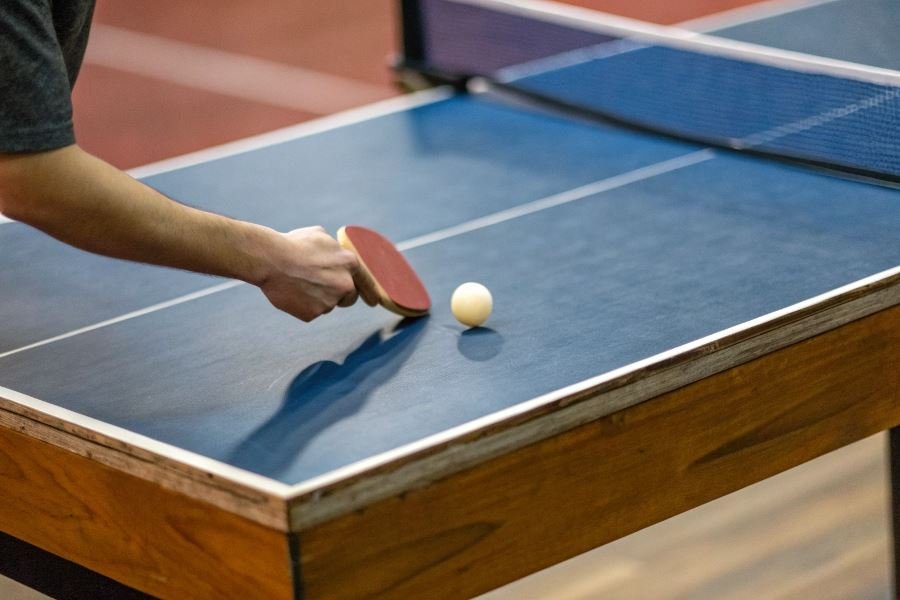
Ever watched a professional ping pong match and wondered why the ball bounces so perfectly? The secret lies not just in skill, but in the table itself. The playing surface you choose can make the difference between frustrating rebounds and tournament-worthy rallies.
When deciding between folding and stationary tables, you’re essentially choosing between convenience and performance. Stationary tables, the gold standard in competitive environments, offer unmatched stability and consistent bounce. The ITTF (International Table Tennis Federation) has used fixed tables in world championships since their inception in 1926, and for good reason – they deliver professional-grade play without compromise.
Folding tables, meanwhile, have revolutionized home play. They transform from storage-friendly units to ready-to-play surfaces in minutes, making them perfect for spaces that serve multiple purposes. The quality gap has narrowed significantly in recent years, with premium folding models now featuring 25mm tops that rival their stationary counterparts.
Your decision ultimately hinges on three critical factors:
- Available space – Do you need to reclaim your area after play?
- Play level – Are you practicing for competition or casual fun?
- Budget considerations – Stationary tables typically command higher prices, starting around $600 for quality models
Remember that the best table is ultimately the one you’ll use most often – whether that means prioritizing convenience or performance depends entirely on your specific needs.
The Ultimate Table Tennis Table Showdown
Space Efficiency vs Permanent Presence
When considering the choice between folding and stationary tables for table tennis, the first factor that demands attention is space management. Stationary tables command a permanent footprint of approximately 9 feet by 5 feet (2.74m by 1.525m), plus additional clearance space of at least 5 feet on all sides for competitive play. That’s roughly 300 square feet of dedicated space—a luxury many enthusiasts simply don’t have.
Folding tables, by contrast, offer remarkable versatility in homes where space comes at a premium. The debate around folding vs stationary tables for table tennis: which is better often hinges on this very point. A quality folding table from JOOLA or Butterfly typically requires just 2 feet of depth when stored, allowing you to reclaim your space when not engaged in fierce rallies. Many models feature wheels for effortless repositioning, with storage dimensions averaging 60″ x 22″ x 64″ when folded.
Playing Performance That Matters
The playing surface quality creates the most significant performance difference between these table types:
| Feature | Stationary Tables | Folding Tables |
|---|---|---|
| Bounce consistency | Exceptional (9.5/10) | Good to Very Good (7-8.5/10) |
| Surface thickness | 25-30mm (tournament grade) | 15-25mm (recreational to mid-range) |
| Frame stability | Rock-solid | Variable (depends on locking mechanism) |
| Seam presence | None | Often present at fold point |
Stationary tables deliver tournament-level performance with bounce consistency that remains unmatched. The absence of joints or folding mechanisms means the playing surface maintains perfect uniformity. Professional-grade stationary tables like those from Stiga feature 1-inch (25mm) thick tops that provide ideal ball response and prevent warping over time.
Folding tables have dramatically improved in recent years, with premium models offering 22-25mm surfaces and sophisticated locking mechanisms that minimize the dreaded “dead spot” at the center seam. However, even high-end folding tables from Killerspin can’t quite match the rock-solid stability of their stationary counterparts during aggressive play.
Longevity and Investment Value
The durability equation favors stationary tables significantly:
- Stationary tables: 15-20+ years of consistent performance
- Folding tables: 5-10 years before noticeable degradation
The moving parts in folding tables—hinges, wheels, and locking mechanisms—inevitably wear over time. Stationary tables eliminate these failure points entirely. Tournament-grade stationary tables from Cornilleau often feature reinforced corners, steel undercarriages, and moisture-resistant coatings that withstand decades of play.
Maintenance requirements also differ substantially. Folding tables need regular inspection of hinges, wheels, and locking mechanisms, plus careful handling during folding/unfolding to prevent warping. Stationary tables require only surface cleaning and occasional leveling adjustments.
For serious players who practice daily, the superior bounce quality and longevity of stationary tables justify their higher initial investment. However, recreational players with space constraints will find today’s premium folding tables offer an excellent compromise between performance and practicality, with models like the JOOLA Inside delivering impressive play characteristics while still fitting in a closet when not in use.
Making the Right Choice: Your Perfect Ping Pong Table
For Casual Home Players: Fun Without the Fuss
If you’re setting up a recreational ping pong space at home, folding tables offer unbeatable convenience. The JOOLA Inside and STIGA Advantage models dominate this category for good reason. These tables typically weigh between 140-180 pounds and feature 15-16mm playing surfaces—perfectly adequate for family game nights and casual play.
The primary advantage? Storage flexibility. Most folding tables can collapse to a footprint of just 60″×30″×5″, allowing you to reclaim your space when not playing. Many models include wheel locks and safety mechanisms to prevent accidental closures during play.
The best home table is one that actually gets used—prioritize convenience and you’ll play more often.
For apartments and smaller homes, consider the Butterfly Personal or midsize options that offer 75% of regulation size but fold to even more compact dimensions. These typically run 299−499, making them an accessible entry point.
For Competitive and Club Players: Performance Matters
Serious players require different specifications. Stationary tables with 19-25mm thick surfaces provide tournament-standard bounce consistency that folding mechanisms simply can’t match. The Butterfly Centrefold 25 and STIGA Expert Roller represent the gold standard here.
Competition-grade tables feature:
- Reinforced undercarriages that eliminate vibration
- Precisely calibrated steel legs with micro-adjusters for perfect leveling
- Consistent bounce across the entire playing surface
- Professional-grade net systems with tension adjustment
For club environments, durability becomes paramount. Tables that will see 8+ hours of daily use should feature anti-scratch coatings and corner protectors to withstand inevitable collisions and intensive use.
Cost-Benefit Analysis: Investment Value
| Table Type | Initial Cost | Lifespan | Cost Per Year | Best For |
|---|---|---|---|---|
| Basic Folding | 299−599 | 3-5 years | ~$120 | Casual home use |
| Premium Folding | 699−999 | 5-8 years | ~$125 | Dedicated recreational players |
| Club Stationary | 1, 299−1,999 | 10-15 years | ~$133 | Serious competitors |
| Tournament Grade | $2,000+ | 15-20 years | ~$125 | Professional settings |
The numbers reveal an interesting truth: higher-end tables often represent better long-term value. While the initial investment is steeper, the extended lifespan means the annual cost difference is surprisingly minimal.
Consider your development trajectory as a player. Many enthusiasts who purchase entry-level tables find themselves upgrading within 2-3 years as their skills improve. A single quality purchase might ultimately save money compared to multiple upgrades.
For competitive players, the Donic Waldner Classic 25 represents the sweet spot between tournament-grade performance and reasonable investment at approximately $1,499.
Remember that resale value correlates strongly with brand reputation and build quality. Premium brands like Butterfly, STIGA, and JOOLA typically retain 40-60% of their value after 5 years, while budget options may become essentially worthless in the secondary market.
Choose based on your playing frequency, skill development goals, and space constraints—the perfect table is the one that maximizes your enjoyment of this fantastic sport.