
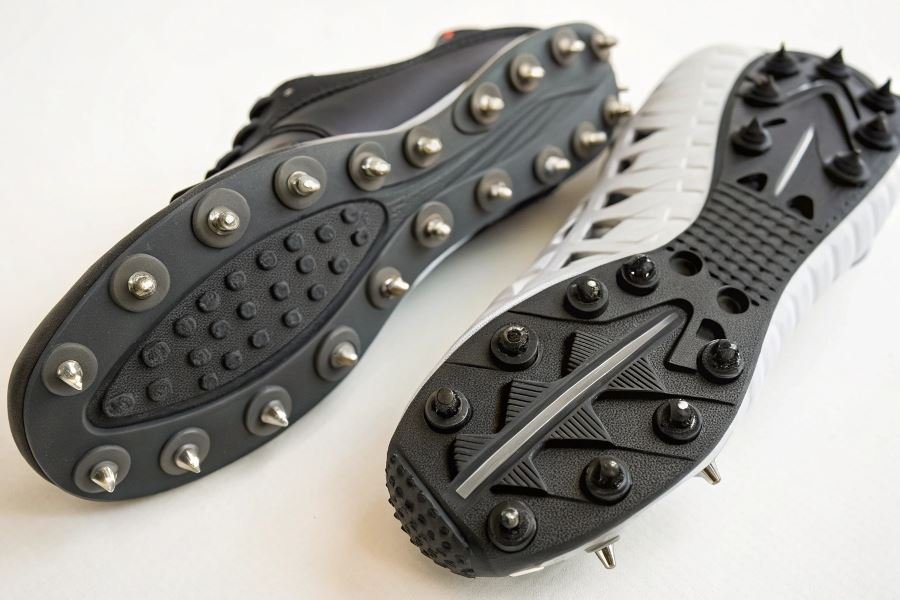
Ever wondered why elite sprinters seem to float across the track while amateurs struggle for grip? The secret often lies not in training hours, but in something surprisingly basic: properly fitted spike shoes.
Finding your perfect spike shoe fit isn’t just about comfort—it’s the foundation of athletic performance. When your track spikes fit correctly, they become an extension of your body, transforming raw power into precision movement. The difference between a personal record and a disappointing finish can literally be measured in millimeters of fit.
The performance-injury connection
Poorly sized spike shoes create a dangerous domino effect. Too tight, and you risk restricted blood flow, blisters, and even stress fractures. Too loose, and sudden slippage can lead to ankle sprains or worse. Research from the American Journal of Sports Medicine shows that approximately 65% of track athletes experience foot-related injuries, with improper footwear sizing being a primary culprit.
Not your everyday sneakers
Spike shoes differ fundamentally from regular athletic footwear in several critical ways:
- Precision fit: While regular running shoes allow 0.5-1 inch of toe room, spike shoes require a much snugger fit with only about 0.25 inches of clearance
- Specialized plate: The rigid spike plate demands different sizing considerations than flexible training shoes
- Event-specific design: Sprint spikes fit differently than distance spikes or jump spikes
The event dictates the fit
Different track and field disciplines demand specialized spike configurations:
| Event Type | Spike Length | Fit Characteristics | Key Sizing Consideration |
|---|---|---|---|
| Sprints (100-400m) | 6-9mm | Ultra-snug, minimal heel | Size down 0.5 from regular shoes |
| Middle Distance | 4-6mm | Balanced support | True to size or 0.5 down |
| Distance | 3-5mm | More cushioning | Similar to regular running shoes |
| Jumps | 6-9mm | Specialized placement | Snug midfoot, secure heel |
The right spike shoe size transforms your connection to the track, turning good technique into great performance.
Mastering the Perfect Fit for Track Spikes
Finding the right size for your track spikes can make the difference between setting a personal record and nursing painful blisters. Unlike casual footwear, spike shoes demand precision fitting to maximize performance and prevent injury. Let’s dive into the science and art of getting that perfect fit.
Measure Like a Pro
The journey to properly fitting spike shoes begins with accurate foot measurement. Here’s how to nail it:
-
Measure late in the day – Feet naturally expand throughout the day, similar to how they’ll swell during competition. Afternoon or evening measurements provide the most accurate sizing.
-
Use a proper foot measuring device – A Brannock Device gives the most accurate readings, but a ruler against a wall works in a pinch.
-
Measure both feet separately – Most athletes have one foot slightly larger than the other (sometimes by half a size). Always fit to your larger foot.
-
Stand while measuring – Weight-bearing measurements reflect how your feet will actually perform in competition.
-
Record three measurements: length, width, and arch length. The arch measurement is crucial for spike shoes as it ensures the spike plate aligns properly with your foot’s mechanics.
When selecting the size of spike shoes for track events, understanding the features of sports footwear designed specifically for performance is essential. The placement of the spike plate must align with the ball of your foot, which is why standard shoe sizing often falls short for specialized athletic footwear.
Brand Variations That Can Trip You Up
Track spike sizing isn’t standardized across manufacturers, creating a sizing maze for athletes:
| Brand | Sizing Tendency | Toe Box | Width Profile |
|---|---|---|---|
| Nike | Runs narrow | Tapered | Narrow-Medium |
| New Balance | True to size | Roomier | Medium-Wide |
| Adidas | Runs small | Medium | Medium |
| Saucony | Runs small | Narrow | Narrow |
| ASICS | True to size | Structured | Medium |
Pro tip: When switching brands, don’t assume your size carries over. Many elite runners size up by half a size when moving from road shoes to track spikes, regardless of brand.
The Dynamic Foot Factor
Your feet aren’t static, especially during competition. Two critical considerations often overlooked:
Sock Strategy Matters
The thickness of your competition socks dramatically affects fit. A difference of mere millimeters can transform a perfect fit into a blister factory:
- Racing socks (0.5-1mm thick): May require tighter spike sizing
- Training socks (1.5-3mm thick): Often need a half-size larger spike
- Compression socks (variable thickness): Test before competition day
Competition Swelling Reality
During high-intensity competition, feet can expand up to half a size due to:
- Increased blood flow to working muscles
- Heat expansion
- Impact-related swelling
The 1-2 hour rule: Your feet will be approximately the same size after 1-2 hours of activity as they will be during competition. Schedule a final fitting trial after a training session of similar intensity to your upcoming event.
Remember that properly fitted spikes should feel snug but never painful. Your toes should have about a thumb’s width of space, and the arch support should align perfectly with your foot’s natural arch. This attention to detail will pay dividends on the track when every millisecond counts.
The Hidden Science of Spike Shoe Fit
When elite athletes shave milliseconds off their times, they’re not just pushing their bodies—they’re leveraging every advantage their equipment offers. Spike shoes represent perhaps the most intimate connection between athlete and performance, where fit isn’t just about comfort—it’s about transferring every ounce of power from muscle to track.
Spike plate architecture dictates your fit
The spike plate—that rigid composite platform underneath—isn’t just where metal meets track. It’s the foundation of your entire fit experience.
The stiffer the plate, the more precise your sizing needs to be. Full-length carbon fiber plates, like those found in the Nike ZoomX Dragonfly, offer minimal flex and demand exact sizing. A shoe that’s even 5mm too long with a carbon plate creates a leverage point that wastes energy with every stride.
Conversely, thermoplastic plates found in mid-range models allow more natural foot movement, providing forgiveness if sizing isn’t perfect. This relationship between plate rigidity and fit explains why elite sprinters often size down compared to their training shoes.
The placement of spike pins also influences how your foot sits in the shoe. Forward-positioned pins create a natural forward lean that can make shoes feel shorter during acceleration phases.
| Spike Plate Material | Sizing Recommendation | Breaking-in Period |
|---|---|---|
| Carbon Fiber | Size precisely or 0.5 size down | Minimal (5-10 sessions) |
| Pebax | True to size | Moderate (10-15 sessions) |
| Thermoplastic | True to size or 0.5 size up | Significant (15+ sessions) |
Upper materials transform over time
The upper material of your spike shoes doesn’t just hold your foot—it evolves with use, dramatically affecting long-term fit.
Synthetic mesh uppers stretch minimally, maintaining their original dimensions throughout their lifespan. The Adidas Adizero Avanti exemplifies this with its engineered mesh that holds its shape through hundreds of training sessions.
Knitted uppers, however, conform to foot shape over time. Initially snug knit uppers can expand up to half a size after 20-30 intensive sessions. This “memory effect” means many experienced athletes intentionally purchase knitted spikes slightly tighter than comfortable off the rack.
The most technical spike shoes now feature asymmetrical upper designs that account for the different expansion rates across various foot zones.
The breaking-in equation
Unlike regular running shoes, spike shoes undergo a complex breaking-in process that directly impacts sizing decisions.
Most track athletes report that spike shoes reach their optimal fit after 8-12 training sessions. During this period, the spike plate develops micro-flexion points aligned with your specific foot mechanics, while upper materials settle into position.
Temperature plays a surprising role in this process. Training in warmer conditions (above 75°F) accelerates breaking-in by making materials more pliable. This explains why new spikes often feel different during indoor versus outdoor seasons.
For distance events, consider that feet naturally expand during longer races. Middle and long-distance runners should account for approximately 3-5mm of foot expansion during events lasting over 15 minutes.
The ultimate test? A properly fitted spike shoe should feel like it disappears during competition—no pinching at the forefoot, no heel slippage during drive phases, and absolutely no conscious thought about your footwear when you’re pushing for the finish line.