
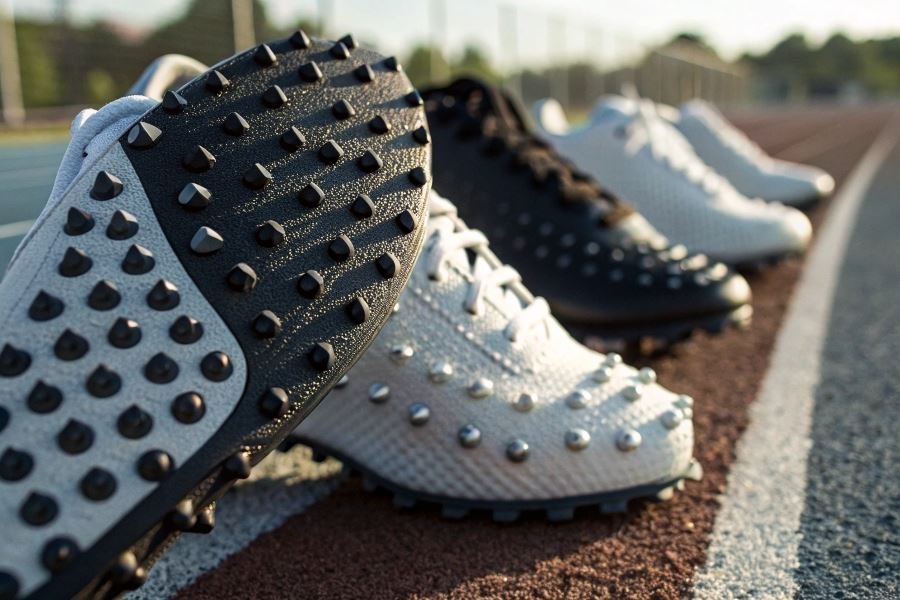
The difference between gold and silver at the Tokyo Olympics 100m final? A mere 0.04 seconds. In a sport where milliseconds matter, your footwear isn’t just equipment—it’s weaponry.
Sprint spikes are specialized athletic shoes designed with one purpose: to maximize speed over short distances. Unlike regular running shoes that prioritize cushioning and support, these lightweight warriors feature a rigid plate and metal pins that bite into the track, transforming every ounce of your power into forward momentum.
What makes sprint spikes special?
Sprint spikes serve as the critical interface between athlete and track. Their primary purpose is threefold: to minimize weight, maximize traction, and optimize energy transfer. The aggressive forward-leaning design essentially forces sprinters onto their toes—exactly where they need to be for explosive acceleration.
Why proper selection matters
Choosing the right sprint spikes isn’t just about comfort—it’s about unlocking your potential. Studies show that appropriate footwear can improve sprint times by up to 3%, which might seem small until you realize that’s the difference between first place and not making the finals at all.
First-time buyer essentials
If you’re new to sprint spikes, focus on these fundamentals:
- Fit: Snug but not painful, with minimal heel slippage
- Spike configuration: 7-8 pins for most sprinters
- Plate stiffness: Stiffer plates for pure sprinters, more flexible for multi-event athletes
- Weight: Lighter is generally better, but durability matters too
Remember that the perfect spike varies based on your event, experience level, and even foot anatomy. What propels one athlete to victory might hold another back.
Essential Features That Make or Break Sprint Spikes
When hundredths of a second separate champions from contenders, your footwear becomes mission-critical equipment. The right sprint spikes can propel you forward with explosive efficiency, while the wrong pair might as well be concrete blocks. Let’s dive into what truly matters when selecting these specialized speed weapons.
Spike Configuration Meets Track Surface
The relationship between your spike plate and the track surface is like a performance partnership. Different tracks demand different spike configurations:
Synthetic tracks (most common in modern facilities) perform best with:
- 6-9 mm needle spikes for maximum penetration
- 7-9 spike positions for optimal distribution
Mondo tracks (used in Olympic and elite competitions) require:
- Shorter 6-7 mm spikes to prevent damage
- More aggressive placement patterns
When evaluating sprint spikes, what to pay attention to when buying goes beyond just counting the number of spikes. The pattern of spike placement dramatically affects your power transfer and stability through each phase of your sprint.
“The spike plate is your power transfer system—it’s where your energy either propels you forward or gets wasted,” explains Olympic sprint coach Darren Williams.
| Track Surface | Recommended Spike Length | Ideal Configuration |
|---|---|---|
| Synthetic | 7-9 mm | 7-9 spikes, aggressive pattern |
| Mondo | 6-7 mm | 6-8 spikes, balanced pattern |
| Indoor | 4-6 mm | 6 spikes, compact pattern |
Weight and Materials That Define Performance
The evolution of sprint spike materials has been revolutionary. Today’s elite spikes weigh 30% less than models from just a decade ago, with some competition models tipping the scales at barely 4 ounces.
Carbon fiber plates have transformed the game, providing:
- Unmatched energy return
- Reduced weight without sacrificing stability
- Superior durability compared to traditional plastic plates
The upper construction matters just as much as the plate. Nike’s Atomknit and Adidas’s Primeknit technologies offer second-skin fit with strategic support zones that eliminate unnecessary weight.
Finding Your Performance Fit
Sprint spikes should fit differently than your training shoes. The ideal fit is:
Snug but not painful – Your toes should nearly touch the end of the shoe, with minimal movement during acceleration.
Heel lock is non-negotiable – Any slippage wastes precious energy and increases injury risk.
Width matters – Sprinters with wider feet should look to brands like New Balance and Saucony which offer multiple width options.
Most elite sprinters size down 0.5-1 size from their regular training shoes.
The toe box deserves special attention—it should be just roomy enough to allow your toes to splay naturally during push-off, but tight enough to eliminate any lateral movement.
Remember that different events may require different fits. The 100m specialist might prefer an extremely tight, aggressive fit, while 400m runners often choose a slightly more forgiving fit to accommodate foot swelling during longer races.
Your sprint spikes are precision instruments—treat the selection process with the same attention to detail you bring to your training. The right pair becomes an extension of your body, turning raw power into pure speed.
Sprint Spike Mastery: Advanced Considerations for Serious Competitors
Distance-Specific Spike Selection
The difference between dominating a 60-meter dash and conquering a 400-meter race lies significantly in your footwear. Short sprints (60-100m) demand maximum power transfer and aggressive traction. For these explosive events, look for:
- Rigid plates with minimal flex
- Higher pin counts (7-9 pins) for immediate grip
- Minimal heel cushioning to keep you on your toes
In contrast, 400-meter specialists need a balance of power and endurance. Your ideal spikes should feature:
- Semi-rigid plates with strategic flexibility
- Moderate pin configuration (5-7 pins)
- Slightly more heel support to reduce Achilles strain
The legendary Nike Superfly Elite 2 dominated the Tokyo Olympics precisely because it offered different plate configurations for different sprint distances. Your event specialization should be the primary factor driving your purchase decision.
Longevity and Maintenance Requirements
Sprint spikes aren’t just performance tools—they’re investments. The typical competitive spike lasts between 1-2 track seasons depending on usage intensity and maintenance practices.
Your maintenance routine directly impacts spike lifespan.
| Maintenance Action | Frequency | Impact on Durability |
|---|---|---|
| Pin replacement | Every 3-5 meets | Prevents thread stripping |
| Upper cleaning | After each use | Prevents material breakdown |
| Proper storage | Constant | Prevents plate warping |
| Track-only usage | Always | Prevents premature wear |
The Asics Metasprint features a carbon-fiber plate that maintains structural integrity for approximately 200 miles of sprint work—nearly double the industry average. However, this durability comes with a $250 price tag, highlighting the critical relationship between investment and longevity.
Performance Return on Investment
The sprint spike market spans from $75 entry-level models to $350+ elite competition spikes. The question isn’t simply “what can I afford?” but rather “what performance gains justify the price?”
Mid-tier spikes ($120-180) like the Puma EvoSpeed Sprint 10 often deliver 80% of the performance benefits of flagship models at half the price. For developing sprinters, this represents the sweet spot of price-to-performance ratio.
Consider these value metrics when evaluating your purchase:
- Weight reduction per dollar (Elite spikes typically save 15-20g over budget options)
- Energy return improvements (Premium plates can deliver 2-3% better energy transfer)
- Durability factor (Cost per competitive season)
The New Balance SD100v3 exemplifies smart value engineering—incorporating a semi-rigid plate technology similar to premium models while maintaining a sub-$100 price point.
For collegiate and professional competitors, the marginal gains from flagship models like the Adidas Adizero Prime SP 2 can justify their premium pricing. When hundredths of seconds determine podium positions, that 1-2% performance edge becomes invaluable.
Remember that the perfect sprint spike balances your competitive needs, maintenance capacity, and budget constraints. The ideal choice isn’t always the most expensive option—it’s the one that delivers maximum performance advantage for your specific sprint discipline at a sustainable investment level.