
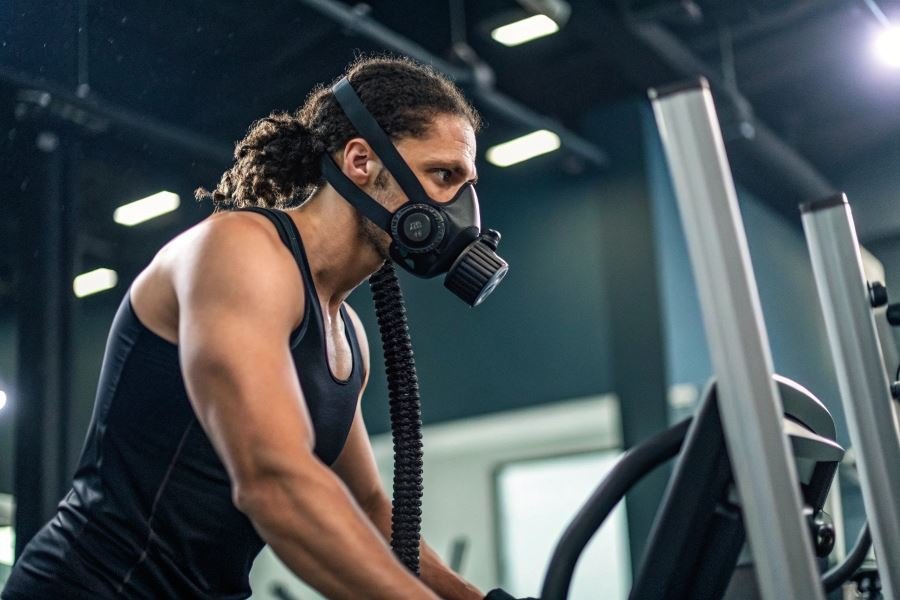
Ever watched someone at the gym looking like Bane from Batman while crushing a deadlift? That’s not a fashion statement—it’s respiratory restriction training in action.
Training masks have muscled their way into fitness centers nationwide, promising everything from superhuman endurance to explosive strength gains. But what exactly are these intimidating facial accessories, and do they deliver on their oxygen-limiting promises?
At their core, training masks are specialized equipment designed to restrict airflow during exercise, creating resistance for your respiratory muscles. Think of them as dumbbells for your diaphragm. By limiting oxygen intake, these masks force your breathing apparatus to work harder, potentially strengthening the muscles involved in respiration.
The science behind these devices stems from the principle of altitude training, where athletes have traditionally traveled to mountainous regions to train in oxygen-thin environments. Training masks attempt to simulate this effect without requiring you to relocate to the Rockies.
However, let’s clear the air about some common misconceptions:
“Training masks don’t actually replicate altitude training at a physiological level. At high altitudes, the air contains less oxygen per breath. With masks, you’re simply working harder to pull in the same oxygen-rich air.” — Journal of Sports Science & Medicine
Many bodybuilders mistakenly believe these masks increase red blood cell production like true altitude training. In reality, they primarily strengthen respiratory muscles, which can improve breathing efficiency during intense workouts.
The benefits, when understood correctly, include:
- Enhanced respiratory muscle strength
- Improved breathing efficiency
- Potential mental toughness development
- Increased focus during high-intensity training
Choosing the right training mask means understanding what they actually do—not what marketing claims they might perform.
What Makes a Training Mask Worth Your Sweat
When you’re pushing your limits in the gym, every piece of equipment matters. Training masks have become increasingly popular tools for bodybuilders looking to enhance their respiratory strength alongside muscle gains. Selecting the right mask can make the difference between a transformative workout and a frustrating experience.
The process of evaluating training masks for bodybuilding: features of selection requires attention to several critical factors that directly impact your performance and comfort. Not all masks are created equal, and understanding the key differences will help you invest in equipment that actually delivers results rather than just looking intimidating in the gym.
Premium Materials That Can Take a Beating
Durability should be non-negotiable when selecting a training mask. The best options typically feature medical-grade silicone for the face piece, which provides both comfort against the skin and resistance to sweat degradation. The Elevation Training Mask 3.0 incorporates this type of material, allowing it to withstand hundreds of high-intensity sessions.
Look for masks with:
- Neoprene outer layers that resist moisture damage
- Reinforced valve systems that won’t crack under pressure
- Machine-washable components for hygiene maintenance
- Tear-resistant head straps that maintain tension over time
Cheaper masks often use porous materials that absorb sweat, creating both hygiene issues and accelerated deterioration.
Resistance Levels That Grow With You
The most effective training masks offer adjustable resistance settings that allow you to progressively challenge your respiratory system. This adaptability is crucial for continued development.
| Resistance Level | Training Experience | Workout Type |
|---|---|---|
| Low (1-2) | Beginners | Longer duration, moderate intensity |
| Medium (3-4) | Intermediate | HIIT, compound movements |
| High (5-6) | Advanced | Short, explosive power training |
The FDBRO Training Mask provides six distinct resistance levels that can be adjusted mid-workout, allowing you to match respiratory resistance to specific exercise intensities. This variability ensures your mask remains relevant as your conditioning improves, rather than becoming obsolete once you adapt to a single resistance level.
Comfort Features For Marathon Sessions
Even the most durable mask with perfect resistance becomes useless if you can’t wear it through your entire workout. Comfort features directly impact training consistency and should be evaluated carefully.
Key comfort considerations include:
- Anatomical contouring that follows facial structure without pressure points
- Moisture-wicking materials that prevent the “swimming pool” effect inside the mask
- Weight distribution across multiple anchor points to prevent single-area strain
- Quick-release mechanisms for moments when you need immediate unrestricted breathing
The Phantom Athletics Training Mask excels in this category with its ergonomic design that accommodates different face shapes and sizes. Its multi-point adjustment system ensures the mask stays in place during dynamic movements without creating uncomfortable pressure or slippage.
Remember that the ideal training mask balances restriction (for training effect) with breathability (for workout sustainability). A mask that’s too restrictive will force you to remove it mid-session, defeating its purpose entirely.
Top 3 Training Masks That Will Transform Your Bodybuilding Game
Training masks have revolutionized how serious bodybuilders approach their workouts. These specialized devices simulate high-altitude training, challenging your respiratory system and potentially enhancing your performance. Let’s dive into the best options across experience levels and training protocols.
Entry-Level Masks for Newcomers
If you’re just beginning your respiratory training journey, starting with the right mask makes all the difference. Entry-level masks offer adjustable resistance without overwhelming your system.
The Training Mask 2.0 stands out as the perfect beginner option. With six resistance levels, you can gradually increase difficulty as your respiratory strength improves. Weighing just 3.5 ounces, it won’t distract from your form during compound movements. Users report significant improvements in recovery time between sets after just 4-6 weeks of consistent use.
The neoprene sleeve design ensures comfort during extended training sessions, a crucial factor when you’re still adapting to restricted breathing patterns.
For budget-conscious beginners, the Dimok Workout Mask offers similar benefits at a lower price point ($35-45). While it only provides three resistance settings, its streamlined design makes it ideal for those testing the waters of respiratory training.
Professional-Grade Masks for Serious Lifters
Advanced bodybuilders require masks that can withstand intense training while offering precise resistance control.
The Elevation Training Mask 3.0 dominates this category with its 16 resistance levels that simulate altitudes from 3,000 to 18,000 feet. The mask’s anatomical design prevents slippage during explosive movements like clean and jerks or heavy deadlifts.
| Feature | Training Mask 2.0 | Elevation 3.0 | Phantom Athletics |
|---|---|---|---|
| Resistance Levels | 6 | 16 | 8 |
| Weight | 3.5 oz | 4.2 oz | 3.8 oz |
| Price Range | $59-79 | $99-129 | $89-109 |
| Warranty | 90 days | 2 years | 1 year |
The Phantom Athletics Training Mask deserves special mention for its proprietary valve system that allows for quick resistance adjustments between sets—perfect for drop sets or supersets where recovery windows are minimal.
Specialized Masks for Targeted Training Protocols
Different bodybuilding protocols demand specialized equipment, and respiratory training is no exception.
For HIIT enthusiasts, the FDBRO Sports Mask features a quick-release mechanism that allows for rapid transitions between restricted and normal breathing—ideal for Tabata or other interval protocols where timing is critical.
Powerlifters gravitate toward the Sparthos Workout Mask with its reinforced nose bridge that prevents collapse during maximum exertion. The extra-wide head straps distribute pressure evenly, preventing the mask from becoming a distraction during one-rep max attempts.
Pro tip: For hypertrophy-focused training, select masks with moderate resistance levels (40-60% restriction) to maintain sufficient oxygen for muscle growth while still challenging your respiratory system.
Endurance-focused bodybuilders should consider the Aduro Sport Altitude Mask, which features a moisture-wicking inner liner that prevents the uncomfortable buildup of condensation during longer training sessions.
Remember that adaptation to respiratory training takes time. Start with 15-20 minute sessions twice weekly, gradually increasing duration and frequency as your respiratory muscles strengthen. Your selection should align with your specific goals, experience level, and the particular demands of your training regimen.