
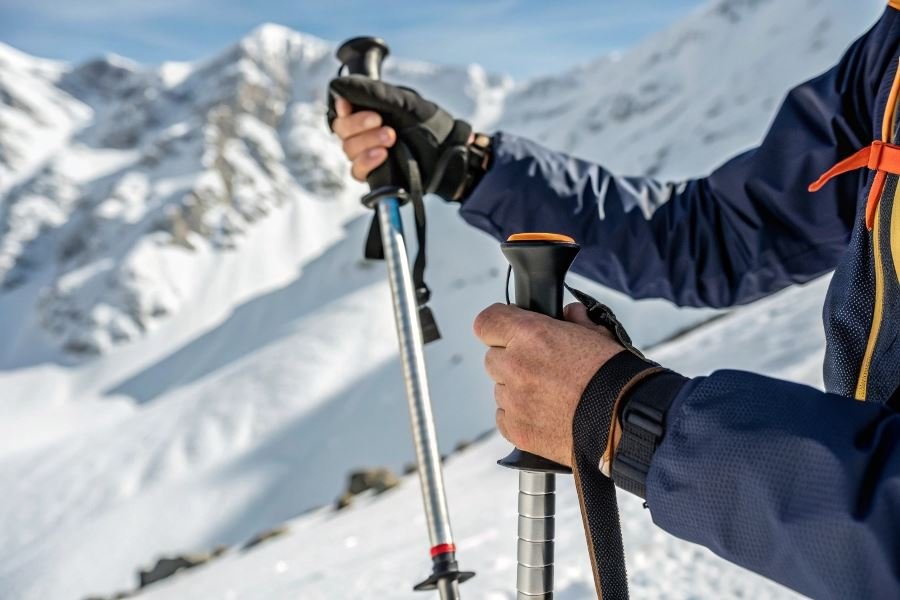
Ever watched a skier effortlessly carve perfect arcs down a groomed run or float through powder with remarkable control? Behind that magic lies a secret weapon most skiers overlook: properly selected ski poles. They’re not just aluminum sticks you plant in snow—they’re rhythm keepers, balance enhancers, and performance multipliers.
When you’re slicing through fresh powder in the backcountry or carving precise turns on groomed slopes, your poles become extensions of your arms, critical tools that synchronize your movements. The right poles can transform your skiing from good to extraordinary, while the wrong ones can disrupt your flow and compromise technique.
Freeride and carving represent two distinct skiing approaches with unique pole requirements. Freeriders exploring ungroomed terrain need poles that offer stability in variable conditions—typically longer with larger baskets to prevent sinking in deep snow. Carving enthusiasts, meanwhile, benefit from shorter, lighter poles that facilitate quick, rhythmic transitions between turns on groomed surfaces.
Your pole selection directly impacts three critical aspects of skiing performance:
- Balance: Proper poles provide a reference point and temporary support during challenging maneuvers
- Rhythm: They establish timing for turn initiation and completion
- Power transfer: Quality poles help channel energy efficiently through your turns
The difference between adequate poles and perfect poles might seem subtle in the shop, but becomes dramatically apparent when you’re halfway down a challenging run. Your poles aren’t just accessories—they’re essential equipment deserving thoughtful selection based on your preferred skiing style.
The Ultimate Guide to Selecting Freeride and Carving Poles
When you’re slashing through powder or carving precise turns on groomed runs, your ski poles aren’t just accessories—they’re extensions of your arms that provide timing, balance, and control. The difference between adequate poles and perfect ones can transform your skiing experience entirely.
Selecting the right poles for freeride and carving requires understanding several critical factors that impact performance. How to choose poles for freeride and carving isn’t just about grabbing whatever’s on sale—it’s about matching specific features to your skiing style, body dimensions, and the terrain you’ll tackle. Let’s dive into what truly matters when making this crucial equipment decision.
Material Matters: Strength vs. Weight
The material of your poles fundamentally affects everything from swing weight to durability:
Aluminum poles offer exceptional durability at budget-friendly prices. They’re virtually bombproof for aggressive skiers who might catch poles on trees or rocks.
Heavier than carbon options, aluminum poles provide reliable performance in most conditions without breaking the bank.
Carbon fiber poles deliver incredible lightness with sufficient strength for most recreational skiers. The reduced swing weight makes them particularly valuable during technical terrain navigation.
Composite poles blend materials to balance performance characteristics, often incorporating carbon fiber, fiberglass, and aluminum components.
| Material | Weight | Durability | Price Range | Best For |
|---|---|---|---|---|
| Aluminum | 18-22 oz | Very High | $30-80 | All-mountain, budget-conscious |
| Carbon Fiber | 12-16 oz | Medium-High | $100-200+ | Performance-oriented, technical terrain |
| Composite | 14-20 oz | High | $60-120 | Versatile use, value seekers |
Length: Your Height Isn’t the Only Factor
Contrary to conventional wisdom, optimal pole length varies significantly between freeride and carving disciplines:
For carving: Shorter poles (typically shoulder height when standing) allow for quicker pole plants and more aggressive angulation on hardpack.
For freeride: Slightly longer poles provide better support in deep snow and help maintain balance during variable conditions.
Pro tip: When in doubt, go shorter rather than longer. You can always choke up on poles that are too long, but you can’t extend poles that are too short.
The classic formula—standing with poles upside down, gripping below the basket with your elbow at 90 degrees—works as a starting point, but adjust based on your specific skiing style.
Grip and Strap Design: The Connection Point
Your interface with the poles deserves serious consideration:
Ergonomic grips contoured to hand anatomy reduce fatigue during long days. Materials range from basic plastic to premium cork and rubber compounds that insulate against cold and absorb vibration.
Strap systems have evolved dramatically from simple loops:
- Traditional loops work fine for recreational skiing
- Quick-release systems like those from Leki provide safety benefits
- Trigger systems offer instant connection/disconnection for backcountry skiers concerned about avalanche safety
Skiers with wrist injuries should consider strapless options that reduce torque during falls.
Basket Selection: Size Matters
Basket size and design should match your typical snow conditions:
Small race baskets (40-50mm) excel on groomed terrain where penetration isn’t needed
Medium all-mountain baskets (70-85mm) provide versatility across varied conditions
Powder baskets (90-120mm) prevent poles from disappearing in deep snow—essential for freeride enthusiasts
The basket shape also matters—asymmetrical designs can provide directional performance benefits for technical skiing.
Choosing poles that perfectly complement your skiing style transforms them from mere accessories into performance tools that enhance every turn. The right combination of material, length, grip system, and basket design creates a seamless extension of your body on the mountain.
The Ultimate Pole Arsenal for Freeride and Carving Mastery
When you’re slicing through fresh powder or carving precise arcs on groomed runs, your poles aren’t just accessories—they’re extensions of your skiing technique. The right poles can elevate your performance from good to extraordinary, providing the perfect balance of feedback, support, and maneuverability exactly when you need it.
Durability meets weight balance for freeride dominance
Freeride skiing demands equipment that can handle unpredictable terrain while remaining responsive. The ideal freeride pole strikes a delicate balance between durability and weight.
Aluminum alloy poles like the Black Crows Duos Freebird offer exceptional strength-to-weight ratios, typically weighing between 450-550 grams per pair. Their 7075-T6 aluminum construction provides impact resistance for those inevitable collisions with hidden obstacles beneath the powder.
For those seeking premium performance, carbon composite poles deliver unmatched weight savings:
| Material | Weight Range | Durability Rating | Price Range |
|---|---|---|---|
| Aluminum | 450-600g | High | $60-120 |
| Carbon | 340-480g | Medium-High | $120-200 |
| Carbon-Aluminum Hybrid | 400-520g | Very High | $100-180 |
The sweet spot for freeride poles is a swing weight that feels nearly nonexistent during aerial maneuvers while maintaining enough substance to provide stability when planting in variable snow conditions.
The difference between good and great freeride poles isn’t just about weight—it’s about where that weight is distributed. Poles with lower swing weights deliver quicker response times when navigating technical terrain.
Flex characteristics for carving precision
Carving demands poles with specific flex patterns that complement your turning mechanics. Unlike freeride poles that prioritize durability, carving poles focus on feedback and precision.
Semi-rigid flex patterns provide the ideal balance for carving enthusiasts. The Leki Detect S exemplifies this with its progressive flex that remains stiff near the grip while allowing controlled flex toward the basket. This design delivers:
- Immediate power transfer during pole plants
- Reduced vibration when carving at high speeds
- Enhanced proprioceptive feedback for timing and rhythm
The optimal shaft diameter for carving poles ranges between 16-18mm, providing enough rigidity without excess weight. Many advanced carvers prefer poles with slight oval cross-sections that naturally align with the direction of force during pole plants.
Adjustability and multi-terrain adaptability
Modern pole technology has embraced adjustability as a core feature, allowing skiers to optimize their equipment for changing conditions and techniques.
Telescoping systems have evolved dramatically, with the Scott Team Issue featuring three-section adjustability that can compact to 35% of its extended length. This adaptability serves multiple purposes:
- Terrain-specific length adjustment (shorter for technical terrain, longer for open slopes)
- Storage efficiency during lift rides or backpack transport
- Customization for different skiing styles within the same day
The most versatile poles incorporate interchangeable basket systems that can be swapped without tools. Powder baskets with 90-100mm diameters provide flotation in deep snow, while racing baskets (50-60mm) offer reduced drag for carving on groomed runs.
Grip ergonomics have also advanced significantly, with dual-density materials providing insulation in cold conditions while maintaining tactile feedback. The Komperdell Carbon C7 features anatomically designed grips that reduce forearm fatigue during long days alternating between freeride and carving techniques.
By selecting poles with these key performance features, you’ll have the versatility to adapt to changing snow conditions and terrain while maintaining the specific characteristics needed for both freeride exploration and precision carving.