
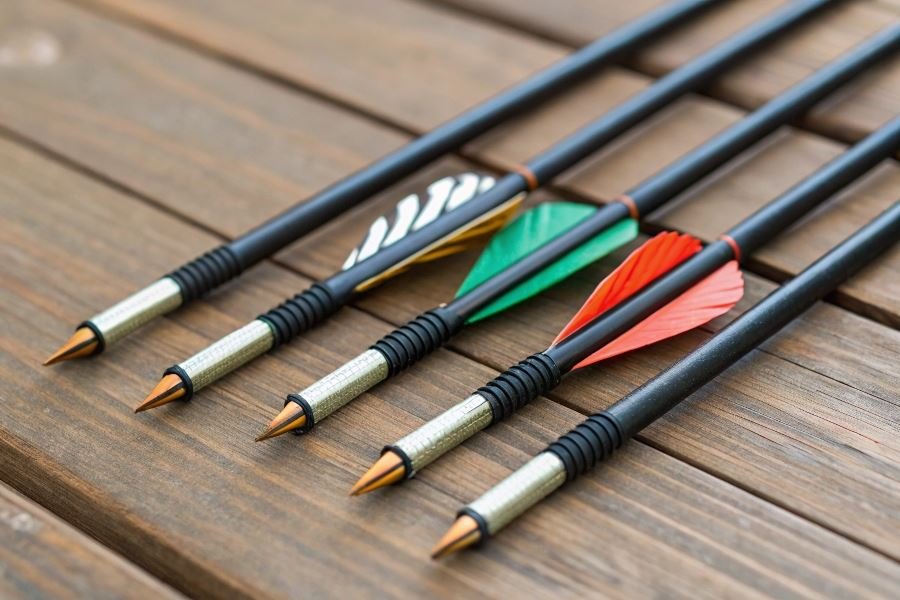
Ever watched a championship-level archer miss their mark by millimeters? That tiny deviation often starts with improper storage.
When you’ve invested in quality arrows or bolts, the last thing you want is to discover they’ve warped or damaged before you even reach your shooting destination. Proper storage and transportation aren’t just good habits—they’re essential practices that directly impact your accuracy, consistency, and ultimately, your success in the field or at the range.
The hidden enemies of arrow integrity
Your arrows face numerous threats even when they’re not in use. Temperature fluctuations can cause carbon fiber to expand and contract, potentially leading to microscopic fractures. Humidity changes might affect wooden arrows, causing them to warp over time. Even simple pressure from improper storage can introduce subtle bends that translate to significant trajectory changes at distance.
“A perfectly straight arrow is the foundation of consistent shooting. Once compromised, even professional-grade equipment can’t compensate for physical damage.”
Essential protection gear worth the investment
To safeguard your investment, several key items deserve consideration:
- Hard-shell arrow cases ($45-120): Provide rigid protection against impacts and crushing forces
- Arrow tubes ($15-40): Lightweight options for field transport that prevent shaft-to-shaft contact
- Foam arrow racks ($20-35): Ideal for home storage, keeping arrows separated and supported
- Silicone tip protectors ($8-15): Preserve broadhead sharpness and prevent accidental cuts
The difference between mediocre and exceptional performance often comes down to how you treat your equipment when you’re not using it. By implementing proper storage and transportation practices, you’re not just protecting your investment—you’re preserving your potential for precision.
Protecting Your Investment: Arrow and Bolt Storage Mastery
Let’s face it—quality arrows and bolts aren’t cheap. After dropping $100+ on a dozen carbon arrows or premium crossbow bolts, the last thing you want is to find them warped, damaged, or missing fletchings because of improper storage. Proper storage techniques not only extend the life of your archery gear but ensure consistent performance when it matters most.
Understanding how to properly store and transport arrows and bolts requires attention to environmental factors, organization systems, and duration considerations. Whether you’re a bowhunter preparing for season, a competitive archer with a collection of match-grade arrows, or a recreational shooter, these storage solutions will keep your projectiles in prime condition.
Battling the elements: Climate control essentials
Temperature fluctuations are the silent killer of arrow straightness. Store your arrows in environments maintaining 65-75°F (18-24°C) with 40-50% humidity for optimal results. Excessive heat can cause carbon fibers to weaken, while extreme cold makes them brittle.
Pro tip: Never store arrows in your vehicle trunk during summer or winter months—temperatures can swing 40+ degrees in a single day!
Wood arrows are particularly susceptible to humidity changes, which can cause warping, while aluminum arrows may develop slight bends when exposed to temperature extremes. Consider these climate-controlled options:
- Dedicated archery closet with a small dehumidifier
- Climate-controlled storage unit for extensive collections
- Basement storage with humidity monitoring (avoid concrete contact)
For those living in particularly humid regions, silica gel packets placed in your arrow case can prevent moisture buildup that leads to rust on field points and broadheads.
Organization systems that protect and perform
The days of arrows loosely rolling around in your gear bag should be behind you. Modern storage solutions offer protection while keeping arrows accessible:
Arrow tubes provide excellent protection for individual arrows or small groups. Products like the Arrow Tube by Easton offer crush-resistant storage perfect for transport.
Hard cases with foam inserts represent the gold standard for serious archers. The SKB ATA Arrow Case features customizable foam that secures arrows individually, preventing fletching contact.
| Storage Type | Best For | Capacity | Protection Level |
|---|---|---|---|
| Arrow Tube | Travel/Field Use | 6-12 arrows | High |
| Hard Case | Competition/Travel | 12-36 arrows | Maximum |
| Wall Rack | Home Storage | 24-100+ arrows | Moderate |
| Quiver | Field Use | 4-12 arrows | Low-Moderate |
Wall-mounted racks offer excellent home storage solutions, keeping arrows horizontal to prevent warping while displaying your collection. The Rush Archery Arrow Rack accommodates dozens of arrows while taking minimal space.
Duration matters: Short vs. long-term storage
Short-term storage (under 3 months) focuses on convenience and protection:
- Hip quivers for practice sessions
- Arrow tubes for weekend trips
- Magnetic arrow holders for active shooting sessions
Long-term storage (3+ months) requires additional considerations:
- Remove broadheads and store separately to prevent oxidation
- Check arrow straightness before and after storage periods
- Store arrows horizontally rather than vertically to prevent warping
- Rotate arrows periodically if stored in quivers to prevent permanent bending
For competition arrows or expensive hunting setups, consider unstringing broadheads and removing nocks before long-term storage. This prevents rubber or plastic components from deforming over time.
Remember that proper storage isn’t just about protection—it’s about maintaining the precision engineering that makes modern arrows and bolts such remarkable projectiles. Your shooting accuracy tomorrow depends on how you store your arrows today.
Safe Transportation: Protecting Your Arrows and Bolts on the Move
When you’ve invested in quality arrows and bolts, protecting them during transport isn’t just about preserving your investment—it’s about maintaining their performance. Nothing ruins a perfect shooting day faster than discovering your precision-engineered arrows arrived bent or damaged. Let’s dive into the transportation methods that serious archers swear by.
Choosing the right case for your journey
The case you select should match both your equipment and your travel plans. For local trips to the range, a simple Arrow Tube might suffice. These lightweight cylinders typically hold 12-24 arrows and offer basic protection against the elements and light impacts.
For serious competitors or those traveling longer distances, hard-shell cases provide superior protection. The SKB ATA Parallel Limb Bow Case includes customizable arrow storage and withstands significant external pressure—perfect when your gear might face rough handling.
The difference between budget and premium cases isn’t just price—it’s peace of mind when you’re hundreds of miles from home.
For crossbow enthusiasts, specialized bolt cases like the TenPoint Crossbow Technologies HardCore Soft Crossbow Case include dedicated bolt storage compartments that prevent fletching compression.
Vehicle transport essentials
When transporting arrows in your vehicle, horizontal positioning prevents unnecessary stress on shafts. Never store arrows standing upright where sudden stops could bend them.
For truck beds, secure your case to prevent sliding during transit. A simple bungee cord system works wonders:
| Securing Method | Best For | Limitations |
|---|---|---|
| Bungee cords | Quick trips, hard cases | Limited impact protection |
| Foam inserts | Loose arrows | Requires storage box |
| Arrow-specific racks | Regular transporters | Permanent installation |
Temperature management matters too. Never leave carbon arrows in hot vehicles—temperatures exceeding 150°F can compromise resin integrity. In winter, allow cold arrows to gradually warm to ambient temperature before shooting to prevent potential micro-fractures.
Navigating air travel with archery equipment
Flying with archery equipment requires advance planning. The TSA classifies arrows and bolts as sporting equipment that must be checked, never carried on. Always check your airline’s specific policies, as some require advance notification for archery equipment.
Best practices for air travel include:
- Double-case your arrows – Place your arrow case inside a larger hard-sided suitcase with clothing as additional cushioning
- Remove broadheads and pack them separately (also in checked luggage)
- Include a printed copy of the airline’s archery equipment policy
- Arrive at least 30 minutes earlier than normal to handle any unexpected questions
For international competitions, research destination country regulations. Some nations require advance permits or registration for archery equipment imports, even temporarily.
When packing for air travel, use arrow separators or individual arrow sleeves to prevent contact between shafts. The Easton Deluxe Roller Bow Case includes arrow dividers specifically designed to prevent fletching damage during the inevitable jostling of air travel.
Remember that proper transportation isn’t just about protection—it’s about arriving at your destination ready to perform at your best, with equipment that’s as prepared as you are.