
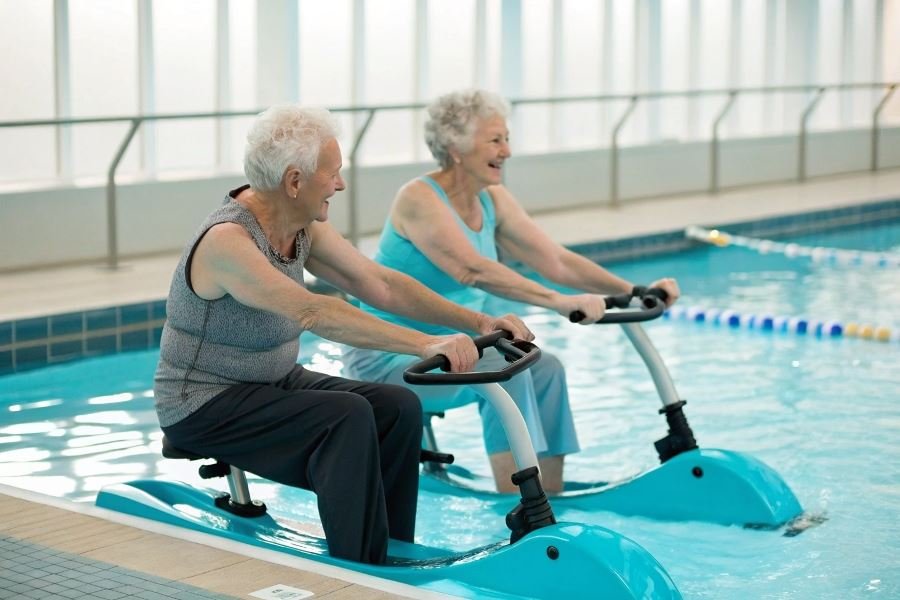
Did you know that exercising in water can reduce joint stress by up to 90% compared to land-based workouts? For seniors seeking low-impact fitness options that deliver maximum results, water exercise bikes are making waves in the rehabilitation and fitness community.
When traditional stationary bikes feel too jarring on aging joints, aquatic exercise bikes offer a refreshing alternative. These specialized fitness tools harness water’s natural resistance and buoyancy to create workouts that are simultaneously challenging and gentle. Unlike their land-based counterparts, water bikes eliminate the punishing impact that can aggravate arthritis, joint replacements, or balance issues.
The buoyancy breakthrough
Water’s natural buoyancy creates a supportive environment where seniors can exercise with confidence. This weightless sensation reduces fall risks while still allowing for a full range of motion. The hydrostatic pressure of water also improves circulation—a significant benefit for those managing cardiovascular conditions or edema.
Resistance that responds to you
Perhaps the most ingenious aspect of aquatic cycling is its adaptive resistance. While traditional stationary bikes require manual adjustment, water naturally increases resistance as you pedal harder. This self-regulating feature makes water bikes particularly suitable for seniors at varying fitness levels, allowing natural progression without complicated settings.
Choosing the right aquatic cycle
When selecting a water exercise bike, consider:
- Stability features: Look for wide bases and non-slip materials
- Adjustability: Ensure seat height and handlebar positions accommodate limited mobility
- Weight: Lighter models offer easier pool entry/removal
- Corrosion resistance: Quality stainless steel construction prevents deterioration
The perfect water exercise bike balances accessibility with effective resistance, creating a sustainable fitness solution that grows with seniors’ evolving capabilities.
Essential Features That Make Water Bikes Work for Seniors
When selecting aquatic exercise equipment for older adults, the details make all the difference. Water exercise bikes have emerged as a game-changer for seniors looking to maintain fitness without stressing aging joints. The buoyancy of water creates an ideal environment where seniors can push their cardiovascular limits while their bodies remain supported and protected.
Understanding the features of selection for water exercise bikes for elderly people requires focusing on three critical areas: stability mechanisms, adjustment capabilities, and resistance systems. Each element plays a crucial role in creating a safe, effective workout experience that accommodates the unique needs of aging bodies while still delivering results that keep seniors coming back to the pool.
Rock-Solid Stability for Confident Workouts
The foundation of any senior-friendly aquatic bike starts with stability. Unlike their land-based counterparts, water exercise bikes must remain firmly planted despite water currents and movement.
Wide-base designs have become the gold standard, with premium models like the Hydrorider Aquabike Professional featuring bases that extend 30-40% wider than standard models. This expanded footprint prevents tipping—even during vigorous pedaling sessions.
Safety suction cups have evolved dramatically in recent years, with medical-grade materials replacing older rubber versions that would deteriorate in chlorinated water.
Look for models with:
- Non-slip pedals with adjustable straps
- Grab bars positioned for easy entry/exit
- Corrosion-resistant frames (316L stainless steel outperforms aluminum)
Adjustment Options That Accommodate Every Body
The ability to customize fit becomes increasingly important as mobility and flexibility change with age.
| Adjustment Feature | Why It Matters for Seniors |
|---|---|
| Seat Height | Allows for proper leg extension without overreaching |
| Handlebar Position | Reduces strain on lower back and shoulders |
| Seat Width | Provides comfort for longer sessions |
| Quick-adjust Mechanisms | Enables changes without requiring strength or dexterity |
The AquaJogger AquaCiser 1 offers tool-free adjustments that can be made while in the water—a significant advantage for seniors who might struggle with pre-workout equipment setup. The best models provide at least 5 height positions and 3 forward/backward settings to accommodate users of different proportions.
Resistance Systems That Protect Aging Joints
Perhaps the most critical feature for senior users is the resistance mechanism. Unlike land bikes that rely on friction or magnetic resistance, water bikes use the natural properties of water and specially designed components.
Paddle-based systems create resistance through water displacement. Larger paddles increase workout intensity, while smaller ones allow for gentler sessions. The Poolbiking One Plus features interchangeable paddles that can be swapped based on fitness level or daily energy.
Hydraulic resistance systems offer the smoothest pedaling motion, eliminating the jerky transitions that can aggravate arthritic joints.
Smart resistance features to look for:
- Variable resistance levels that can be adjusted during the workout
- Bidirectional resistance for balanced muscle development
- Smooth transition between resistance levels
- Self-limiting systems that prevent overexertion
The resistance should challenge without punishing—allowing seniors to build strength and endurance while the water’s buoyancy protects vulnerable joints from impact and compression.
When these three essential elements—stability, adjustability, and appropriate resistance—come together in a well-designed water exercise bike, seniors gain access to a fitness tool that can significantly improve quality of life while minimizing injury risk.
Making a Splash with the Perfect Water Exercise Bike
Key Selection Features at a Glance
Water exercise bikes have revolutionized fitness for seniors, combining low-impact workouts with effective resistance training. When selecting the ideal aquatic cycle, stability should be your top priority. Look for models with weighted bases and non-slip feet that remain firmly anchored during even the most vigorous workouts. The Hydrorider Aquabike Professional exemplifies this stability with its 75-pound marine-grade stainless steel frame.
Adjustability runs a close second in importance. The best water bikes offer multiple seat height positions, handlebar adjustments, and resistance settings. This customization ensures proper alignment for users of varying heights and fitness levels, preventing strain on sensitive joints.
Materials matter more than you might think. Premium water bikes use marine-grade stainless steel (316L grade) that resists corrosion even in chlorinated pools. Budget options often use powder-coated aluminum, which may require more vigilant maintenance but can still provide years of service when properly cared for.
Keeping Your Aquatic Investment Pristine
Maintenance requirements vary significantly between models, but all water exercise bikes benefit from a consistent care routine:
| Maintenance Task | Frequency | Notes |
|---|---|---|
| Fresh water rinse | After each use | Removes chlorine and salt |
| Full inspection | Monthly | Check for loose parts or corrosion |
| Lubrication | Quarterly | Focus on moving parts |
| Professional service | Annually | Comprehensive check-up |
Longevity considerations extend beyond materials. The AquaJogger AquaCiser 1 boasts a 5-year warranty, but many premium models can last 8-10 years with proper care. When evaluating cost, divide the price by expected years of service to determine true value. A $1,200 bike that lasts a decade costs just $120 per year—often less than a few months of gym membership.
Diving Into Your Water Cycling Journey
Starting your aquatic cycling adventure requires more than just equipment. Begin with 15-20 minute sessions at moderate intensity, gradually increasing duration as your fitness improves. The beauty of water exercise lies in its forgiving nature—you can push yourself without punishing your joints.
For optimal results, consider these starter strategies:
- Start shallow: Begin in chest-deep water before progressing to deeper immersion
- Focus on form: Maintain proper posture with shoulders relaxed and spine neutral
- Mix it up: Alternate between seated and standing positions to engage different muscle groups
Many seniors find success by joining aquatic fitness classes before investing in personal equipment. The Aquatic Exercise Association offers resources for finding certified instructors who specialize in senior fitness.
“The resistance of water provides 12 times more resistance than air, making every pedal stroke count without stressing aging joints.”
Remember that consistency trumps intensity. Three 30-minute sessions per week will yield better results than occasional marathon workouts. Track your progress using heart rate monitors designed for aquatic use or simply by noting improvements in your daily activities.
By selecting the right water exercise bike and approaching your fitness journey methodically, you’re not just investing in equipment—you’re investing in mobility, independence, and quality of life for years to come.