
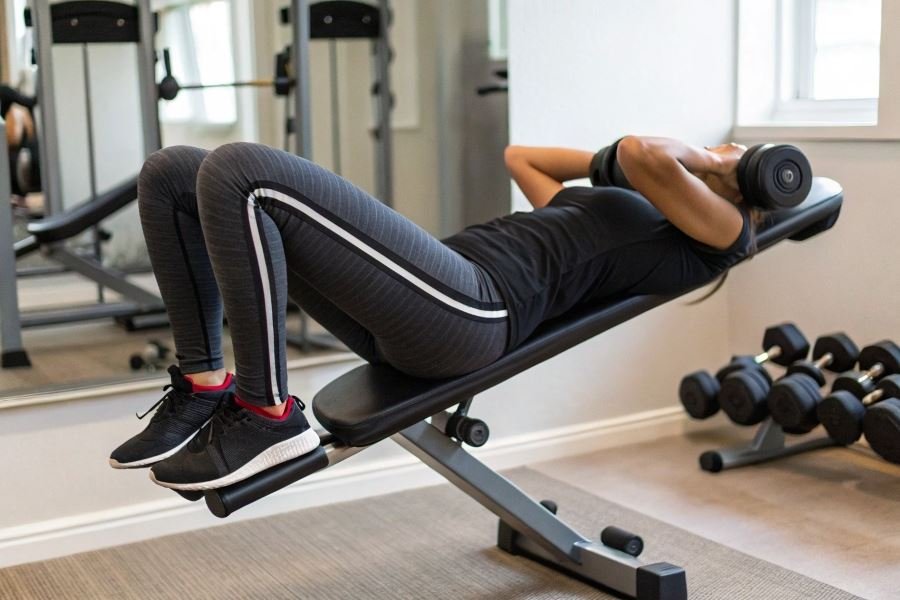
Ever stood in a sporting goods store, staring at two seemingly identical weight benches with a $200 price difference? The culprit: that press attachment.
When building your home gym, few decisions impact both your wallet and workout potential quite like choosing between a standard power bench and one with integrated press capabilities. These versatile fitness stations have become the cornerstone of serious strength training, but the premium price tag often leaves fitness enthusiasts wondering if they’re paying for convenience or necessity.
What exactly are we talking about?
Power benches with press options combine a traditional flat or adjustable bench with an integrated barbell rack system designed specifically for bench pressing. Unlike standard benches that require separate power racks, these all-in-one solutions feature built-in uprights that hold your barbell at the proper height for pressing movements.
The market shows a significant price disparity:
| Bench Type | Average Price Range |
|---|---|
| Standard Flat Bench | 100−250 |
| Adjustable Bench | 200−400 |
| Power Bench with Press Option | 350−800+ |
Key considerations before investing
The value proposition hinges on several factors. First, space efficiency – combined units typically occupy 30% less floor space than separate components. Second, workout flow – integrated systems eliminate the awkward shuffle between equipment pieces. Finally, stability – purpose-built press benches often provide superior structural integrity during heavy lifts.
However, the investment only makes sense if pressing movements form a significant portion of your routine. For those primarily focused on dumbbell work or bodyweight exercises, the premium might represent unnecessary overhead rather than smart spending.
Power Bench Press Combos: Premium Price, Premium Performance?
When you’re serious about strength training, equipment choices matter—a lot. The debate around power benches with integrated press options often centers on one critical question: are these premium multi-function stations worth the extra investment? For dedicated lifters looking to maximize both their space and training potential, the answer lies in understanding what that additional cost actually buys you.
Many fitness enthusiasts struggle with deciding whether power benches with an option for the press is worth overpaying for when compared to standard flat benches. The reality is that this isn’t simply about paying more—it’s about investing in expanded functionality that transforms your training possibilities.
Space Efficiency That Transforms Home Gyms
The first undeniable advantage of combination power benches is their space-saving design. A quality unit like the Rogue Fitness Adjustable Bench 3.0 can replace 3-4 separate pieces of equipment while occupying the footprint of just one.
Real estate calculations matter: A standard power rack (4’×4’), separate adjustable bench (4’×2’), and dedicated press station (5’×4’) consume approximately 36 square feet. A combination unit typically requires only 20-24 square feet—a 33% space savings that transforms cramped basements into functional training centers.
The space efficiency alone justifies the premium for apartment dwellers and those with limited home gym space.
Muscle Targeting Versatility
Premium combination benches dramatically expand your exercise library without requiring additional equipment purchases.
| Exercise Type | Standard Bench | Combo Power Bench |
|---|---|---|
| Chest Variations | 3-4 | 8-12 |
| Shoulder Movements | 1-2 | 6-8 |
| Back Exercises | 2-3 | 5-7 |
| Leg Options | 1-2 | 4-6 |
This versatility isn’t just about exercise quantity—it’s about training quality. The ability to seamlessly transition between decline, flat, and incline positions allows for comprehensive muscle fiber recruitment across multiple angles, creating more complete development.
Build Quality That Withstands Punishment
The construction differences between budget and premium combination benches are substantial and directly impact both safety and longevity.
Weight capacity tells the real story. Entry-level combination benches typically support 300-400 pounds total (user plus weights). Premium models from manufacturers like Titan Fitness offer 1,000+ pound capacities—essential for serious lifters pushing heavy compound movements.
The frame construction differences are equally significant:
- Budget models: 14-gauge steel tubing with basic welds
- Premium models: 11-gauge or thicker steel with reinforced joints and commercial-grade welds
These construction differences translate to stability under load—the difference between a rock-solid platform and a wobbly, confidence-sapping experience when you’re pushing your limits.
The True Cost Calculation
When evaluating whether the premium price is justified, consider the complete financial picture. A quality power bench with press capabilities might cost $500-800, while separate components of similar quality would total $800-1,200.
Beyond the initial purchase, premium combination units typically offer:
- Longer warranties (5-10 years vs. 1-3 years)
- Better resale value (retaining 60-70% vs. 30-40%)
- Reduced maintenance requirements
For serious lifters committed to long-term training, the premium price of a quality combination bench represents not an expense but an investment in training efficiency, space optimization, and workout variety that pays dividends with every session.
Making the Final Decision: Premium Power Benches Worth Every Dollar?
When it comes to strength training equipment, few decisions impact your fitness journey quite like selecting the right power bench. The premium models with press options represent a significant investment—but is that investment justified? Let’s break down who benefits most, how to calculate true value, and which models deliver at different price points.
Who thrives with premium press benches
Not everyone needs top-tier equipment, but certain fitness enthusiasts see exponential returns on their investment:
Serious strength athletes training for competitions need precision-engineered equipment that can handle heavy loads day after day. The stability difference between budget and premium benches becomes apparent when you’re pressing 300+ pounds overhead.
Home gym devotees who train 4+ times weekly transform cost calculations—when you’re using equipment 200+ times annually, premium features pay for themselves through durability and versatility.
Rehabilitation-focused users benefit tremendously from adjustable features that allow precise positioning for therapeutic exercises while maintaining proper form during recovery phases.
The difference between budget and premium benches isn’t just about prestige—it’s about precision, durability, and injury prevention when it matters most.
Multi-athlete households represent perhaps the strongest case for premium options. When a bench serves different body types and fitness goals under one roof, adjustability becomes non-negotiable.
Calculating true bench value over time
Premium power benches with press options typically cost between 300−1,200, while budget options hover around 150−250. But raw price tells only part of the story:
Cost-per-use calculation:
- Premium bench ($800) used 3x weekly for 5 years = $1.03 per workout
- Budget bench ($200) replaced after 2 years = $0.64 per workout initially, but requires replacement
The hidden value multipliers include:
- Injury prevention (proper support and stability)
- Workout efficiency (quick adjustments between exercises)
- Exercise variety (enabling more movements in your routine)
- Resale value (quality equipment maintains 40-60% value after years of use)
The true cost of equipment isn’t what you pay upfront—it’s what you pay divided by years of reliable service.
Top performers at every price point
Based on durability, features, and user satisfaction, these three benches represent exceptional value in their respective categories:
| Bench Model | Price Range | Key Features | Best For |
|---|---|---|---|
| Fitness Reality 1000 | 200−250 | 800lb capacity, 12-position backrest | Budget-conscious users seeking reliability |
| Rep Fitness AB-5200 | 550−600 | Zero-gap design, 7 back positions, 3 seat positions | Serious lifters needing commercial quality |
| Rogue AB-3 | 950−1,100 | Decline option, laser-cut numbering, 11-gauge steel | Professional athletes and commercial gyms |
The mid-range Rep Fitness AB-5200 represents the sweet spot for most dedicated lifters—commercial quality construction without the commercial price tag. Its zero-gap design eliminates the annoying space between seat and back pad that plagues lesser benches.
For those pushing serious weight, the premium construction of higher-end models isn’t just luxury—it’s necessary insurance against equipment failure at the worst possible moment.
Remember that while budget options have improved dramatically, the gap in stability and durability remains significant when training approaches intermediate and advanced levels.