
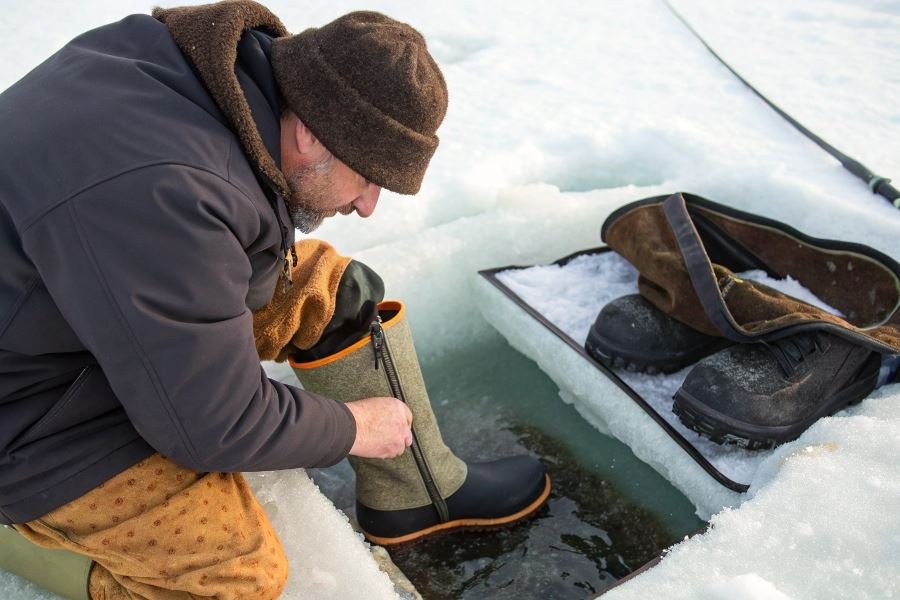
Standing on that frozen lake at dawn, the difference between an epic day and a miserable retreat often comes down to your toes. Not your technique. Not your gear. Your toes.
When temperatures plummet below freezing, proper liners for your fishing boots aren’t just a comfort issue—they’re the silent heroes that keep you on the ice long enough to land that trophy catch. The right liner creates a microclimate inside your boot that maintains circulation and prevents the bone-chilling cold that can end your fishing day prematurely.
Think of boot liners as your personal climate control system. They work by trapping body heat, wicking moisture, and creating crucial insulation between you and the frozen world beneath your feet. Studies show that extremities lose heat up to 5 times faster than your core, making proper foot insulation absolutely critical.
“The difference between good and great liners can mean 3-4 extra hours on the ice during peak feeding times.” — Professional ice angler Mark Stevenson
Your liner selection directly impacts three crucial aspects of winter fishing:
- Thermal efficiency – How effectively heat is retained
- Moisture management – How quickly sweat is moved away from skin
- Weight-to-warmth ratio – How much insulation without bulk
The performance connection
What many anglers don’t realize is how dramatically foot comfort affects fishing performance. Cold feet lead to stamina loss, decreased focus, and compromised dexterity—all enemies of that perfect hook-set when the big one finally strikes.
Material Magic for Winter Fishing Boot Liners
Thermal Champions in the Cold
When temperatures plummet and ice forms on your favorite fishing spot, what stands between comfort and misery is often just a few millimeters of liner material. The thermal properties of different liners can make or break your winter fishing experience. Wool liners reign supreme in natural insulation, creating warmth even when damp. Merino wool specifically offers exceptional temperature regulation, maintaining a microclimate around your feet that feels like a personal heater.
Neoprene liners deliver outstanding insulation through a different mechanism. This synthetic rubber traps heat through tiny air bubbles within its structure, creating remarkable warmth even in the most brutal conditions. When selecting liners for fishing boots in winter, understanding these material differences becomes crucial as each performs differently under various temperature ranges and activity levels.
Synthetic options like Thinsulate™ and PrimaLoft® have revolutionized the liner game with their impressive warmth-to-weight ratio. These materials can provide exceptional insulation without the bulk, allowing for better mobility while maintaining toasty toes.
Moisture Management Matters
Nothing ruins a winter fishing trip faster than wet, freezing feet. The moisture management capabilities of your boot liners aren’t just a luxury—they’re essential survival gear.
| Material | Moisture Wicking | Drying Time | Performance When Wet |
|---|---|---|---|
| Wool | Excellent | Moderate | Maintains 80% warmth |
| Neoprene | Poor | Slow | Maintains warmth |
| Synthetic | Very Good | Fast | Variable performance |
Wool naturally wicks moisture away from the skin while retaining insulating properties even when damp. This makes it ideal for active anglers who might work up a sweat while drilling holes or hiking to remote fishing spots.
Neoprene excels in different conditions—it doesn’t absorb water readily, creating a moisture barrier. However, once moisture gets inside (often from perspiration), it stays trapped. This makes neoprene better suited for stationary fishing in extremely cold conditions rather than active movement.
Synthetic materials like Polartec fleece offer exceptional moisture management, actively pulling sweat away from your feet and dispersing it for rapid evaporation. This prevents the dangerous cooling effect that occurs when moisture sits against your skin in freezing temperatures.
Durability and Care Considerations
The harshest winter conditions demand liners that can withstand abuse. Durability factors vary dramatically between materials and directly impact both performance and value.
Wool liners offer remarkable resilience and naturally resist odors—a significant advantage during multi-day fishing trips. They require minimal maintenance but benefit from air-drying between uses and occasional gentle washing with wool-specific detergents.
Neoprene delivers exceptional longevity when properly maintained. These liners resist abrasion and compression but require thorough rinsing after use to prevent salt or mineral buildup that can degrade the material over time.
Synthetic liners typically offer the easiest maintenance, with many being machine washable and quick-drying. However, they may compress and lose insulating properties faster than natural alternatives, particularly lower-quality versions.
The ideal liner choice ultimately depends on your specific fishing conditions, activity level, and personal preferences. By understanding these material properties, you’ll ensure your feet remain your allies rather than your enemies during those prime winter fishing opportunities.
Sealing the Deal on Winter Fishing Boot Liners
When the ice thickens and temperatures plummet, your final liner choice becomes the difference between an epic day on the ice and a miserable retreat to the truck heater. After testing dozens of options across Minnesota’s frozen lakes, I’ve discovered that matching your liners to specific conditions isn’t just helpful—it’s essential.
Environment-Specific Selection Strategy
Your fishing environment dictates your liner needs with surprising specificity. Ice fishing on windswept lakes demands different protection than river fishing in fluctuating temperatures.
For stationary ice fishing, prioritize liners with maximum insulation ratings—typically 800-1000g Thinsulate or equivalent. The Cabela’s Inferno liners excel here, maintaining warmth during hours of minimal movement.
River anglers face unique challenges with temperature variations and potential moisture. In these scenarios, moisture-wicking properties become paramount. The Simms Exstream liner system offers exceptional performance with its dual-layer construction that manages both perspiration and external moisture.
Pro tip: For high-elevation winter fishing, select liners with reinforced toe areas to prevent cold spots when standing on ice for extended periods.
Balancing Comfort and Performance
The perfect liner strikes harmony between what feels good and what performs well. This balance varies dramatically between anglers.
| Comfort Factor | Performance Consideration | Recommended Compromise |
|---|---|---|
| Soft interior | Durability | Wool-synthetic blends |
| Lightweight feel | Insulation capacity | Aerogel technology liners |
| Easy on/off | Secure fit | Side-zip designs with ankle locks |
| Breathability | Waterproofing | eVent fabric technology |
Many anglers initially prioritize comfort but regret it when performance falters. Others choose technical performance that feels like wearing concrete blocks. The sweet spot? Liners like the Korkers IceTrac that incorporate compression-molded EVA footbeds with thermal reflective layers—delivering both comfort and critical heat retention.
“The liner that feels amazing in the store but fails on the ice is worthless, while the one that performs flawlessly but causes blisters is equally useless.”
Extending Your Investment
Quality liners aren’t cheap—expect to invest $40-120 for premium options. Proper care dramatically extends their lifespan and maintains performance.
After each use:
- Remove liners from boots immediately to prevent moisture trapping
- Air dry completely at room temperature (never near direct heat sources)
- Use cedar shoe trees to maintain shape and absorb residual moisture
- Apply antimicrobial spray every 3-5 uses to prevent odor development
Critical maintenance step: Wash synthetic liners every 15-20 uses with technical fabric cleaner to prevent oil and salt buildup that degrades insulating properties.
For wool-blend liners, occasional brushing with a soft-bristled brush removes debris and restores loft—critical for maintaining insulation value.
The final verdict? Your winter fishing success hinges on thoughtful liner selection matched to your specific conditions, finding that perfect balance between comfort and performance, and maintaining your investment through proper care. Make these considerations your priority, and you’ll be the one still hauling in fish when others have retreated to shore.