
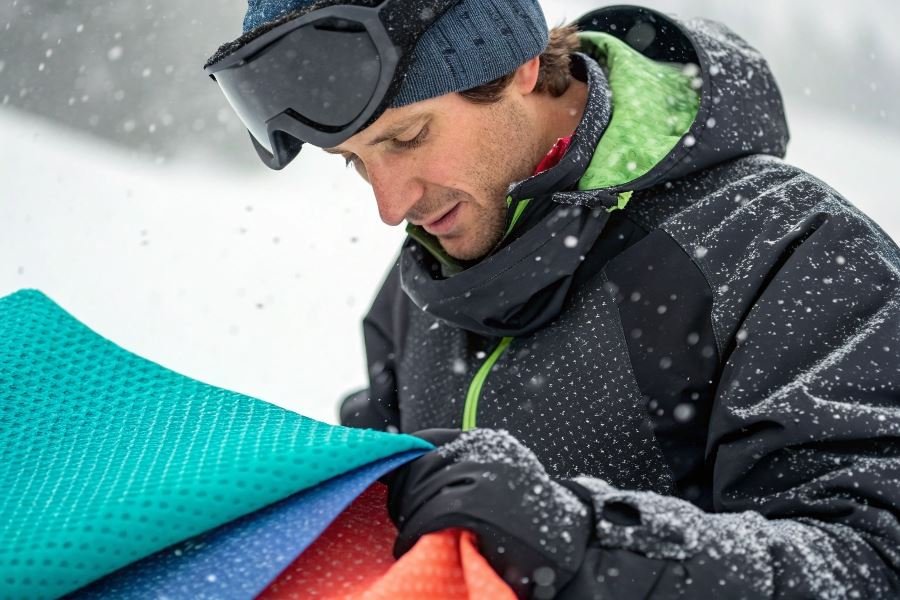
At -20°F, your body can lose heat 25 times faster than on a mild day. That’s not just uncomfortable—it’s dangerous.
When you’re carving through fresh powder or scaling an icy peak, your insulated gear isn’t just equipment—it’s your personal climate control system. The difference between an exhilarating winter adventure and a miserable (or potentially dangerous) experience often comes down to what you’re wearing and how it works with your body.
The performance-safety connection
Proper insulation does double duty on the mountain. First, it maintains your core temperature, keeping your muscles warm and responsive when you need quick reactions. Studies show that cold muscles react up to 20% slower—a delay that could mean the difference between landing a jump or taking a fall.
But beyond performance, there’s survival. Hypothermia doesn’t announce itself with dramatic shivers; it sneaks in with subtle cognitive changes. By the time you’re making poor decisions on the slope, you’re already in trouble.
What makes insulation work?
Three factors determine how effectively your gear will protect you:
- Trapped air – The primary insulating mechanism in most winter gear
- Moisture management – Wet insulation can lose up to 90% of its effectiveness
- Wind resistance – Even the warmest layers fail without proper wind blocking
From goose down to graphene
Winter sports insulation has undergone a revolution. The bulky, restrictive layers of the 1980s bear little resemblance to today’s technical systems. Synthetic insulations now mimic the thermal properties of down while performing better when wet. Aerogel—once reserved for NASA spacecraft—now appears in premium gloves and boots.
Perhaps most impressive are the adaptive insulations that actively respond to your body, increasing warmth when you’re still and reducing it during intense activity—essentially thinking for you while you focus on the mountain.
Essential Features for Winter Sport Insulation
When temperatures plummet and snow blankets the landscape, your choice of insulation becomes the difference between exhilarating winter adventures and miserable, shivering retreats. The technical aspects of winter sports apparel have evolved dramatically, offering specialized solutions for every condition imaginable.
Understanding how to choose an insulated set for winter sports requires diving into the science behind staying warm while active in cold environments. The perfect winter sports ensemble balances thermal efficiency with moisture management and activity-specific design features that work in harmony with your body’s natural processes.
Down vs. Synthetic: The Great Insulation Debate
The foundation of any winter sports outfit starts with insulation type, and the choice between down and synthetic fills represents a critical decision point.
Down insulation delivers unmatched warmth-to-weight ratio, compressibility, and longevity. Premium down with fill powers of 700+ creates microscopic air pockets that trap body heat with remarkable efficiency.
However, down’s Achilles heel emerges when moisture enters the equation—wet down clumps, losing up to 90% of its insulating properties.
Synthetic alternatives like Primaloft and Thinsulate maintain insulating properties when wet and dry faster, though they typically weigh more and compress less efficiently than natural down.
| Insulation Type | Warmth-to-Weight | Water Resistance | Compression | Durability | Price Range |
|---|---|---|---|---|---|
| Down (700+ Fill) | Excellent | Poor | Excellent | 10+ years | $150-400 |
| Synthetic | Good | Excellent | Good | 5-7 years | $100-250 |
| Hybrid | Very Good | Very Good | Very Good | 7-9 years | $175-350 |
Breathability: The Moisture Management Masterclass
Winter athletes face a paradoxical challenge: staying warm while preventing overheating and moisture buildup. The technical term “microclimate management” describes this delicate balance.
Breathability metrics measured in grams of water vapor passing through one square meter of fabric in 24 hours (g/m²/24h) reveal a garment’s ability to release excess heat and moisture. For high-output winter activities, look for ratings of 15,000+ g/m²/24h.
The most sophisticated insulated sets incorporate zone-mapped breathability—placing more permeable materials in high-heat areas like underarms and the center back.
Advanced moisture management systems like Gore-Tex Infinium and Polartec Power Shield Pro create semi-permeable membranes that block wind and snow while allowing water vapor to escape, preventing the dreaded post-activity chill caused by sweat-soaked layers.
Layering Compatibility: Versatility Across Activities
The modern approach to winter sports insulation embraces the “system thinking” philosophy—each garment must function both independently and as part of an integrated layering system.
Articulated design elements like underarm gussets, pre-bent elbows, and stretch panels enable full range of motion without exposing skin or creating cold spots. Look for features like:
- Helmet-compatible hoods that rotate with your head without obstructing vision
- Powder skirts that integrate with snow pants to create a sealed thermal envelope
- Wrist gaiters with thumb loops that prevent snow entry and sleeve ride-up
The versatility factor becomes particularly important when transitioning between activities with varying exertion levels. A truly exceptional insulated set adapts to both high-output activities like backcountry skiing and lower-intensity pursuits like lift-served snowboarding or winter hiking.
The most innovative designs from brands like Arc’teryx and Patagonia feature modular components that can be added or removed as conditions change, transforming a single purchase into a four-season solution for virtually any winter adventure.
Sealing the Deal: Your Winter Sports Insulated Set
When the mercury plummets and the powder beckons, your insulated set becomes your closest ally on the mountain. After weighing technical fabrics, insulation types, and design features, it’s time to make that final call. Let’s cut through the noise and focus on what truly matters when selecting your winter armor.
Quality meets functionality meets wallet
The perfect winter sports insulated set exists at the intersection of three critical factors: quality construction, performance functionality, and realistic budget constraints.
Quality indicators aren’t just marketing fluff—they’re your insurance policy against mid-mountain equipment failures. Look for reinforced seams, YKK zippers, and established warranties. Brands like Arc’teryx and Patagonia command premium prices because their gear consistently performs season after season.
But functionality must match your activity profile. A backcountry splitboarder needs different features than a resort skier. Be honest about your usage patterns:
- Weekend warrior hitting groomed runs? Prioritize comfort and moderate waterproofing (10K-15K rating)
- Powder hound chasing storms? Invest in maximum waterproofing (20K+) and advanced ventilation
- Mixed-condition adventurer? Focus on layering compatibility and adaptable features
The most expensive set isn’t always the right set. A $900 technical shell system might be overkill if you’re primarily hitting the slopes a dozen days each season. Conversely, skimping on quality for daily use is a false economy that’ll cost you more long-term.
Extending your investment’s lifespan
The best insulated sets can last 5-7 seasons with proper care. Implement these maintenance practices to maximize your return:
“Treat your gear right, and it’ll return the favor when temperatures drop to single digits.”
-
Wash according to tech specs – Technical fabrics require special care. Use dedicated cleaners like Nikwax Tech Wash rather than standard detergents that can damage waterproofing.
-
Reapply DWR treatments annually – Water beading on your outer layer isn’t magic—it’s chemistry that needs refreshing.
-
Proper storage matters – Hang your gear in a cool, dry place during off-seasons. Compression damages insulation over time.
-
Address damage immediately – Small tears become catastrophic failures. Many manufacturers offer repair services far cheaper than replacement.
Performance champions worth your consideration
After testing dozens of current models, these three insulated sets deliver exceptional performance-to-price ratios for 2025:
| Set | Best For | Standout Feature | Price Range |
|---|---|---|---|
| Helly Hansen ULLR Infinity | All-mountain versatility | H²Flow™ temperature regulation | $650-800 |
| The North Face Freedom | Value-conscious riders | DryVent™ technology with surprising durability | $350-450 |
| Mountain Hardwear FireFall | Technical terrain | Thermal.Q Elite insulation with remarkable warmth-to-weight | $500-650 |
The Helly Hansen set earns top marks for its adaptability across conditions, while The North Face Freedom delivers remarkable performance at a mid-tier price point. For those pushing limits in challenging environments, Mountain Hardwear’s FireFall system provides technical excellence without the extreme premium of some competitors.
Remember: the perfect insulated set isn’t just about surviving winter—it’s about thriving in it. Choose wisely, maintain diligently, and your winter adventures will reach new heights of comfort and performance.