
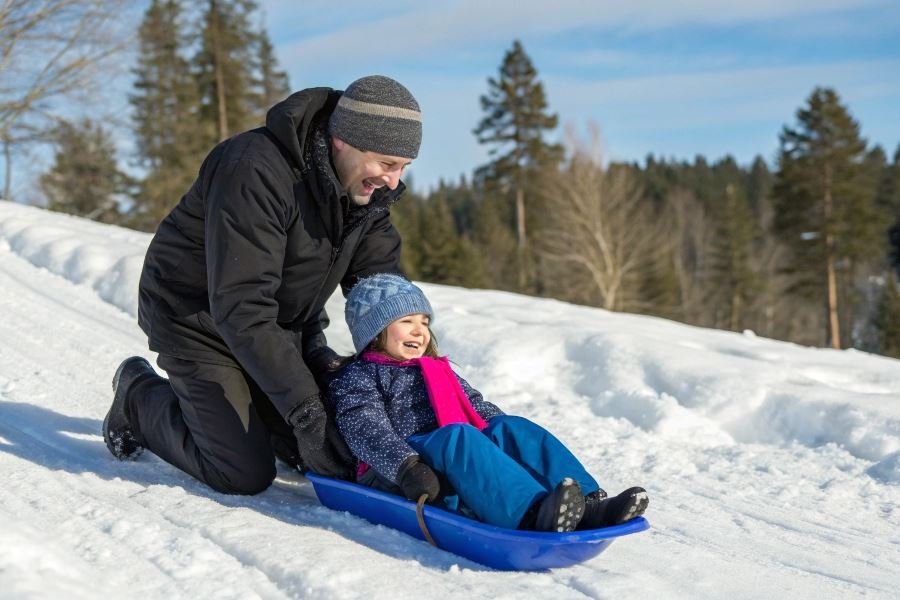
Ever watched a child zoom down a snowy hill, their laughter echoing through the crisp winter air? That joy can quickly turn to tears with the wrong sled. A staggering 20,000+ sledding injuries send kids to emergency rooms annually—many preventable with proper equipment selection.
Choosing the right sled isn’t just about grabbing whatever’s on sale at the sporting goods store. It’s about matching the perfect winter vehicle to your child’s unique body dimensions and abilities. The right sled becomes an extension of your child, allowing them to control their descent while maximizing both safety and that all-important fun factor.
Safety first: Why proper sizing matters
When a sled properly matches a child’s height and weight, it provides optimal balance and control. Too small, and they’ll struggle to steer. Too large, and they might not have the strength to maneuver effectively. Either scenario increases the risk of collisions or rollovers.
Sled types decoded
Today’s market offers far more than the classic wooden toboggan:
- Plastic sleds: Lightweight, affordable, ideal for younger children
- Foam sleds: Softer, providing cushioning for bumpy terrain
- Steerable sleds: Feature steering mechanisms for older children
- Inflatable tubes: Fun but offer minimal control
Beyond dimensions: Other crucial factors
While height and weight form the foundation of your decision, consider:
- Age and experience level: Beginners need more stable options
- Terrain type: Different sleds perform better on powder versus packed snow
- Durability: Quality construction ensures multiple seasons of use
- Weight capacity: Always check manufacturer specifications
The perfect sled creates the perfect winter memory—one that doesn’t end in the emergency room!
Finding the Perfect Sled Match for Your Child
When winter blankets the neighborhood in snow, nothing beats the thrill of sledding down a perfect hill. But that excitement can quickly turn to disappointment with the wrong equipment. Properly matching a sled to your child’s physical dimensions isn’t just about comfort—it’s about safety, control, and maximizing fun in the snow.
Parents often struggle with how to properly choose a sled based on the child’s height and weight, not realizing that these measurements directly impact performance and safety. The right sled creates that perfect balance between speed and control, while the wrong one can lead to difficult steering, tipping, or even accidents.
Weight Capacity Guidelines That Matter
Weight limits aren’t just suggestions—they’re engineering specifications designed for safety and optimal performance. Here’s what you need to know:
- Toddler sleds (ages 2-4): Typically support 40-60 pounds
- Youth models (ages 5-10): Usually rated for 60-100 pounds
- Teen/Adult sleds: Can handle 100-250+ pounds depending on construction
Most manufacturers like L.L. Bean and Flexible Flyer clearly list weight capacities on packaging or product descriptions. Exceeding these limits doesn’t just wear out the sled faster—it can compromise structural integrity and lead to dangerous breaks or cracks mid-run.
The weight capacity isn’t about what the sled can hold while stationary, but what it can safely support while absorbing the impacts and forces of downhill sledding.
Sled Length: The Height Connection
Finding the right sled length creates the perfect balance between maneuverability and stability:
| Child’s Height | Recommended Sled Length | Best For |
|---|---|---|
| Under 3’ | 24″-36″ | Toddlers needing maximum control |
| 3’-4’ | 36″-42″ | Young children learning to steer |
| 4’-5’ | 42″-48″ | Elementary-aged confident sledders |
| Over 5’ | 48″+ | Older children seeking speed |
The ideal sled should allow your child to comfortably reach the steering mechanism (if equipped) while maintaining a stable seated position. For traditional toboggan-style sleds, the child’s legs should extend comfortably without hanging too far over the front edge.
Center of Gravity: The Science of Sledding
Center of gravity considerations change dramatically across age groups, affecting everything from stability to steering response:
-
Toddlers (2-4 years): Have a higher center of gravity relative to their size, making them more prone to tipping. Look for wider sleds with lower seating positions and side rails for added stability.
-
Elementary ages (5-10): Developing better balance but still benefit from sleds with moderate side support. Saucer-style sleds from brands like Zipfy work well as children gain confidence.
-
Pre-teens and teens: Can handle more advanced designs with higher seating positions that allow for aggressive turning and weight shifting. Performance sleds from Hammerhead offer precision control for this age group.
For younger children, look for sleds with a lower center of gravity and wider base. As they grow, gradually transition to more responsive models that reward developing coordination skills with better performance.
Remember that the perfect sled grows with your child—what works for a 6-year-old might be outgrown by 8. Investing in quality means you’ll likely pass that beloved winter companion down to younger siblings or friends for many snowy seasons to come.
Beyond Basics: Advanced Sled Selection for Growing Children
When choosing the perfect sled for your child, looking beyond just height and weight opens up a world of possibilities that can enhance their winter adventures for years to come. The right features can make sledding safer, more enjoyable, and provide value long after the first snowfall.
Steering Systems That Grow With Skills
The steering mechanism on your child’s sled should match their coordination level and sledding experience:
- Simple rope handles work perfectly for beginners (ages 3-6) who need basic directional control
- T-bar steering offers intermediate control for school-age children ready for more precision
- Advanced handlebar systems give older kids and pre-teens the responsive control they need for higher speeds
“The right steering mechanism isn’t just about control—it’s about building confidence on the slopes,” notes veteran sledding instructor Mark Winters. “As children develop physically, their ability to manage more sophisticated steering improves dramatically.”
For children showing exceptional balance and coordination, consider models with dual-action steering that allows both lean-to-steer and manual direction control. These systems adapt beautifully as children progress from cautious first-timers to confident sledders.
Material Matters: Durability Across Weight Classes
Sled construction varies significantly based on intended weight capacity and usage patterns:
| Weight Class | Recommended Materials | Expected Durability |
|---|---|---|
| 30-50 lbs | High-density polyethylene | 2-3 seasons |
| 50-80 lbs | Reinforced plastic with metal runners | 3-5 seasons |
| 80-120+ lbs | Composite materials or molded plastic with aluminum reinforcement | 5+ seasons |
The material quality becomes increasingly important as children grow heavier and naturally become more adventurous. Look for:
- Reinforced bottoms that resist cracking when hitting hidden obstacles
- Impact-resistant plastics that maintain integrity in sub-freezing temperatures
- UV-protected materials that won’t degrade when stored during off-seasons
For children at the upper end of weight ranges, invest in sleds with weight distribution technology that prevents stress concentration on vulnerable parts of the sled structure.
Future-Proof Features for Long-Term Value
Smart design elements can extend a sled’s useful life through multiple growth spurts:
- Adjustable seating positions that accommodate increasing leg length
- Modular components that can be reconfigured as skills improve
- Expandable footwells that prevent outgrowing the sled prematurely
The most versatile models incorporate telescoping frames that literally grow with your child. These innovative designs might cost 20-30% more upfront but can double the usable lifespan of the sled.
Pro tip: Look for sleds with removable padding inserts that can be taken out as children grow, effectively increasing the interior space without purchasing a new sled.
Weight capacity ratings typically include a buffer zone, but for maximum longevity, choose a sled rated for at least 20 pounds more than your child’s current weight. This simple strategy accounts for growth spurts and extends usability through multiple winter seasons.
By considering these advanced selection criteria, you’re not just buying a sled for this winter—you’re investing in years of snow-day excitement that adapts to your child’s developing physical abilities and growing confidence on the slopes.