
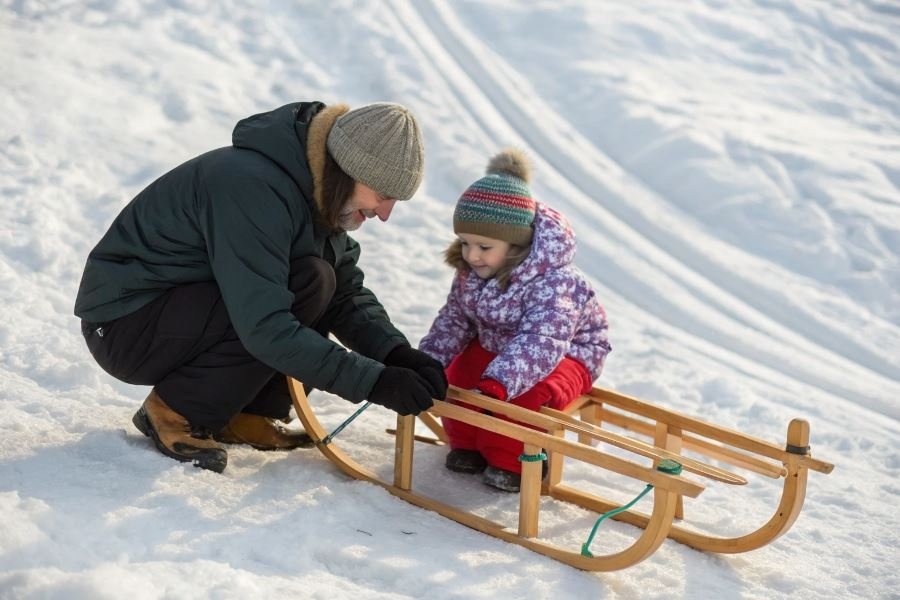
Ever watched a child’s face light up as they zoom down a snowy hill? That perfect moment happens when the right sled meets the right rider.
Winter brings a special kind of magic, especially when there’s enough snow for sledding adventures. But that magic quickly fades when a sled breaks mid-run or proves too difficult for small hands to control. The difference between winter memories that last a lifetime and those best forgotten often comes down to one thing: choosing the right sled.
Safety first, fun forever
When selecting a child’s sled, safety isn’t just another feature—it’s the foundation. Look for models with steering mechanisms appropriate for your child’s coordination level and sleds with reinforced handles that won’t snap under pressure. The best sleds incorporate safety without sacrificing the thrill that makes sledding irresistible.
“A quality sled is an investment in both safety and joy. The right choice prevents injuries while maximizing smiles per hour.”
Age matters: Finding the perfect match
Not all sleds work for all ages. For toddlers (ages 2-4), consider sleds with high backs and safety straps that keep them secure. Elementary-aged children (5-10) benefit from sleds with some steering capability but simple enough to master quickly. Preteens and teenagers can handle more sophisticated options with greater speed potential and maneuverability.
Beyond the basics: What truly matters
The perfect sled balances:
- Material durability that withstands temperature fluctuations
- Weight capacity appropriate for growth spurts
- Storage practicality for off-season months
- Control mechanisms that match developmental abilities
Remember: The best sled isn’t necessarily the most expensive one—it’s the one that creates the perfect balance of safety, control, and pure winter excitement for your child.
Safety Features That Make or Break Children’s Sleds
When winter blankets the neighborhood in snow, nothing beats the pure joy of sledding down a pristine hill. But behind that exhilaration lies an important parental responsibility: selecting a sled that delivers both thrills and protection. What to pay attention to when buying children’s sleds goes beyond colorful designs and popular brands—it’s about understanding the critical safety elements that keep your young adventurers protected during their downhill escapades.
Bulletproof Materials and Construction
The foundation of sled safety starts with materials that can withstand winter’s punishment. Modern sleds typically come in three primary constructions:
High-density polyethylene (HDPE) sleds offer exceptional durability while maintaining flexibility in cold temperatures. Unlike brittle plastics that can crack upon impact, HDPE absorbs shock and resists fracturing even when temperatures plummet below freezing.
Premium models feature reinforced edges that prevent splitting and extend the sled’s lifespan through multiple seasons.
Metal components, particularly in steering mechanisms, should be stainless steel or aluminum to prevent rust and structural weakening. Inspect all connection points—they should feature smooth, rounded edges with no exposed screws or sharp corners.
| Material Type | Cold Weather Performance | Impact Resistance | Typical Lifespan |
|---|---|---|---|
| HDPE Plastic | Excellent | High | 5-7 seasons |
| Standard Plastic | Good | Moderate | 2-3 seasons |
| Foam | Fair | Low | 1-2 seasons |
Look for sleds with molded handles that are integrated into the body rather than attached separately, as these provide more reliable grip points that won’t break off during use.
Steering Systems That Respond
The difference between a controlled glide and a wild ride often comes down to steering capability. Modern sleds from companies like L.L.Bean and Flexible Flyer offer sophisticated steering mechanisms that provide crucial control on varied terrain.
Rope steering systems are ideal for younger children (ages 3-6) offering simple directional control without complicated mechanisms. The rope should be thick enough for small hands to grip while wearing mittens and securely fastened to prevent detachment.
T-bar steering provides more precise control for older children, allowing them to navigate around obstacles with greater accuracy. Quality T-bars should:
- Feature textured, non-slip grips
- Respond immediately to directional input
- Return to center position naturally
- Lock in place for straight downhill runs
For maximum safety, look for models with foot brakes that allow children to slow their descent when approaching obstacles or other sledders.
Weight Capacity and Stability Factors
A sled’s stability directly impacts its safety profile. The wider the base, the more resistant it is to tipping during turns or when encountering bumps.
Weight distribution plays a crucial role in sled stability. The best designs feature:
- Low center of gravity to prevent rollovers
- Reinforced bottom runners that track straight
- Contoured seating that positions riders securely in the center
Most manufacturers list maximum weight capacities, typically ranging from 150-250 pounds. Exceeding these limits compromises structural integrity and handling characteristics. For family sledding where parents might ride with children, consider models from Mountain Boy Sledworks that specifically accommodate higher weight limits.
The sled’s length-to-width ratio significantly affects stability—longer sleds track straighter but require more space to turn, while wider models resist tipping but may sacrifice some speed.
Remember that stability also depends on snow conditions. Even the most stable sled design requires adjustment in technique when conditions change from powder to packed or icy surfaces.
By prioritizing these safety features, you’ll ensure that winter’s most exhilarating activity remains a source of cherished memories rather than preventable accidents.
Performance Factors That Make or Break a Child’s Sled
When winter blankets the landscape in pristine white, the right sled transforms ordinary hills into memory-making adventures. But not all sleds deliver equal thrills—or safety. Let’s dive into the performance factors that separate the champions from the pretenders in the world of children’s sleds.
Sled Types for Every Snow Adventure
Different terrains demand different designs, and manufacturers have answered with specialized options:
Toboggan-style sleds excel on powder snow with their elongated bodies and curved fronts that glide effortlessly over fresh snowfall. The classic L.L.Bean Toboggan remains a gold standard for deep snow conditions.
Plastic saucers deliver spin-tastic fun on packed snow but struggle in deeper powder. Their lightweight design makes them perfect for younger sledders who need to carry their own equipment.
Foam sleds offer impressive speed on icy surfaces while providing better impact absorption than their plastic counterparts—a crucial consideration for parents of daredevil kids.
The terrain-sled relationship is symbiotic—match them correctly and you’ll unlock peak performance.
| Sled Type | Best Terrain | Age Range | Speed Rating |
|---|---|---|---|
| Toboggan | Deep powder | 5+ | Moderate |
| Plastic saucer | Packed snow | 3+ | Fast |
| Foam sled | Icy conditions | 4+ | Very fast |
| Steerable sled | Groomed hills | 6+ | Moderate-fast |
Speed Control and Braking Systems
The thrill of acceleration must be balanced with reliable stopping power. Modern sleds offer varying degrees of control:
Steering mechanisms on premium models like the Flexible Flyer Snow Screamer allow riders to navigate around obstacles with remarkable precision. These systems typically employ a combination of handlebar steering and weight shifting.
Foot brakes provide immediate deceleration when needed. The most effective designs feature metal teeth that dig into snow rather than plastic tabs that merely create drag.
Hand brakes offer superior control for older children, with some high-end models featuring dual-brake systems similar to bicycle designs.
The best braking system is the one your child will actually use when needed—intuitive design trumps complexity every time.
Testing shows that children as young as five can effectively operate simple foot brakes, while hand brake systems are better suited for ages seven and up.
Comfort Features and Ergonomic Design
A sled’s performance isn’t just about speed and control—it’s about how long your child can comfortably enjoy their winter adventure.
Contoured seating prevents the numbing discomfort that comes from sitting on flat plastic for hours. The Zipfy Freestyle Mini Luge exemplifies ergonomic design with its anatomically shaped seat that reduces pressure points.
Padded handles prevent frozen fingers and provide secure gripping points during high-speed runs. Look for moisture-resistant materials that won’t become slippery when wet.
Weight distribution channels in modern sleds direct impact forces away from the spine and tailbone—particularly important for jumps and bumpy terrain.
Ergonomic considerations aren’t luxury add-ons; they’re essential safety features that extend play time while reducing injury risk.
The padding thickness and material quality directly correlate with comfort during extended sledding sessions. Premium models feature dual-density foam that remains flexible even in sub-zero temperatures.
When evaluating a sled’s performance potential, remember that the perfect combination of terrain compatibility, control systems, and ergonomic design creates not just a winter toy, but a vehicle for childhood joy that performs reliably season after season.