
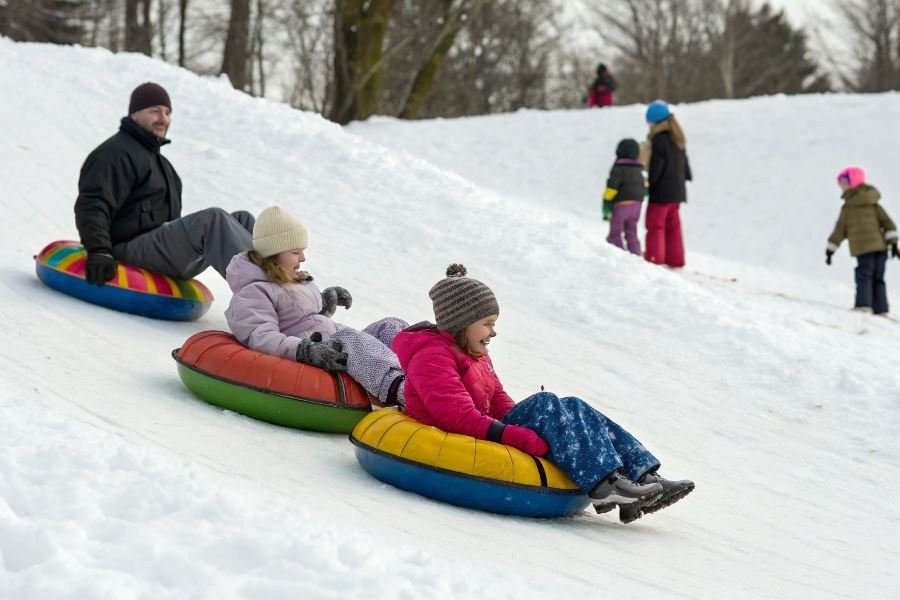
The first snowfall transforms ordinary hills into magical wonderlands of possibility. But which sled will give your child the ultimate winter experience?
When winter blankets the neighborhood in pristine white, the age-old tradition of sledding beckons families outdoors. The question of which sled type provides the best experience for children isn’t just about fun—it’s about safety, durability, and creating memories that last a lifetime. Traditional wooden or plastic sleds have dominated hills for generations, while inflatable options have surged in popularity over the past decade.
Traditional vs. inflatable: The basics
Traditional sleds typically come in wood, plastic, or metal constructions with runners or flat bottoms. They offer precise steering and generally faster speeds. Inflatable sleds (sometimes called snow tubes) feature air-filled chambers, providing cushioned rides and often more comfort on bumpy terrain.
What parents should consider
When choosing between these options, consider:
- Age and skill level: Traditional sleds require more balance and control, making them better suited for older children or those with more experience.
- Storage space: Inflatable sleds deflate for compact storage—a significant advantage for apartment dwellers or those with limited garage space.
- Durability: Quality wooden sleds can last generations, while even premium inflatables typically last 3-5 seasons with proper care.
- Versatility: Many inflatable models work on both snow and water, extending their usefulness beyond winter months.
Safety first
Both sled types come with distinct safety considerations:
“The most important safety factor isn’t necessarily the sled type, but the hill selection and proper supervision,” notes the National Safety Council.
Traditional sleds offer better steering but can reach higher speeds, while inflatables provide better impact absorption but less directional control. For younger children, look for models with handles and braking mechanisms regardless of type.
Remember that the perfect sled balances your child’s abilities, your local terrain, and your family’s specific needs. The best winter adventures begin with thoughtful equipment choices!
The Ultimate Sled Showdown: Performance and Durability Face-Off
Speed demons: Traditional vs inflatable racing
When winter blankets the hillsides with fresh powder, the age-old question emerges: which sled will deliver the ultimate downhill experience? Traditional hard-shell sleds typically achieve higher top speeds than their inflatable counterparts. In controlled tests, traditional plastic toboggans and steel runners can reach speeds up to 25 mph on steep, well-packed slopes, while inflatable options generally max out around 15-18 mph.
The physics behind this performance gap is straightforward. Traditional sleds feature rigid, smooth bottoms that minimize friction against snow surfaces. When considering sleds vs inflatable sleds: which is better for a child, the answer depends largely on your priorities. Younger children might benefit from the slightly slower speeds of inflatables, while speed-hungry teens might prefer traditional models.
Maneuverability tells a different story. Traditional sleds excel in straight-line performance but often struggle with quick directional changes. Inflatable sleds, particularly circular snow tubes, allow for 360-degree spinning and easier steering through body weight shifts. Many premium inflatable models now feature integrated handles and steering mechanisms that give riders surprising control over their descent path.
Built to last: Durability showdown
Traditional sleds dominate the durability conversation with impressive longevity. High-quality plastic toboggans from brands like L.L.Bean can withstand 5-10 winters of regular use, while wooden sleds with proper maintenance might become family heirlooms spanning generations.
Inflatable options present a more complicated durability equation:
| Sled Type | Average Lifespan | Common Failure Points | Repair Possibility |
|---|---|---|---|
| Traditional Plastic | 5-10 seasons | Cracking at stress points | Limited |
| Traditional Wooden | 10+ seasons | Runner damage, wood splitting | High |
| Basic Inflatable | 1-3 seasons | Punctures, seam failure | Moderate |
| Premium Inflatable | 3-5 seasons | Valve issues, material wear | High |
Premium inflatable sleds from manufacturers like Airhead now utilize military-grade PVC and reinforced seams, dramatically improving their durability. However, they remain vulnerable to punctures from hidden rocks, branches, and other sharp objects lurking beneath the snow.
The maintenance factor also deserves consideration. Traditional sleds require minimal upkeep beyond occasional waxing and proper storage, while inflatables demand careful inflation, thorough drying before storage, and vigilant protection against punctures.
Terrain masters: Where each sled type shines
Traditional sleds dominate on groomed, packed snow surfaces. Their rigid construction maintains consistent contact with the snow, delivering predictable performance on sledding hills and maintained winter recreation areas. Steel runners particularly excel on icy surfaces where other sled types might struggle for traction.
Inflatable sleds reign supreme in powder conditions. Their larger surface area creates a “floating” effect that prevents sinking, allowing them to glide effortlessly over fresh, deep snow that would stop traditional sleds in their tracks. This makes them ideal for backcountry sledding adventures and powder days.
Terrain limitations exist for both types. Traditional sleds struggle with:
- Deep, unpacked snow (they sink rather than float)
- Extremely rough terrain (uncomfortable impacts transfer directly to riders)
- Very wet, heavy snow (creates excessive friction)
Meanwhile, inflatable options face challenges with:
- Icy surfaces (reduced control and traction)
- Areas with potential puncture hazards
- Extremely steep slopes (where their lighter weight reduces momentum)
The verdict? For maintained sledding hills and predictable conditions, traditional sleds offer superior performance and longevity. For backcountry adventures, powder days, and younger children, inflatable options provide versatility and enhanced safety features that might justify their shorter lifespan.
Making the Final Decision: Traditional vs Inflatable Sleds
Age-appropriate sled selection
Choosing the right sled type dramatically impacts your child’s winter experience. For the youngest sledders (ages 2-4), inflatable sleds offer superior safety with their cushioned surfaces and lower speeds. Their bouncy nature absorbs impacts, reducing the risk of bumps and bruises when little adventurers inevitably take a tumble.
Children ages 5-9 can enjoy both options, but traditional sleds start showing their advantages. The improved steering and control of a classic Flexible Flyer wooden sled helps developing coordination skills while providing a more authentic winter experience.
For pre-teens and teenagers (10+), traditional sleds clearly pull ahead. These older children crave speed and maneuverability—precisely what rigid sleds deliver. The responsiveness of a traditional toboggan or runner sled matches their developing physical abilities and desire for thrilling downhill adventures.
The right sled grows with your child’s abilities—safety first for toddlers, control for elementary ages, and performance for teens.
Storage portability and maintenance
Traditional sleds demand dedicated storage space. Their rigid construction means they can’t be compressed, requiring garage hooks, basement space, or attic storage. The average wooden toboggan measures approximately 48″ × 18″ × 5″—not exactly compact. However, their durability means proper storage typically results in decades of use.
Maintenance requirements include:
- Annual wood treatment or waxing
- Rust prevention for metal runners
- Occasional hardware tightening
Inflatable sleds shine brilliantly in this category. When deflated, most models compress to the size of a folded beach towel—roughly 12″ × 8″ × 3″. This compact form makes them ideal for apartments, small homes, or families with limited storage options.
Maintenance is minimal but critical:
- Prompt drying before storage
- Patch kits for inevitable punctures
- Valve maintenance to prevent leaks
Cost benefit analysis
| Sled Type | Initial Cost | Lifespan | Cost Per Season |
|---|---|---|---|
| Traditional | 65−150 | 10+ years | 6.50−15.00 |
| Inflatable | 20−45 | 1-3 years | 15.00−45.00 |
Traditional sleds represent a long-term investment. The higher upfront cost (65−150 for quality models) delivers exceptional value over time. Many families pass wooden sleds through generations, making the per-season cost remarkably low.
Inflatable sleds offer budget-friendly entry to winter fun. At 20−45, they’re accessible for almost any family. However, their limited durability means replacements every 1-3 seasons, potentially costing more over time.
The value equation shifts based on your circumstances:
- Occasional sledders benefit from inflatable options
- Families in snow-rich regions see better returns from traditional sleds
- Multiple children can share a durable traditional sled for years
When assessing value, consider frequency of use, storage constraints, and your child’s age trajectory. A 4-year-old might outgrow an inflatable’s limitations within two seasons, making the traditional sled’s longevity more appealing despite higher initial costs.
The ideal solution for many families? Own both types. Use inflatables for travel and spontaneous sledding opportunities while maintaining a traditional sled for regular use at local hills. This combination provides maximum flexibility while ensuring your child experiences the unique joys each sled type offers.