
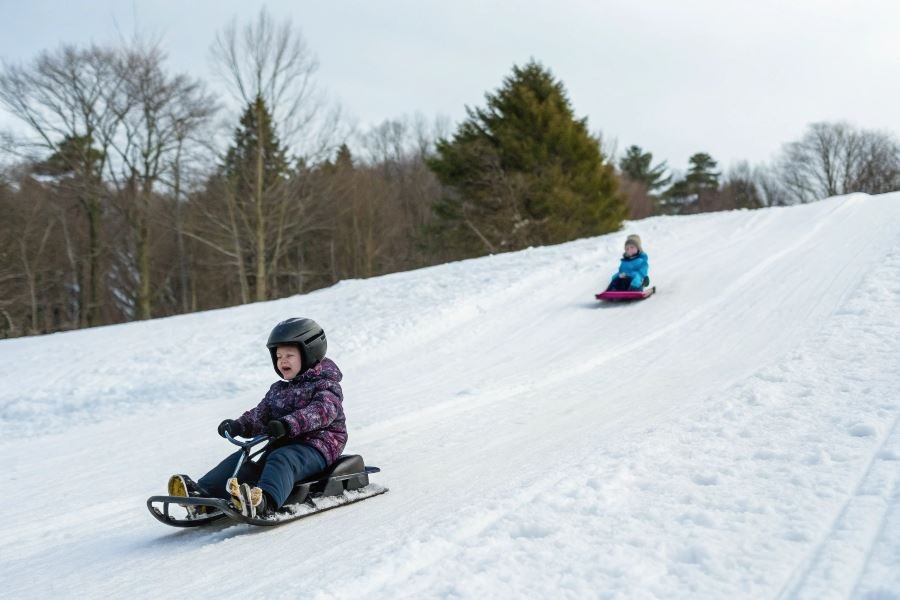
The perfect winter day: fresh powder, blue skies, and the sound of your child’s laughter echoing across the snow-covered landscape. But which vehicle will best capture those magical moments while keeping safety at the forefront?
When winter blankets our neighborhoods and recreation areas with snow, the question of choosing between snow scooters and snowcats becomes crucial for parents looking to maximize their child’s outdoor enjoyment. These two popular winter vehicles offer distinctly different experiences, and making the right choice can be the difference between a season of thrilling adventures and one of frustration.
The fundamental differences
Snow scooters are essentially kick-sleds with handlebars, requiring physical effort and balance from the rider. They’re lightweight, portable, and operate much like a traditional scooter but with a ski-like blade replacing the front wheel.
Snowcats, on the other hand, are more robust vehicles with tracks instead of wheels, designed to navigate through deeper snow with greater stability. They typically feature a seated position and can be either manually powered or motorized depending on the model.
Why your choice matters
The vehicle you select directly impacts:
- Safety profile: Each option presents different stability characteristics and learning curves
- Physical development: Snow scooters offer more active engagement, building core strength and balance
- Age appropriateness: Younger children may need the added stability of a snowcat
- Terrain compatibility: Consider where your family typically enjoys winter activities
The ideal winter vehicle should match your child’s physical abilities, confidence level, and the typical snow conditions in your area. Remember that the best choice isn’t about following trends—it’s about finding the perfect match between your child’s developmental stage and the winter environment they’ll be exploring.
Finding the Perfect Snow Ride for Your Child
When winter blankets the landscape in pristine white, it’s time to introduce your little ones to the joy of gliding across snow. The debate between snow scooters and snowcats for children isn’t just about which looks cooler in the garage—it’s about matching the right vehicle to your child’s developmental stage, safety needs, and skill-building potential.
Parents often find themselves weighing options when considering snow scooter vs snowcat: what is better to choose for a child depends on several factors including age, physical abilities, and your winter recreation goals. Both vehicles offer unique advantages that can transform ordinary snow days into extraordinary adventures while building crucial physical skills.
Age-Appropriate Snow Adventures
Different developmental stages call for different snow vehicles:
Ages 2-4: Toddlers benefit from simplified snowcats with parent-controlled steering and low centers of gravity. Look for models with comfortable seating and minimal required input.
Ages 5-7: This transition age works well with either beginner snow scooters (with wider platforms) or intermediate snowcats that allow more independent control.
Ages 8+: Older children typically excel with snow scooters, which offer greater maneuverability and speed potential while building transferable skills for other winter sports.
| Age Group | Best Snow Scooter Features | Best Snowcat Features |
|---|---|---|
| 2-4 years | Not recommended | Parent-controlled steering, secure seating |
| 5-7 years | Wider platform, limited steering | Child-controlled with safety limiters |
| 8+ years | Full steering capability, adjustable height | Advanced models with performance features |
Safety First: Protection Mechanisms Compared
Both vehicles approach child safety differently:
Snowcats prioritize stability with their:
- Lower center of gravity preventing tipping
- Enclosed seating systems with harnesses
- Limited speed capabilities
- Wider turning radius reducing rollover risk
Snow scooters focus on responsive control through:
- Handlebar braking systems
- Anti-slip foot platforms
- Flexible steering mechanisms
- Lightweight frames for easier management
The safety equation isn’t just about which vehicle has more features—it’s about matching safety mechanisms to your child’s coordination level and supervision circumstances. Younger children benefit from the passive safety of snowcats, while older kids learn active safety management with scooters.
Building Winter Athletes
Each vehicle develops different skill sets that contribute to overall winter sports proficiency:
Snow scooters excel at developing:
- Dynamic balance while in motion
- Weight transfer techniques
- Edge control (similar to skiing)
- Upper and lower body coordination
- Quick reaction times
Snowcats strengthen:
- Core stability
- Steering comprehension
- Understanding of weight distribution
- Confidence in snow environments
- Basic sledding techniques
Many winter sports families start younger children on snowcats to build confidence and basic snow comfort, then transition to snow scooters as coordination improves. This progression creates a natural pathway toward more advanced winter sports like skiing and snowboarding.
The ideal choice ultimately depends on your child’s individual development, your family’s winter recreation goals, and the specific terrain available to you. Whichever you choose, consistent practice in either vehicle will transform winter from a season to endure into a playground of possibility.
Making the Final Decision: Snow Scooter vs Snowcat for Your Child
When winter blankets your neighborhood in pristine white powder, choosing the right snow vehicle for your child becomes a mission-critical decision. Both snow scooters and snowcats offer unique winter adventures, but which one truly aligns with your child’s needs? Let’s dive into the scenarios where each option shines brightest and assess their long-term value.
When Snow Scooters Take the Crown
For the independent explorer
Snow scooters deliver unmatched maneuverability for children who crave independence. Their lightweight design (typically 7-12 pounds) allows kids as young as 5 to transport them without assistance. This self-sufficiency builds confidence as children learn to navigate winter terrain on their terms.
For families with storage limitations
Living in an apartment or have limited garage space? Snow scooters fold down to approximately 24×8×4 inches—roughly the size of a backpack. This compact profile makes them ideal for families who can’t accommodate bulkier winter equipment or those who travel frequently to snow destinations.
For budget-conscious parents
With most quality models ranging from 49−129, snow scooters represent a significantly lower initial investment compared to snowcats, which typically start at $199. The simple mechanical design also means fewer maintenance costs and replacement parts over time.
When Snowcats Prove Superior
For challenging terrain adventures
Snowcats, with their tracked design and superior traction, excel on varied snow conditions. The wider base and lower center of gravity provide stability on slopes up to 20 degrees steeper than what snow scooters can safely handle. For families with access to backcountry trails or steeper hills, snowcats deliver consistent performance where scooters might struggle.
For multi-child households
Many snowcat models feature tow capabilities, allowing one child to pull another (or their gear). This cooperative play element creates shared experiences that snow scooters simply can’t match. The sturdier construction also withstands the inevitable “pass-down” to younger siblings better than scooters.
For children with balance challenges
The seated position and four-point contact with the snow makes snowcats more accessible for children with coordination or balance difficulties. This inclusive design ensures that children with varying physical abilities can participate fully in winter recreation.
Long-term Value Assessment
| Feature | Snow Scooter | Snowcat |
|---|---|---|
| Average Lifespan | 3-4 seasons | 5-7 seasons |
| Age Range Suitability | 5-12 years | 4-14 years |
| Skill Development | Balance, coordination | Steering, weight distribution |
| Resale Value | 30-40% of original price | 50-60% of original price |
Durability considerations
Snowcats feature reinforced frames and replaceable parts that extend their usable life significantly. While quality snow scooters can last several seasons, their simpler construction means components like handles and foot platforms may show wear more quickly under aggressive use.
Adaptability as children grow
The adjustable steering and seating positions of snowcats accommodate growing children better than fixed-dimension scooters. Many premium snowcat models offer modular designs that can be reconfigured as your child’s skills advance.
The true value winner depends on your specific circumstances. For families who visit snow destinations occasionally, the snow scooter’s affordability and portability create immediate enjoyment without significant investment. For those living in snowy regions who will use their winter vehicle frequently, the snowcat’s durability and adaptability often justify the higher initial cost.
Choose based on your child’s personality, your local terrain, and how central winter sports will be to your family’s lifestyle—the right choice creates winter memories that last far longer than the equipment itself.