
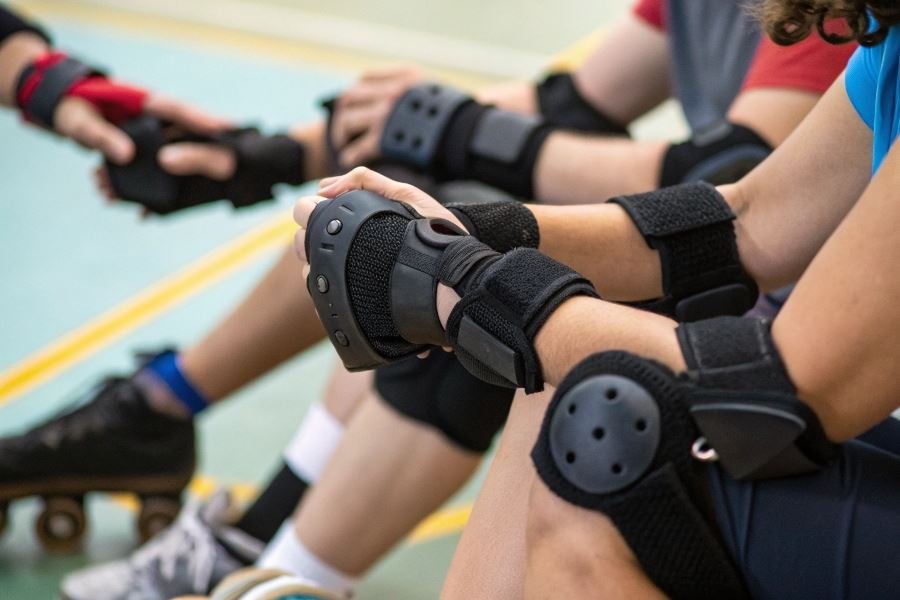
Ever landed a trick wrong and felt that sickening snap in your wrist? According to the American Journal of Sports Medicine, wrist injuries account for nearly 40% of all extreme sports trauma, with the average recovery time exceeding 8 weeks. That’s two months of watching from the sidelines while your skills rust.
When you’re dropping into a half-pipe or hitting a mountain bike trail, your wrists become your first line of defense. They absorb impact, stabilize your body, and often take the brunt of falls. Selecting the right wrist protection isn’t just about comfort—it’s about preserving your ability to ride tomorrow and for years to come.
The injury you can’t afford
The most common wrist injuries in extreme sports include scaphoid fractures, TFCC tears, and the notorious “snowboarder’s fracture.” What makes these particularly devastating is their long-term impact. A poorly healed scaphoid can lead to arthritis by your mid-30s, while repeated sprains create instability that can end careers prematurely.
Protection options that actually work
Your choices range from minimal to maximum protection:
- Flexible wrist guards: Offer moderate support while maintaining mobility—ideal for skateboarding and parkour
- Rigid splint guards: Provide maximum protection by limiting wrist extension—perfect for snowboarding and aggressive inline skating
- Compression sleeves with reinforcement: Balance support with flexibility—great for BMX and mountain biking
The best protection balances three critical factors: impact absorption, range of motion, and comfort. Remember, the guard you’ll actually wear consistently is ultimately better than the “perfect” one that sits in your gear bag.
Essential Features of Wrist Protection That Define Performance
When you’re pushing limits in extreme sports, your wrists often take the brunt of falls and impacts. Selecting the right wrist protection isn’t just about injury prevention—it’s about extending your session time and progressing with confidence. Let’s dive into what separates premium wrist guards from basic options.
Material Composition: The Foundation of Protection
The materials used in wrist protection for extreme sports directly influence both performance and durability. Most high-quality guards feature a multi-layer construction:
Outer shell materials typically include high-density polyethylene, carbon fiber, or reinforced nylon. These materials absorb and distribute impact forces while maintaining structural integrity through repeated use. G-Form has pioneered SmartFlex technology that remains flexible during normal movement but instantly hardens upon impact.
Inner padding components usually consist of EVA foam, memory foam, or gel inserts strategically placed at impact zones. The thickness varies from 4mm to 12mm depending on the intended sport and protection level.
When examining wrist protection for extreme sports, features of selection should focus on material durability ratings. Premium guards undergo testing for at least 1,000 impact cycles without significant degradation—a crucial factor for athletes who ride multiple times per week.
| Material Type | Impact Resistance | Weight | Durability Rating |
|---|---|---|---|
| Carbon Fiber | Excellent | Light | 5+ years |
| Reinforced Nylon | Very Good | Medium | 3-4 years |
| Standard Plastic | Good | Heavy | 1-2 years |
Support Level and Flexibility: Finding Your Balance
The eternal tradeoff in wrist protection is between support and mobility. This balance varies dramatically based on skill level and sport demands:
Rigid support systems incorporate aluminum or composite splints that limit wrist hyperextension—the most common injury mechanism. These splints typically prevent backward bending beyond 40-60 degrees, the threshold where ligament damage often occurs.
Articulated designs offer progressive resistance, allowing natural movement until a certain angle where support dramatically increases. Triple Eight and 187 Killer Pads have developed systems that provide 70% mobility with 90% of the protection of fully rigid guards.
The flexibility spectrum ranges from race-oriented snowboard guards (most rigid) to freestyle skateboarding guards (most flexible). Your selection should match your riding style—beginners benefit from more rigid protection while advanced athletes often prefer increased mobility for trick execution.
Sport-Specific Requirements: Tailored Protection
Different extreme sports create unique demands for wrist protection:
Skateboarding guards prioritize palm protection and finger mobility. The ideal design features a low-profile splint that doesn’t interfere with board feel while maintaining 3-5mm impact padding at the heel of the palm. Loaded offers guards specifically designed to maintain grip sensitivity.
Snowboarding protection requires extended coverage due to higher speeds and harder impacts. Look for guards extending 4-6 inches up the forearm with dual splints (palmar and dorsal) for comprehensive support during falls on packed snow and ice.
Inline skating guards balance the requirements of both sports, with emphasis on slide plates that allow skaters to safely slide out of falls rather than absorbing all impact force. Ennui has developed specialized inline protection with replaceable slide pucks similar to longboarding gloves.
The most versatile guards incorporate modular components that can be added or removed based on the day’s activity, allowing one investment to serve multiple sports with optimal protection levels for each.
The Ultimate Wrist Protection Guide for Extreme Sports
When you’re dropping into a halfpipe or hitting a mountain bike trail, your wrists are often the first point of impact during a fall. I’ve seen too many seasons cut short by a preventable injury. Let’s dive into the world of wrist protection that could save your next session!
Beginner shields for your first drops
Starting out in skateboarding, snowboarding, or inline skating? Your wrists need immediate attention. Entry-level guards like the Triple Eight Wristsaver offer the perfect introduction to protection without breaking the bank ($25-35).
What makes beginner guards special:
- Simplified design with single splints for straightforward protection
- Easier fastening systems that don’t require expert adjustment
- More forgiving fit for those still developing their riding style
The G-Form Pro-X Wrist Guards have revolutionized the beginner market with their flexible SmartFlex technology that hardens on impact. These guards ($45) feel almost invisible until the moment you need them—perfect for newcomers who resist “bulky” protection.
Pro tip: When starting out, choose wrist guards with extended palm coverage. You’ll naturally put your hands down first when falling.
Pro-level armor for seasoned riders
Advanced athletes demand more sophisticated protection that balances mobility with maximum impact resistance. The difference is immediately apparent in products like the Demon Flexmeter Double Sided Wrist Guards ($75-90).
What separates pro-grade protection:
| Feature | Beginner Guards | Professional Guards |
|---|---|---|
| Splint design | Single, rigid | Multiple, articulated |
| Impact absorption | Basic foam | Advanced D3O or similar materials |
| Range of motion | Limited | Optimized for performance |
| Customization | One-size-fits-most | Sport-specific designs |
Professional snowboarders often choose the Burton Impact Wrist Guards ($55) which integrate seamlessly with their gloves. These low-profile guards offer exceptional protection without compromising the feel of the board or the ability to grab.
For BMX and mountain biking, the POC Joint VPD 2.0 Wrist Guards ($70) use viscoelastic polymer dough that remains flexible during normal movement but instantly hardens upon impact—truly remarkable technology.
Keeping your guards in fighting shape
Wrist protection isn’t a buy-once proposition. Even the best guards degrade with use and impact.
Maintenance essentials:
- Wash fabric components regularly (hand wash with mild soap, never machine dry)
- Inspect splints and hard components for cracks after significant impacts
- Check strap integrity and velcro effectiveness monthly
Most quality wrist guards should be replaced every 12-18 months of regular use. However, replace immediately after any significant impact that causes visible damage or deformation to the protective elements.
Signs your guards need replacement:
- Visible cracks in plastic components
- Compressed or thinning padding
- Loose stitching or torn fabric
- Straps that no longer secure tightly
The Dakine Wristguard ($35) includes a replacement indicator that changes color when the impact absorption properties have degraded—a brilliant innovation worth looking for in your next purchase.
Remember: The most expensive wrist guard is still cheaper than an ER visit. Protect those wrists like your season depends on it—because it absolutely does!