
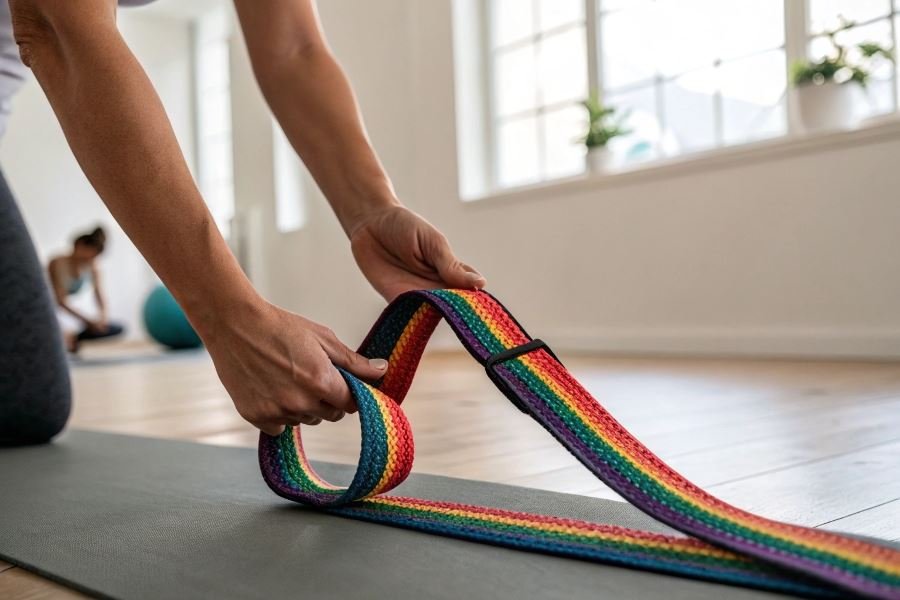
Ever watched a seasoned yogi effortlessly fold into a pose that seems physically impossible? Behind many of those impressive stretches lies a simple secret: the humble yoga strap. This unassuming prop has transformed countless practices, bridging the gap between limitation and possibility.
Yoga straps aren’t just for beginners struggling to touch their toes. They’re sophisticated tools that enhance alignment, deepen stretches, and unlock new dimensions in your practice. From the D-ring classics to quick-release buckles and adjustable loops, the right strap can be the difference between forcing a pose and finding its true expression.
The silent yoga teacher in your bag
Think of a yoga strap as your personal assistant on the mat. When hamstrings protest during forward folds, it extends your reach. During challenging binds, it creates connection where flexibility falls short. For restorative practices, it secures positions so you can truly surrender into relaxation.
Beyond physical assistance, straps provide invaluable feedback about alignment. That gentle tension tells you exactly where you are in space, helping develop body awareness that transfers to strap-free practice.
Choosing your ideal match
Material matters tremendously. Cotton offers traditional grip and durability, while newer eco-friendly hemp and bamboo blends provide sustainability with performance. Length requirements vary by height and practice style—6-foot straps suit most practitioners, while 8-10 foot versions enable advanced binds and creative variations.
The buckle system might seem like a minor detail until you’re mid-pose adjusting your strap. D-rings offer simplicity and security, while quick-release mechanisms provide instant adjustments for dynamic practices.
Your perfect strap aligns with your practice level, physical needs, and yoga style—transforming limitations into opportunities for growth.
Finding Your Perfect Yoga Strap
When it comes to deepening your yoga practice, the humble yoga strap might be your most underrated ally. Far from being just a strip of fabric, the right yoga strap can transform your practice, making seemingly impossible poses accessible and helping you maintain proper alignment. Understanding which yoga straps are better: selection criteria involves examining materials, length options, and buckle types to find your perfect match.
Material Matters: Strength Meets Comfort
The foundation of any quality yoga strap starts with its material. Each option brings distinct advantages to your practice:
Cotton straps reign supreme in the yoga world for good reason. They offer a perfect balance of softness against skin and impressive durability. The natural fibers provide excellent grip even when hands get sweaty during intense sessions. Premium cotton straps from brands like Manduka typically last for years without fraying or losing their shape.
Hemp alternatives have surged in popularity among eco-conscious practitioners. These straps boast exceptional strength-to-weight ratios and naturally antimicrobial properties. Hemp’s durability often exceeds cotton, though it comes with a slightly rougher texture that softens beautifully with use.
Nylon straps deliver unmatched strength and moisture resistance. Their synthetic construction makes them ideal for hot yoga environments or outdoor sessions where sweat and humidity are factors. Many athletes prefer nylon’s consistent tension and minimal stretch during deep holds.
| Material | Durability | Grip | Eco-Friendly | Price Range |
|---|---|---|---|---|
| Cotton | High | Excellent | Good | $15-25 |
| Hemp | Very High | Good | Excellent | $20-35 |
| Nylon | Highest | Moderate | Fair | $12-22 |
Length Options: Finding Your Perfect Fit
The ideal strap length depends entirely on your body proportions and the poses you’re targeting:
Standard 6-foot straps (approximately 183cm) work well for most practitioners with average flexibility. This length provides sufficient reach for basic poses like seated forward folds and shoulder stretches.
8-foot options (about 244cm) offer versatility for taller individuals or those working on advanced binds and wraps. The extra length proves invaluable for poses like King Dancer or complex shoulder openers.
Adjustable straps with sliding mechanisms represent the best of both worlds, allowing you to customize length mid-practice without interrupting your flow. These adaptable tools shine in classes where you might transition between poses requiring different strap lengths.
Buckle Types: The Connection Point
The buckle might seem like a minor detail, but it dramatically impacts your experience:
D-ring metal buckles provide the most secure hold with virtually zero slippage. Their simple design allows for quick adjustments and reliable stability during deep stretches. The metal construction ensures longevity, though they can occasionally press uncomfortably against the body in certain positions.
Quick-release plastic buckles offer convenience for rapid adjustments. They’re lightweight and won’t dig into your body during floor poses, though they may not provide the same rock-solid hold as metal alternatives.
Cinch buckles deliver a streamlined profile with no bulky hardware. These elegantly simple designs allow the strap to pass through itself, creating a secure loop that adjusts with a simple pull. They excel in poses where the buckle might otherwise press against your body.
The perfect yoga strap combines material quality, appropriate length, and functional buckle design to support your unique practice. By carefully considering these essential criteria, you’ll find a strap that becomes not just an accessory, but a trusted partner in your yoga journey.
Making Your Final Yoga Strap Decision
Finding your perfect yoga strap doesn’t need to feel like searching for a needle in a haystack. After exploring materials, lengths, and buckle types, it’s time to bring everything together and make that final selection. Let’s cut through the noise and pinpoint exactly what will serve your practice best.
Matching features to your practice style
Your yoga practice is as unique as your fingerprint, and your strap should complement it perfectly. Consider these practice-specific recommendations:
- Beginners: Opt for cotton straps with D-ring buckles for easy adjustments during poses. The 8-foot length provides versatility while you explore different asanas.
- Advanced practitioners: Look for non-stretch materials like nylon that provide the resistance needed for deeper stretches and challenging binds.
- Restorative yoga: Choose wider straps (1.5-2 inches) that distribute pressure more comfortably during long-held poses.
- Hot yoga enthusiasts: Seek out quick-drying materials like nylon or polyester blends that won’t absorb sweat and become slippery.
The right strap doesn’t just assist your practice—it transforms it, turning limitations into opportunities for growth.
Your body proportions also matter significantly. Taller practitioners generally benefit from longer straps (10 feet+), while those with broader shoulders might prefer wider designs for comfort across the back.
Investment considerations beyond the price tag
When evaluating yoga straps, the initial cost is just one factor in a more complex equation. The true value emerges when considering:
| Quality Factor | Budget ($5-15) | Mid-Range ($15-30) | Premium ($30+) |
|---|---|---|---|
| Durability | 1-2 years | 3-5 years | 5+ years |
| Comfort | Basic | Enhanced padding | Ergonomic design |
| Versatility | Single-purpose | Multi-functional | Adaptable to all practices |
| Sustainability | Limited | Moderate | Eco-friendly materials |
A $35 strap that lasts five years costs you $7 annually—potentially less than replacing cheaper alternatives multiple times. Additionally, premium straps from brands like Manduka often include lifetime warranties, making them surprisingly economical long-term investments.
Consider also the hidden costs of inadequate equipment: discomfort that discourages practice, injuries from slippage, or limitations in pose progression. These factors can’t be measured in dollars but significantly impact your yoga journey.
Top three straps that deliver exceptional value
After evaluating dozens of options against our comprehensive criteria, these three straps consistently outperform the competition:
-
Hugger Mugger Cotton Strap with D-Ring – The gold standard for versatility, featuring 8 feet of durable cotton webbing and metal D-rings that maintain tension reliably. Perfect for practitioners at any level seeking balance between quality and affordability ($16).
-
Lululemon No Limits Stretching Strap – A premium option with loop systems that eliminate buckles entirely, offering multiple grip points for progressive stretching. The non-slip material excels in dynamic practices ($28).
-
Yoga Design Lab Sustainable Cork Strap – Environmentally conscious with cork-infused cotton that provides natural grip even during sweaty sessions. The innovative buckle system allows micro-adjustments for precise tension ($25).
Each of these options represents thoughtful engineering that addresses specific practitioner needs while maintaining exceptional build quality. Your perfect match depends on which aspects of your practice you’re looking to enhance most significantly.
Remember that the best strap isn’t necessarily the most expensive—it’s the one that becomes so seamlessly integrated into your practice that you hardly notice it’s there, until you realize how much further you’ve progressed.