
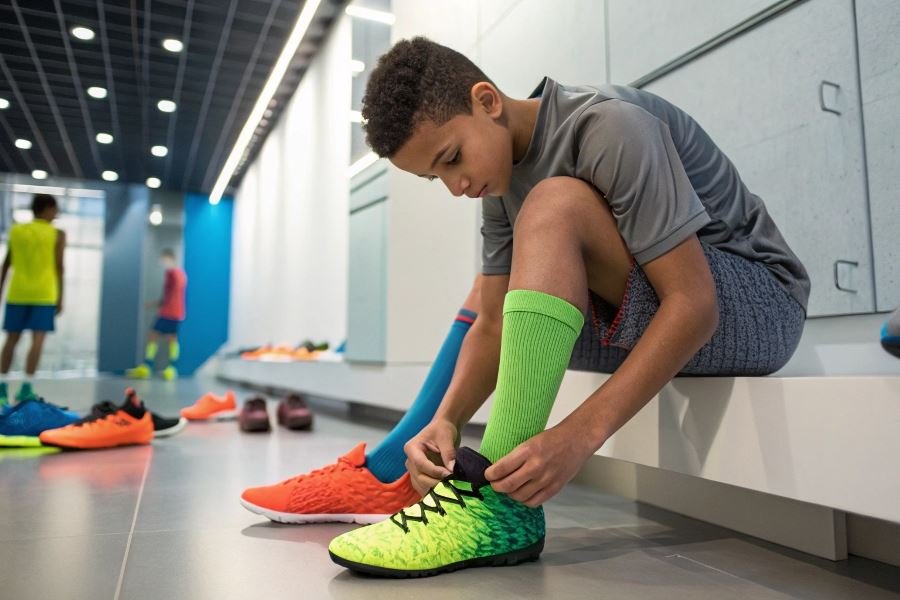
Ever watched a 9-year-old execute a perfect pivot on a futsal court only to slip and lose the ball? That split-second could be the difference between developing confidence or frustration—and it often comes down to what’s on their feet.
Futsal isn’t just soccer’s indoor cousin. Played on a hard court with a smaller, heavier ball, futsal demands quick turns, explosive movements, and precise ball control that regular soccer shoes simply weren’t designed to handle. When children wear inappropriate footwear, they’re not just compromising performance—they’re risking injury and missing crucial developmental opportunities.
The right futsal shoes act as more than just equipment—they’re developmental tools. Children’s growing feet need specific support during those lightning-fast direction changes and sudden stops. Unlike outdoor soccer where cleats dig into grass, futsal requires a flat, grippy sole that works with the court surface rather than against it.
Three elements stand above all when selecting futsal shoes for young players:
- Proper fit that allows growth without excess movement
- Non-marking rubber soles with futsal-specific traction patterns
- Low-profile design that maximizes ball feel and control
The difference between generic sneakers and purpose-built futsal shoes isn’t just marketing—it’s measurable in milliseconds of reaction time, degrees of ball control, and years of injury-free development. For children learning the beautiful game’s indoor variant, proper footwear isn’t a luxury—it’s the foundation everything else builds upon.
The Ultimate Guide to Choosing Futsal Shoes for Young Players
When your child steps onto that indoor court, their footwear becomes their most crucial piece of equipment. The right futsal shoes can enhance performance, prevent injuries, and boost confidence—while the wrong pair might leave them sliding, uncomfortable, or even sidelined. Let’s dive into what truly matters when selecting these specialized indoor soccer shoes.
Selecting appropriate futsal shoes for a child requires careful consideration of several key factors including proper sizing, sole construction, upper materials, support features, and weight characteristics. Each element plays a vital role in ensuring your young athlete can perform safely and confidently on indoor courts.
Finding the Perfect Fit
The cornerstone of any athletic footwear decision starts with sizing. Unlike regular sneakers, futsal shoes should fit snugly with approximately a quarter-inch of space between the longest toe and the shoe’s end. This “thumb rule” ensures proper foot mechanics while preventing blisters and toe injuries.
Growth considerations: Children’s feet grow rapidly—sometimes up to two sizes per year for younger players. Consider:
- Purchasing shoes with a half-size allowance for growth
- Testing shoes in the afternoon when feet are naturally more swollen
- Having your child wear the same socks they’ll use during play
“A properly fitted futsal shoe should feel like a natural extension of the foot—secure but never constrictive.”
Court-Specific Sole Technology
The sole is where futsal shoes truly differentiate themselves from other soccer footwear:
| Sole Type | Best For | Key Benefits |
|---|---|---|
| Flat non-marking rubber | Standard indoor courts | Superior grip, prevents floor damage |
| Gum rubber | Wooden surfaces | Enhanced traction, excellent durability |
| Low-profile turf | Artificial turf futsal | Balanced grip without excessive catch |
Never choose shoes with cleats or bladed soles for indoor play—they’re dangerous on court surfaces and typically prohibited in facilities. The ideal futsal sole provides a balance of grip and glide, allowing for quick directional changes without “sticking” to the floor.
Upper Material Selection
The shoe’s upper determines touch sensitivity, durability, and comfort:
-
Synthetic leather: Offers excellent durability and water resistance at lower price points. Nike Tiempo Academy and adidas Predator models feature quality synthetics that mimic natural leather.
-
Mesh panels: Provide breathability and flexibility—crucial for growing feet. Look for strategic placement around the midfoot and tongue.
-
Natural leather: Premium option delivering superior ball feel and custom fit over time. Joma and Mizuno offer excellent leather options sized for youth players.
Support Systems for Developing Players
Young athletes need specific support features as their foot structure continues developing:
- Heel counter: Should be firm enough to prevent excessive movement
- Arch support: Moderate support prevents fatigue during extended play
- Ankle collar: Padded but not restrictive for natural movement
- Insole quality: Removable insoles allow customization as needed
Weight and Flexibility Factors
The ideal futsal shoe balances lightweight construction with necessary structure:
Weight considerations: Youth futsal shoes should generally weigh between 7-9 ounces (200-255g) depending on size. Heavier shoes fatigue young legs faster, while ultra-lightweight options may sacrifice essential protection.
Flexibility test: The shoe should bend primarily at the ball of the foot—where the foot naturally flexes during running and pivoting. Excessive stiffness restricts natural movement, while too much flexibility provides inadequate support.
Remember that indoor court play involves constant direction changes, quick stops, and technical footwork. The perfect futsal shoe accommodates these movements while protecting growing feet from the impacts of hard court surfaces.
Making the Right Futsal Shoe Decision for Your Young Player
When it comes to equipping your child for futsal success, the final decision requires balancing several crucial factors. Let’s dive into how to make that perfect choice, when to upgrade, and which brands consistently deliver quality across different age groups.
The Quality-Price-Durability Triangle
Finding the sweet spot between quality, durability, and price doesn’t have to be a frustrating exercise. The most expensive option isn’t always the best for growing feet. Instead, focus on value—shoes that offer proper support and durability without breaking the bank.
For younger players (ages 6-9), spending $40-60 on quality futsal shoes makes sense since they’ll outgrow them quickly. For older children (10-14), investing $60-90 becomes more reasonable as their foot growth slows and playing intensity increases.
The true value of a futsal shoe isn’t in its price tag but in how it serves your child’s specific playing needs while lasting through their development stage.
Remember that durability requirements vary by age and playing frequency. A child playing twice weekly needs more robust construction than one playing occasionally. Look for reinforced toe caps and quality stitching at stress points—these features often justify a slightly higher price point.
Growth Timing: When to Replace
Children’s feet grow at different rates depending on age:
- Ages 5-8: May need new shoes every 3-4 months
- Ages 9-12: Typically require replacements every 4-6 months
- Ages 13+: Can often wear the same shoes for 6-8 months
Don’t wait for complaints about discomfort—regularly check for these warning signs:
- Less than a thumb’s width of space at the toe
- Visible wear on the outsole pattern
- Compression of the midsole cushioning
- Heel counter losing its firmness
Early replacement prevents potential foot development issues and ensures optimal performance. Many parents find success with the “two-pair rotation system”—alternating between two pairs extends overall lifespan and provides options for different court surfaces.
Top Brands by Age Group
Based on performance, durability, and specialized features for developing players:
| Age Group | Recommended Brands | Key Strengths |
|---|---|---|
| 5-8 years | Nike Junior Tiempo | Soft leather, wide fit options, simple closure systems |
| Adidas Predator Sala | Durable rubber outsole, excellent grip, easy-on design | |
| Puma Future Z | Lightweight, flexible, vibrant colors kids love | |
| 9-12 years | Nike Mercurial | Responsive feel, excellent traction, growing room |
| Adidas X Speedflow | Supportive fit, cushioned insole, durable materials | |
| Joma Top Flex | Exceptional value, wide toe box, gum rubber outsole | |
| 13+ years | Nike Phantom | Professional-grade features, superior touch, ankle support |
| Adidas Copa Sense | Premium materials, cushioned ride, excellent ball control | |
| Mizuno Morelia Neo | Lightweight kangaroo leather, exceptional fit, durability |
For beginners in any age group, the Nike Tiempo and Adidas Samba lines offer exceptional versatility and value, making them perennial favorites among coaches and parents alike.
Remember that the perfect futsal shoe combines proper fit, appropriate features for your child’s playing style, and construction quality that will last through their current development stage. By balancing these factors thoughtfully, you’ll equip your young player for success on the court.