
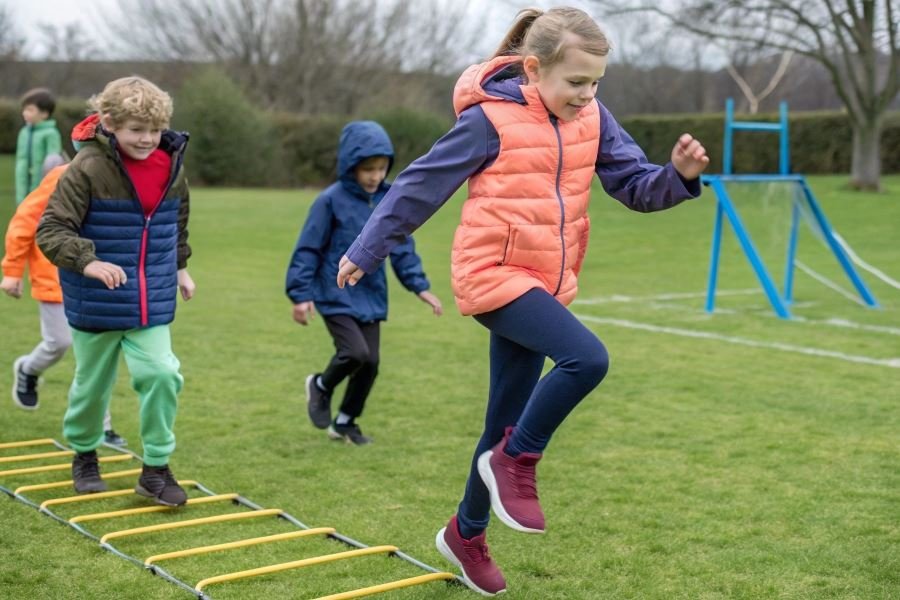
Ever watched a 7-year-old try to play soccer in jeans? Or seen a child shivering through winter practice in cotton sweats? These aren’t just uncomfortable moments—they’re missed opportunities for development and enjoyment that can shape a young athlete’s relationship with physical activity for years to come.
When it comes to children’s athletic performance, the right gear isn’t just nice to have—it’s essential. Seasonal sportswear selection for kids requires thoughtful consideration beyond simply scaling down adult designs. Children’s bodies regulate temperature differently, they move in unique ways, and their comfort thresholds can make or break their enthusiasm for sports.
The seasonal factor changes everything. A breathable moisture-wicking shirt that works perfectly in May might be completely inadequate by November. The UV protection crucial for summer baseball becomes less important than thermal regulation for winter skiing. Each season presents distinct challenges that quality sportswear must address.
Three critical factors should guide your selection process:
-
Functionality first: Will this gear support rather than restrict movement? Does it provide appropriate protection for the specific activity and weather conditions?
-
Temperature regulation: Children often don’t recognize overheating or cold until it’s extreme. Their sportswear needs to compensate for this with advanced materials that adapt to body temperature.
-
“Durability matters”: Children grow quickly, but their gear should withstand the season’s worth of tumbles, slides, and adventures that define childhood sports.
The right seasonal sportswear doesn’t just protect—it empowers young athletes to focus on what matters most: the pure joy of play and the development of lifelong skills.
The Science Behind Kids’ Seasonal Gear
When it comes to outfitting young adventurers for outdoor activities, the right sportswear can make all the difference between a day of fun and a miserable experience. The technical aspects of seasonal sportswear for children deserve as much attention as adult performance gear—perhaps even more, given kids’ unique needs and activity patterns.
Material Magic Across Seasons
The foundation of any quality children’s sportswear starts with appropriate materials. During summer months, breathability becomes paramount. Look for fabrics with moisture-wicking properties like polyester blends that pull sweat away from the skin, preventing that uncomfortable clammy feeling that can lead to chafing and irritation. Nike’s Dri-FIT and Under Armour’s HeatGear technologies have revolutionized how kids stay cool during intense summer activities.
For winter wear, the layering system reigns supreme. Base layers should feature merino wool or synthetic materials that trap heat while continuing to wick moisture. Mid-layers provide insulation—fleece remains the gold standard here—while outer shells need waterproofing with adequate breathability. The seasonal sportswear for children features selection should always prioritize temperature regulation, as kids typically run hotter than adults during activity but cool down faster when stationary.
“The difference between a good day outdoors and a miserable one often comes down to what’s between your child and the elements.”
Spring and fall demand versatility. Look for convertible pieces with zip-off components or adjustable features that adapt to temperature fluctuations. Columbia’s Omni-Heat reflective technology exemplifies innovation in this space, providing warmth without bulk—perfect for unpredictable shoulder seasons.
Safety Features That Matter
Children’s sportswear must incorporate safety elements that adult versions might not require. Visibility features become non-negotiable for any outdoor activity. Reflective strips or piping should appear on all outer layers, especially for dawn/dusk activities or winter’s shorter daylight hours.
For impact sports, integrated padding in strategic locations prevents injuries without restricting movement. Modern youth football and soccer gear includes lightweight foam protection that absorbs shock while maintaining flexibility.
UV protection represents another critical safety feature often overlooked. Many quality children’s sportswear lines now incorporate UPF (Ultraviolet Protection Factor) ratings of 30+ in their fabrics, providing crucial sun protection during extended outdoor play.
Built to Last and Grow
The durability equation for kids’ sportswear differs from adults’. Children outgrow clothes before wearing them out—unless the gear is poorly constructed. Smart manufacturers design with reinforced knees, double-stitched seams, and abrasion-resistant panels in high-wear areas.
| Growth Feature | Benefit | Best For |
|---|---|---|
| Adjustable waistbands | Extends wear time | Pants, shorts |
| Extendable cuffs | Accommodates height spurts | Jackets, pants |
| Layering systems | Adapts to changing body size | All seasons |
| Generous hem allowances | Permits lengthening | Pants, sleeves |
Patagonia’s Grow-Fit system exemplifies thoughtful design, allowing pants to extend up to 2 inches in length. Similarly, The North Face offers their EZ-Grow technology that extends sleeve and pant length without altering the garment’s appearance.
The best children’s sportswear balances immediate performance needs with inevitable growth, creating pieces that serve faithfully through multiple seasons and potentially multiple children. When selecting seasonal gear for young athletes, these technical considerations ultimately determine whether that expensive ski jacket becomes a treasured hand-me-down or a single-season disappointment.
Smart Choices for Kids’ Seasonal Sportswear
The quality-function-budget triangle
Finding that sweet spot between quality, functionality, and budget isn’t just possible—it’s essential. Premium sportswear from brands like Nike or Under Armour often delivers on durability, but don’t dismiss mid-range options from Target’s All in Motion or Decathlon. These brands have dramatically improved their technical fabrics while keeping prices accessible.
The smart money approach: Invest in critical pieces—waterproof winter jackets, quality running shoes, and base layers—while economizing on items that see less wear or face less environmental stress. A $30 difference in a winter jacket can mean the difference between a child staying dry during snow play or coming home soaked and miserable.
“The bitterness of poor quality remains long after the sweetness of low price is forgotten.” This applies doubly to kids’ sportswear that needs to perform in challenging conditions.
Consider the cost-per-wear calculation: A $60 pair of quality athletic shorts worn 50 times costs $1.20 per wear, while a $20 pair that wears out after 10 uses costs $2 per wear—and creates more waste.
Let them choose, let them use
Children who participate in selecting their sportswear are significantly more likely to actually wear it. This isn’t just about keeping peace—it’s practical psychology that translates to better value and more consistent use.
Create a collaborative process by:
- Pre-selecting 2-3 options that meet your technical requirements
- Letting your child make the final choice
- Explaining the features that make the item special (“These pants wick away sweat!”)
For younger children, incorporate their favorite colors or characters while maintaining performance standards. For teens, balance their style preferences with functionality—Adidas and Puma excel at this intersection.
The engagement factor: Kids who understand why their gear works develop appreciation for quality and performance—valuable lessons that extend beyond sports.
Extend the lifespan with proper care
The best sportswear becomes the worst value when improperly maintained. Implement these game-changing care routines:
| Care Aspect | Best Practice | Common Mistake |
|---|---|---|
| Washing | Cold water, gentle cycle, sport-specific detergent | Hot water, regular detergent with fabric softeners |
| Drying | Air dry technical fabrics, low heat for cotton | High heat for all items |
| Storage | Fully dry before storing, hang technical outerwear | Stuffing damp items in bags or drawers |
Technical fabric revival: Restore water-repellent finishes on outerwear with products like Nikwax after approximately 10 washes. This simple step can extend a jacket’s functional life by an entire season.
For footwear, rotate between two pairs when possible—this allows complete drying between uses and extends the structural integrity of the shoes by up to 50%.
Remember that most performance decline in sportswear comes not from activity but from improper washing and drying. Teaching children to care for their gear not only preserves your investment but instills responsibility and appreciation for quality equipment that serves them well.