
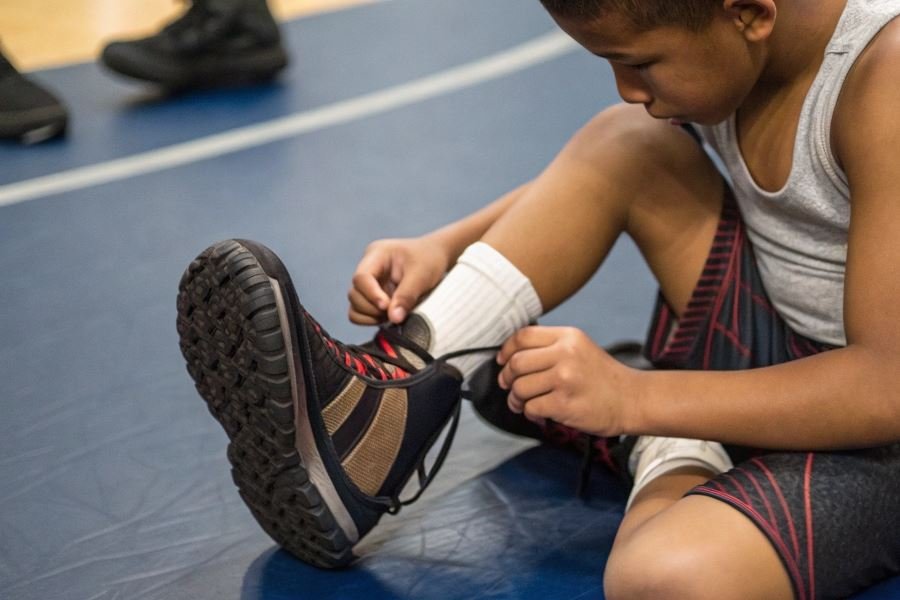
Step onto the mat with confidence. Your journey begins with what’s on your feet.
Wrestling shoes aren’t just footwear—they’re specialized equipment that can make the difference between victory and defeat in those crucial moments when leverage, grip, and stability matter most. Unlike running shoes designed for forward motion or basketball shoes built for jumps and quick cuts, wrestling shoes serve a unique purpose in one of humanity’s oldest sports.
When I watched Olympic gold medalist Jordan Burroughs explain his footwear choice before the 2016 Games, his words stuck with me: “My shoes are my weapons. They’re how I connect to the mat, how I generate power, how I move.” This perfectly captures why proper wrestling footwear matters so dramatically for beginners.
The wrestling shoe difference
Wrestling shoes differ from standard athletic footwear in three critical ways:
- Exceptional mat grip – The thin, flexible soles provide superior traction that allows for explosive movements
- Ankle support – Higher cuts protect against the awkward twists common in wrestling
- Lightweight design – Every ounce matters when you’re fighting for position
For beginners especially, proper wrestling shoes provide the foundation for developing technique. They allow you to focus on learning moves rather than slipping or compensating for inadequate footwear. Think of them as your first real investment in the sport—one that protects your ankles while helping you develop proper footwork from day one.
In this guide, we’ll walk through everything from sizing considerations to material choices, helping you make an informed decision that matches your specific needs on the mat.
The Wrestling Shoe Trifecta: Fit, Support, Traction
When you step onto the wrestling mat for the first time, your footwear becomes your foundation. The right wrestling shoes don’t just complete your gear setup—they fundamentally transform your performance. Let’s dive into what separates championship-worthy wrestling shoes from the pretenders.
Finding Your Perfect Fit
Wrestling shoes should fit like a second skin—snug but never painful. Unlike running shoes where you might size up for comfort, wrestling footwear demands precision. Most wrestlers benefit from selecting shoes a half-size smaller than their street shoes to eliminate movement inside the shoe during explosive movements.
Learning how to choose wrestling shoes for beginners starts with understanding that proper sizing creates the platform for everything else. When trying on pairs, wear the same socks you’ll use during practice and competition. Your toes should nearly touch the end without cramping, and the midfoot should feel secure without pinching.
Measurement tip: Late afternoon fittings provide the most accurate sizing as feet naturally swell throughout the day—similar to how they’ll respond during intense matches.
The width matters just as much as length. Wrestling shoes from ASICS typically offer a narrower fit, while Nike wrestling shoes often accommodate wider feet. Remember that synthetic uppers will barely stretch, while leather options mold to your foot over time.
Ankle Support Systems
The ankle design in wrestling shoes represents perhaps the most critical engineering feature separating styles and price points.
High-tops provide maximum stability but slightly reduced mobility, while mid-cuts balance protection with freedom of movement.
| Support Level | Best For | Typical Features |
|---|---|---|
| High-top | Beginners, heavyweight classes | Extra straps, reinforced collar |
| Mid-cut | Intermediate wrestlers, middle weights | Flexible ankle material, strategic reinforcement |
| Low-cut | Experienced wrestlers, lightweight classes | Minimal restriction, enhanced speed |
The best beginner shoes incorporate a split-sole design with a flexible middle and reinforced ankle support. This construction allows natural foot movement while protecting against the awkward landings and twisted positions common in wrestling.
Protection insight: Look for models with padded collars and integrated lace garages that prevent laces from coming untied during matches—a small detail that prevents major disruptions.
Traction That Grips When It Matters
The sole of a wrestling shoe tells the story of its performance capability. Elite wrestling shoes feature rubber outsoles with intricate traction patterns designed specifically for mat surfaces.
The ideal sole combines flexibility with grip—too sticky and you sacrifice mobility; too smooth and you’ll slip during crucial moments.
Split-sole designs from Adidas and Rudis provide excellent mat feel by separating forefoot and heel sections, allowing your foot to bend naturally. This construction proves especially valuable for beginners still developing technique.
The traction pattern should feature circular or hexagonal designs that grip in multiple directions. These patterns provide stability during penetration steps and explosive shots while allowing controlled pivoting during turns and escapes.
Performance detail: Suede leather sections on the outsole offer additional friction points for foot drags and mat returns—techniques you’ll develop as you progress.
Remember that wrestling shoes with exceptional traction will feel slightly “grabby” when new. This sensation indicates proper grip that will optimize slightly with use while maintaining the essential traction that keeps you firmly planted when driving through takedowns.
Making the Final Call on Wrestling Shoes
The moment of decision has arrived. After trying on multiple pairs and narrowing down your options, it’s time to make that final call on which wrestling shoes will accompany you onto the mat. This decision combines practical considerations with performance needs—a balance every wrestler must strike.
Budget reality check
Wrestling shoes range dramatically in price—from $50 entry-level models to $200+ elite competition footwear. The sweet spot for beginners typically falls between $70-120, where you’ll find reliable performance without breaking the bank.
Value isn’t always tied to price tag. Many mid-range options from brands like ASICS and Nike deliver 90% of high-end performance at 60% of the cost. Consider this comparison:
| Price Range | Expected Durability | Best For |
|---|---|---|
| $50-70 | 1 season | Practice, beginners |
| $70-120 | 1-2 seasons | Regular competition |
| $120+ | 2+ seasons | Serious competitors |
The most expensive shoe isn’t necessarily the right shoe for your development stage. Focus on fit and function first, then find the best price point that delivers those qualities.
Brand reliability matters
The wrestling shoe market has clear leaders with proven track records. ASICS, Nike, Adidas, and Rudis consistently produce quality wrestling footwear backed by athlete testing and feedback.
Most reputable brands offer 6-12 month warranties against manufacturing defects—not covering normal wear and tear. Always check the specific warranty terms before purchase, especially for online orders.
Customer service reputation varies significantly. Brands like ASICS and Rudis have built strong reputations for addressing issues quickly, while some lesser-known brands may offer lower prices but questionable after-purchase support.
Knowing when it’s time for new shoes
Wrestling shoes aren’t designed to last forever. Even top-tier models eventually surrender to the intense friction and pressure of the sport. Watch for these clear indicators it’s replacement time:
- Sole separation – When the outsole begins detaching from the upper
- Significant tread wear – Smooth spots developing on the outsole
- Upper material tears – Especially near flex points or seams
- Ankle support collapse – The shoe no longer provides stable support
- Consistent slipping – When grip becomes unreliable despite clean soles
Most beginners can expect 1-2 seasons from quality shoes with proper care. Elite wrestlers competing year-round might replace shoes every 6-8 months.
The best wrestling shoes feel like an extension of your feet—when they stop feeling that way, it’s time for a change.
Remember that worn shoes aren’t just a performance issue but a safety concern. Compromised traction or support increases injury risk, particularly to ankles and knees.
By balancing budget considerations with quality requirements, choosing a reliable brand with solid warranty protection, and knowing when replacement time arrives, you’ll make confident decisions about your wrestling footwear throughout your career on the mat.